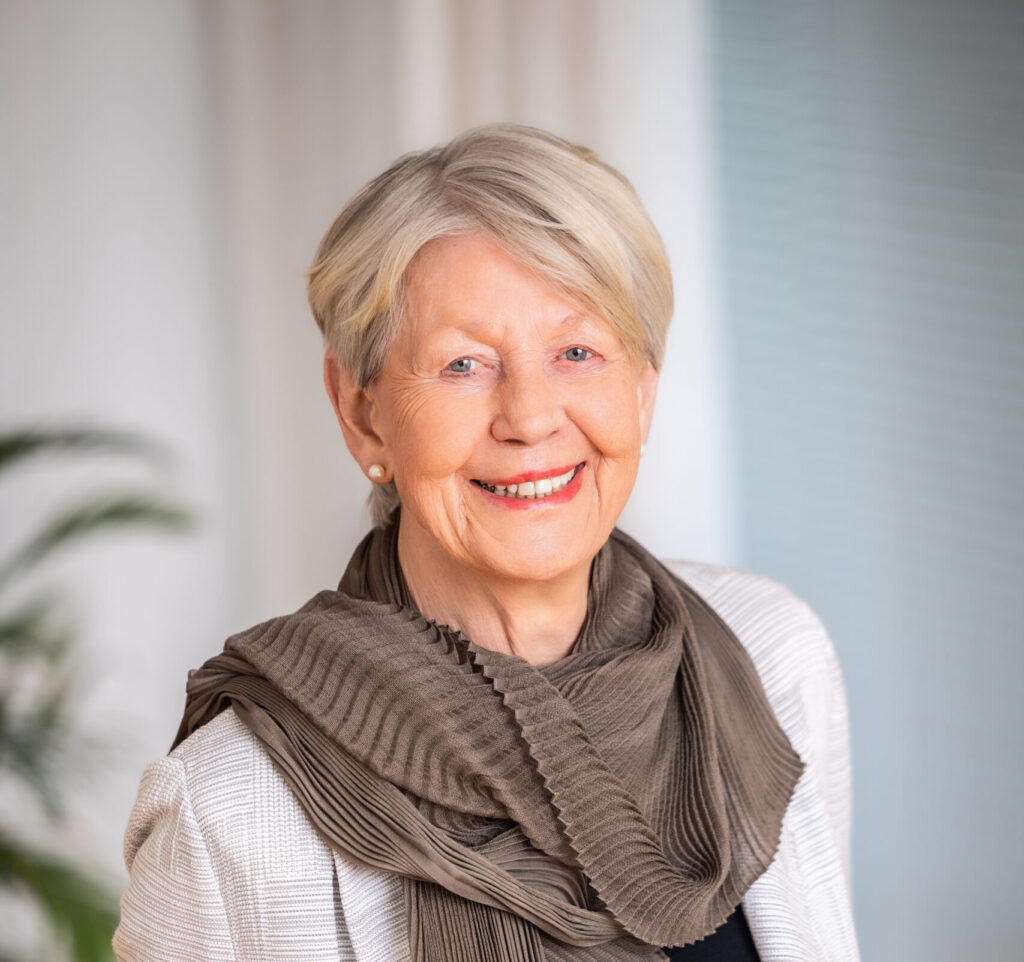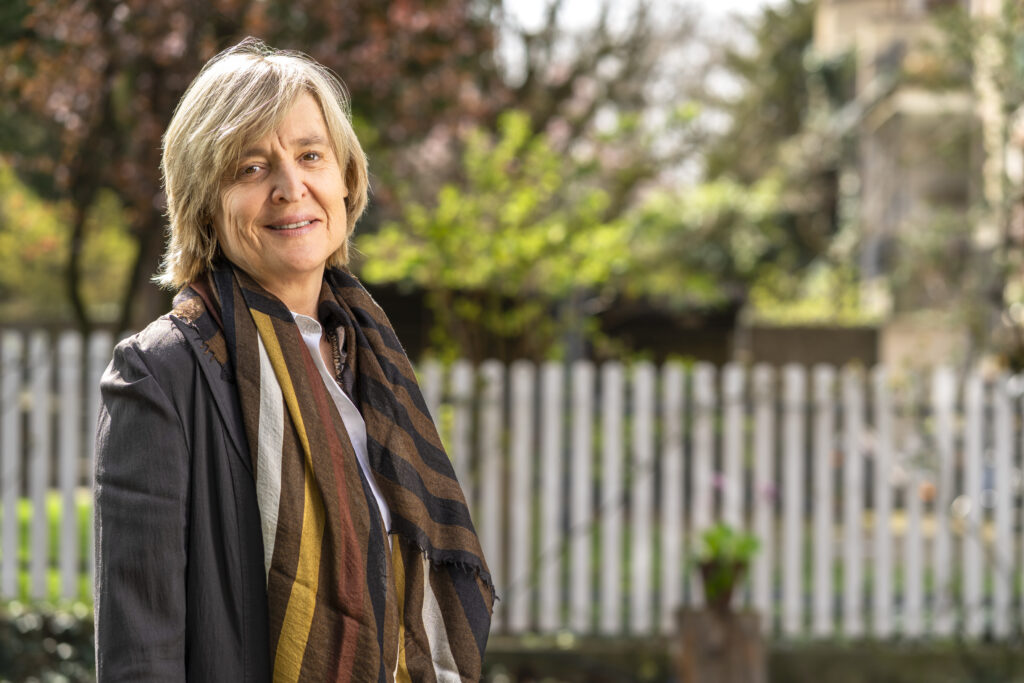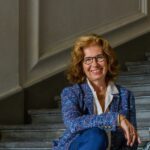

To begin, could you tell us who Anne Schwöbel is? What experiences and values have shaped you as a person and as a philanthropist?
«I was born into a large German family whose identity has been shaped for more than six generations by our family business in the healthcare sector. This environment has influenced me from early childhood – not only in terms of work ethic and responsibility, but also through a deep awareness of what it means to serve the wellbeing of others.
When my parents moved to Switzerland in the 1970s to build up the company here, they dedicated more than five decades to establishing a successful and reputable medical-device business here in Switzerland. Growing up in this context, I witnessed firsthand how values such as integrity, reliability and long-term thinking can become the foundation of an entrepreneurial success story spanning more than 180 years.
Protecting and improving people’s health has always been at the heart of our work. This mission gives my life a strong sense of purpose. It also defines my understanding of patronage: responsibility does not end with economic or ecological considerations. For me, it extends to a social commitment – to today’s generation and to those who will follow. This conviction guides my actions as a person and as a philanthropist».
What role has your family, especially your mother Carla Braun Schwöbel, played in your personal and professional journey?
«My parents have both been profound role models for my sister and me, each in their own way. My father was an entrepreneur in the truest sense – a pioneer with the courage to create something new and the determination to see it through. Towards the end of his professional career, he founded a small brewery in Lucerne and preserved a cultural center that was at risk of being closed. He once told me: “I’m doing this so the people of Lucerne can enjoy a high-quality beer – and so the next generation can enjoy it too”. That mindset – to act not only for today but also for tomorrow – continues to guide my sister and me.
My mother, Carla Braun Schwöbel, has shaped me in a different but equally meaningful way. She taught us how essential culture and social engagement are for a healthy society. I still remember her saying: “The success of our company gives us the freedom to engage in social and cultural causes.”
To me, this sentence captures a beautiful principle: that genuine commitment stems from freedom, not obligation. This understanding – that privilege comes with the opportunity to contribute – has deeply influenced both my personal and professional journey».
Was there a defining moment in your life when you realized that supporting culture and society would become central to your path?
«There was no single defining moment – no sudden realization that cultural or social engagement would become the center of my life. For me, it has always been more of a continuum, something that grew naturally from the environment in which I was raised.
I do not see supporting culture and society as “my central path”. Rather, I see it as a meaningful dimension of a fulfilled life – something that accompanies my professional work, my family values, and my sense of responsibility. It is less a mission than an attitude: an understanding that if one has the freedom and the means to contribute, one should do so with sincerity and purpose».
How do you experience your relationship with the city of Lucerne? Do you feel actively involved in your community?
«My relationship with the city of Lucerne is shaped by a deep sense of belonging. I grew up here, spent most of my school years here, and built friendships that still accompany me today. Lucerne has never been just a place of residence it is the city that formed me.
I also feel actively connected to the community through various roles I hold. I am involved in several committees and boards, including the Lucerne Festival, the BEST ART Collection of the Art Museum of Luzern, the Council of the University of Lucerne. Each of these engagements reflects my conviction that a thriving city needs strong cultural, educational and social institutions.
And, of course, there is our house brewery in the Rathauskeller, right in the heart of Lucerne’s old town – a place where community, tradition and local identity come together in a very tangible way.All the memories, contributions and friendships I hold in Lucerne makes me feel not only at home in Lucerne, but also meaningfully involved in the life of the city».
What passions do you pursue outside of your philanthropic commitments?
«»The beautiful thing is that many of my commitments align naturally with my passions. One of them is classical music. During the festival season, I truly cherish the diversity of classical and contemporary works performed by some of the world’s most exceptional musicians who come to Lucerne. For me, this is a real luxury – as well as a source of inspiration and joy.
My involvement in the arts and in the academic world also gives me the privilege of seeing what happens behind the scenes: the creative processes, the dedication, and the many people who contribute to making these experiences possible. Having this deeper insight feels like an enrichment of my life.
And there is another passion that has grown in recent years through my partner: his love for cinema. Thanks to him, I have discovered how special it is to watch films at the Kino am See in Zürich – surrounded by the beauty of Lake Zurich, enjoying great films in such an atmospheric setting. It has become a pleasure I truly appreciate».
Which causes or projects are closest to your heart today?
«All the causes and projects I am involved in are close to my heart – without that personal connection, I would not commit myself to them. But one initiative I would particularly like to highlight is the Pulsar Prize, awarded jointly by the Fumetto Comic Festival and Stiftung Weltethos Schweiz.
The Fumetto Comic Festival in Lucerne brings together some of the most talented emerging artists from around the world. As Vice President of the Stiftung Weltethos Schweiz, I am closely involved in this collaboration. This global ethic foundation, established by Hans Küng, fosters dialogue across religions and cultures and highlights the universal values that connect us.
For the past three years, the Pulsar Prize has honored a young, exceptionally promising artist. I find it truly inspiring to see how these talents explore the possibilities of visual storytelling – often in ways that are sensitive, profound, and poetic. Their work shows that shared values can build bridges and strengthen social cohesion. It also reveals something important: young people care deeply about ethical questions and search for answers far more actively than we often assume».
How do you choose the initiatives you support? Are there specific criteria or intuitions that guide your decisions?
«For me, curiosity is the starting point. An initiative has to spark my interest – intellectually, culturally or personally. If I can combine my support with an active role within the project, then it becomes truly meaningful. I appreciate being involved not only as a patron but also as someone who contributes time, thought and engagement. When inspiration and active participation come together, I am assured it is the right commitment for me».
Have you ever faced moments of doubt or difficulty in your philanthropic work? How did you overcome them?
«Yes, I have faced moments of doubt – particularly during the years I worked for Transparency International Switzerland, an international NGO dedicated to countering corruption. In this field, success cannot simply be measured in numbers. It is a continuous, often painstaking effort to fight injustice by raising awareness for transparency, accountability and integrity.
There are times when the impact of this work is not immediately visible. That can be challenging, because the results unfold slowly and often only over many years.
When such doubts arise, I make a conscious effort to “put on my global glasses” – to take a step back and look at the world from a broader, long-term perspective. From that vantage point, I can see that development is happening, even if not always in a straight line. There are setbacks, detours and frustrations, but there is also undeniable progress.
I hold a deep conviction that we are moving toward a better world – not quickly, not perfectly, but steadily. This belief helps me stay grounded, patient and committed in my philanthropic work».
As a mother, how do you envision your children’s future in relation to philanthropy? Would you like them to carry on the legacy, as you did with your mother, or do you prefer to let them find their own path?
«For me, true commitment must come from the heart. If my children one day choose to continue my philanthropic legacy, I would of course be delighted. But I do not see it as something they should or must do.
I want them to find their own path – their own passions, their own causes, their own way of contributing to society. What matters to me is not what they choose to support, but how they approach it. If they take responsibility, act with sincerity, and pursue a commitment with genuine passion, then they will be carrying forward the values that shaped me – in their own meaningful way».