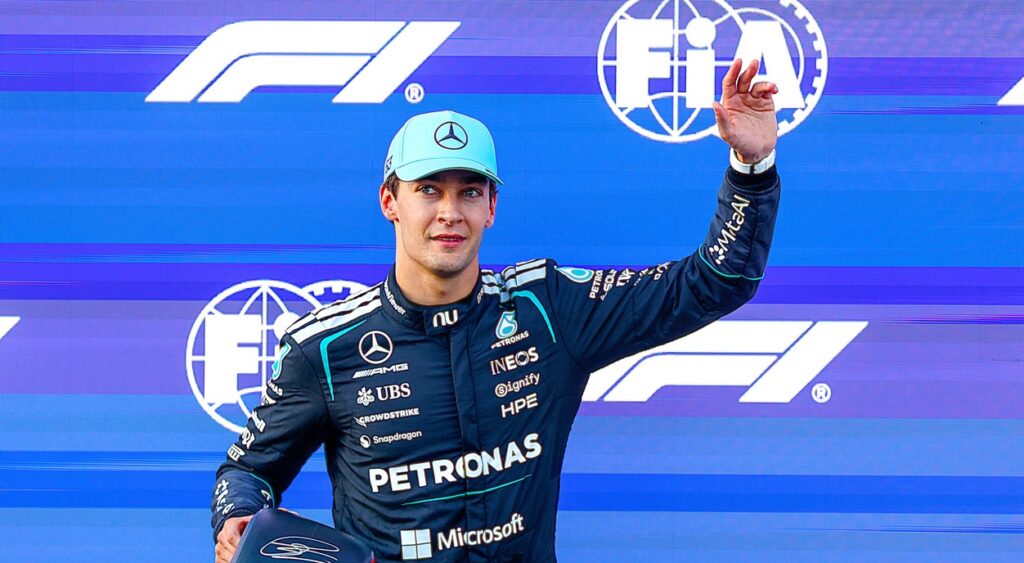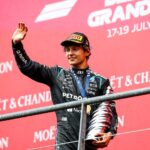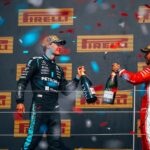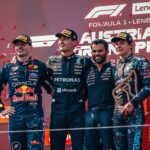

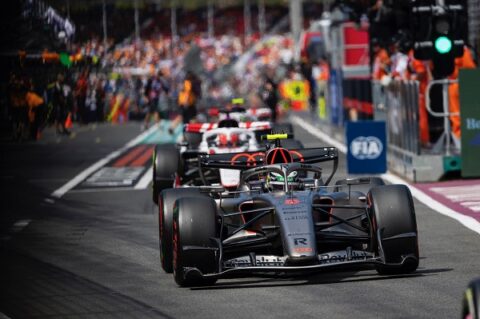
 George Russell won the 2026 Australian Grand Prix, the opening round of the Formula 1 World Championship, on the Albert Park circuit in Melbourne, capital of the state of Victoria in southeastern Australia.
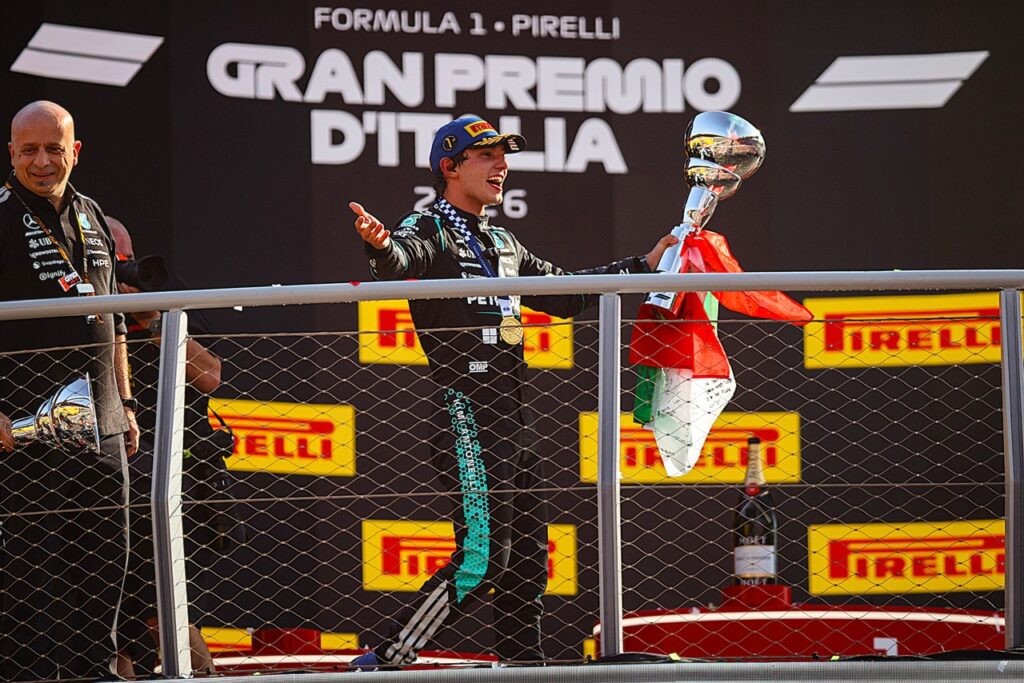
Second place went to his Mercedes teammate Kimi Antonelli, a 19-year-old from Bologna, Italy, in his second F1 season.
Third was Charles Leclerc in the Ferrari, with Lewis Hamilton fourth in the other red car, just six-tenths of a second behind his teammate.
The Mercedes dominance had already been signaled on Saturday, when Russell claimed pole position with Antonelli alongside him on the front row.
For Formula 1, 2026 opens a season of sweeping technical change.
The engine remains a 1.6-liter V6 turbo, but power is now split evenly between internal combustion and the electric system: the MGU-K—the electric motor that harvests energy under braking and delivers it back under acceleration—has been tripled in output compared to previous seasons.
Fuel is now 100% sustainable. On the aerodynamic side, the DRS is gone.
That was the system that allowed a driver within one second of the car ahead to open a rear wing flap and gain straight-line speed manually.
 In its place is Active Aero: both front and rear wings adjust their angle automatically at every point on the circuit, closing in corners to maximize grip and opening on straights to cut drag.
The practical consequence is straightforward and significant—closing speeds on the straights are now extremely high, and if a driver’s battery runs low at the wrong moment, there is simply no way to hold off an attack.
Back to Australia.
The race turned on two Virtual Safety Car stints at roughly half-distance.
The VSC is a procedure that slows the entire field without bringing out the full Safety Car, typically used to manage a stopped car or debris without halting the race completely.
First, Hadjar retired his Red Bull, then Bottas pulled over in the Cadillac.
Both times, Mercedes called its drivers in for fresh tires, taking full advantage of the reduced pit stop time that the slower field provides.
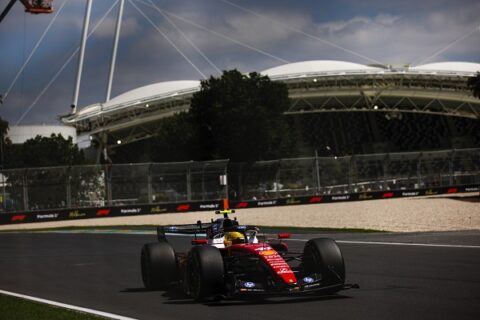 Ferrari chose not to stop either time. When Leclerc and Hamilton eventually came in for their one planned stop, Russell and Antonelli were already ahead of them on newer rubber.
Ferrari’s single-stop strategy was not wrong on paper, but it was undone by a less precise reading of the opportunity those VSC windows offered.
The Ferrari picture after the Melbourne race cuts two ways.
The pace is real: Leclerc led the early laps, and Hamilton, in his very first race in a Ferrari, adapted to the SF-26 quickly and naturally.
Strategically, though, the team gave away what the car had earned. Leclerc was candid after the race: with the new regulations, managing the battery during a stint is genuinely difficult, and when the charge runs out, there is no defense against a faster car on a straight.
 Verstappen, a four-time world champion, started last after a qualifying crash and recovered to sixth.
McLaren’s Oscar Piastri, the hometown favorite in Melbourne, never made it to the grid after an incident on the formation lap.
Race result, top three: 1. Russell (Mercedes), 2. Antonelli (Mercedes) at 2.97 sec., 3. Leclerc (Ferrari) at 12.52 sec.
Drivers’ Championship after Round 1: 1. Russell 25 points, 2. Antonelli 18, 3. Leclerc 15.
Constructors’ Championship: 1. Mercedes 43 points, 2. Ferrari 27.
Next race: Chinese Grand Prix, Shanghai International Circuit, March 13–15, 2026.
Le immagini:
Per Ferrari: ©ferrari.com/it-IT/media-centre;
Per Audi: Audi Revolut F1® Team – Copyright: 2026 Getty Images.