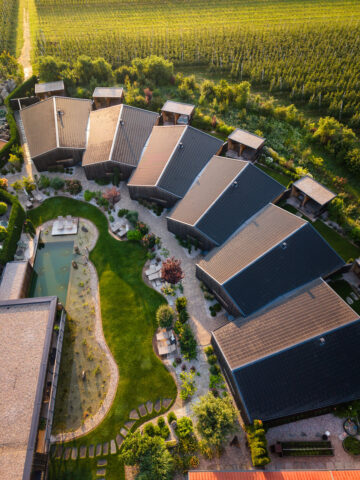
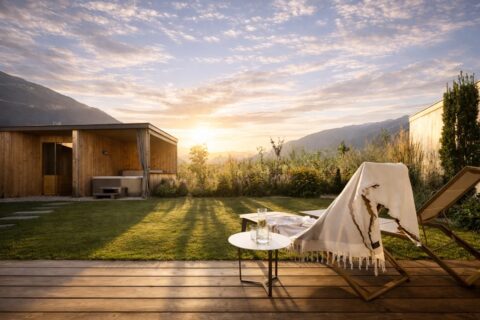
 In the heart ofSouth TyrolThe Laces-Val Martello region offers a mountain getaway that combines nature, outdoor activities, local culture, and gastronomy. This is the context for the Amolaris Garden Lodges & Guesthouse, run by the Kaserer family, now in its third generation.
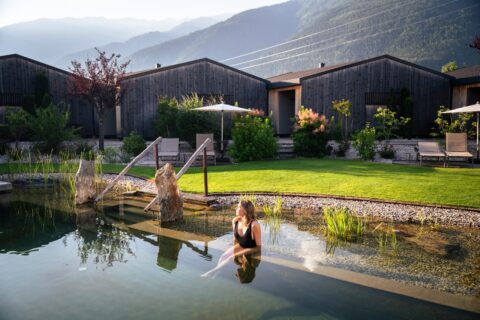
The history of Amolaris began in 1970. The very name of the establishment recalls the millstone, an element that holds a significant place in the history of the place and in the family's memory. Over the years, the business has evolved, culminating in the creation of the Garden Lodges in 2020, which have given shape to a new hospitality concept compared to its origins.
The stated principle is "discreet luxury, with plenty of tranquility and privacy." A philosophy that focuses less on the spectacular aspect of hospitality than on the opportunity to slow down, have your own space, and experience the area with greater autonomy.
For those arriving from Ticino, Laces is less than an hour's drive from the Swiss border and about four and a half hours from Lugano. This distance makes the destination accessible even for a few days' stay, without sacrificing the sensation of being in an Alpine setting profoundly different from that of the Ticino resorts.
 The Kaserer family at the heart of hospitality
One of the defining elements of Amolaris is the family's role in managing the facility. Generational continuity isn't just a historical fact, but is also reflected in the division of tasks and the relationship with guests.
Martin Kaserer, senior owner of Amolaris, is an organic farmer and host. A tour of the organic apple orchards with him offers a closer look at some of the work that underpins the property's philosophy and a deeper understanding of the connection between hospitality, agriculture, and the local area.
Breakfast, in turn, becomes a moment where this approach finds concrete expression. Wally Kaserer prepares sweet and savory dishes using, whenever possible, produce from the neighborhood or the property's own garden.
Fruit, cured meats, cheeses, eggs, yogurt, smoothies, and desserts are presented with special attention. More than just a simple food offering, the goal seems to be to share with guests a slice of local gastronomic culture through recognizable ingredients and meticulous preparation.
The reception is instead entrusted to the daughter Katharina, third generation of the family involved in the management of Amolaris.
 Castles, trails, and gorges between Laces and Val Martello
A stay at Amolaris can be a great starting point for exploring an area rich in historical sites and nature trails.
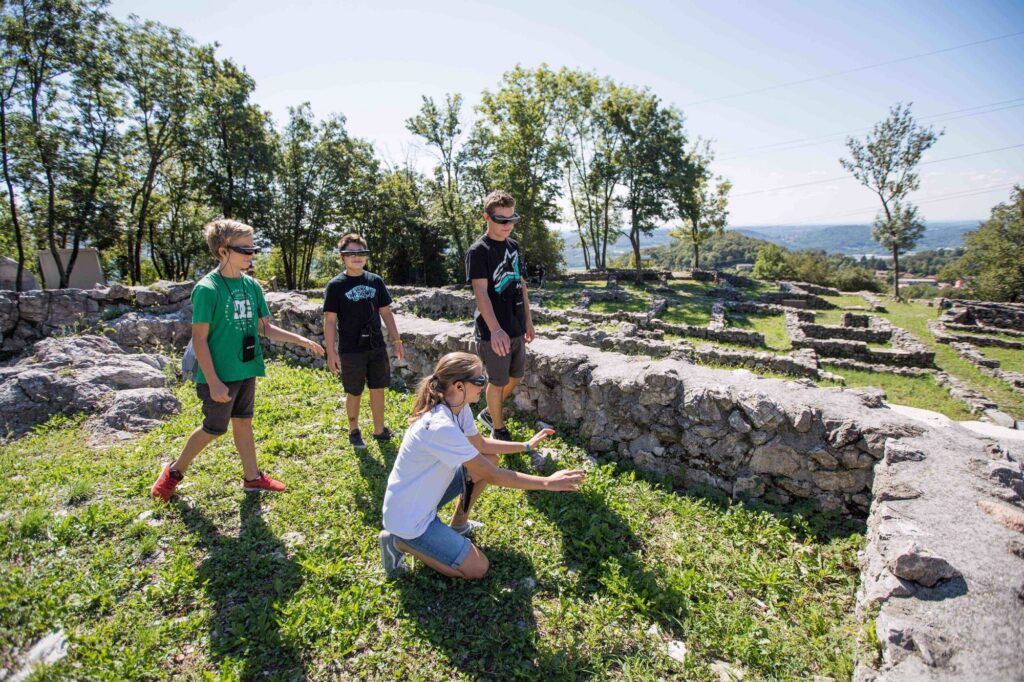
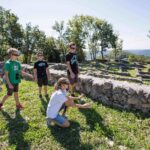
Among the destinations are the ruins of Untermontani Castle and Obermontani Castle, with the Chapel of St. Stephen, known as "the Sistine Chapel of South Tyrol." Added to these is Goldrain Castle, a historic residence characterized by its fortified walls and four towers.
For those who prefer a natural environment, the Plima Gorge is one of the most easily accessible options, while hikers can enjoy itineraries of varying difficulty in the Val Martello and the Stelvio National Park.
Among the most challenging hikes is the one to Madritsch, at 3.265 meters. The summit can be reached via a relatively accessible route for those with good physical condition, but it's still a full-day excursion. Along the way, you might even spot a bearded vulture.
 Another option is a hike to the Zufall refuge, while those interested in small historic towns can head to Glorenza, one of the most characteristic villages in the area.
The Venosta Valley by bike
The Laces and Val Martello area is also particularly attractive for mountain bikers. The combination of roads, trails, and alpine routes allows for itineraries of varying length and difficulty, combining sporting activities with exploration of the surrounding area.
The bicycle thus becomes another tool for moving between small towns, apple orchards, vineyards, and slopes of the Venosta Valley, with the possibility of reaching places that are rarely included in more conventional tourist itineraries.
 A cuisine that starts from local products
The Alto Adige experience also extends to the table. The local gastronomic tradition is built on products and preparations ranging from speck to dumplings, from chestnuts to cheeses, all the way to a contemporary restaurant capable of reinterpreting ingredients and recipes.
In the area around Coldrano and Laces, there are numerous options, allowing you to explore trattorias, mountain restaurants, producers, and haute cuisine establishments.
In Silandro, you'll find the Speckeggele restaurant, led by young chef Victoria Walder, who has also gained experience in high-end Swiss hotels, including the Kempinski in St. Moritz.
In Glorenza, the Flurin restaurant offers young and creative cuisine. In the kitchen is Thomas Ortler, chef and host, named a GaultMillau New Discovery 2021/22 and author of the book Südtirol fine & fancy.
The visit can also be an opportunity to learn about less conventional productions. Werner Schönthaler, in addition to producing hemp bricks for sustainable construction, is known locally for his "marble wine," a unique winemaking experiment.
 Castelatsch – Marmor Wein
Between organic wines and resistant vines
Viticulture represents another chapter in understanding the region. Some local producers have developed a particular focus on grape varieties resistant to fungal diseases, a characteristic that can be particularly valuable in organic farming.
Among the varieties listed are Solaris, Muscaris, and Souvignier gris. Their presence also speaks to an agricultural sector seeking new solutions to reduce pesticide use and adapt to the demands of more sustainable viticulture.
In Castelbello, a tasting at the Marinushof allows you to delve deeper into the world of local wines and grappas, discovering a production closely tied to the agricultural dimension of the Venosta Valley.
From autumn to Törggelen
For those who choose to visit the area in autumn, the gastronomic calendar offers an event deeply rooted in South Tyrolean tradition: Törggelen.
From early October until late November, mountain taverns and inns offer seasonal dishes, a time when chestnuts become one of the symbolic ingredients of local cuisine.
Törggelen isn't just a gastronomic occasion. It's a custom that marks the transition from autumn to winter and allows visitors to experience a rural dimension that's still present in the region's culture.
L'Uva Blu, a contemporary South Tyrolean restaurant
Among the gastronomic addresses recommended during the stay is L'Uva Blu – Osteria Sudtirolese, also known as Blaue Traube, in Lagundo.
The restaurant has 17,5 GaultMillau points and was named Restaurant of the Year 2025 by Der Grosse Guide . The offering is part of a contemporary South Tyrolean cuisine, in which regional roots are reinterpreted through more contemporary techniques and sensibilities.
The Blue Grape – South Tyrolean Tavern
Kuppelrain, Michelin-starred cuisine in Castelbello
Another top-notch restaurant is the Kuppelrain Restaurant in Castelbello, which has been awarded a Michelin star.
The kitchen is entrusted to Kevin Trafoier, who carries out the work with precision and personal research, supported by his father Jörg, with decades of experience and committed to advising the new generation.
The wine component also plays a central role. Sonya Egger-Trafoier, a Michelin Sommelier Award winner, oversees the wine and food pairings.
The family journey continues with Nathalie Trafoier, responsible for the menu's finale. Her artisanal pralines, French-inspired pastries, and chocolate sculptures complete the gastronomic experience.
Hiking and gastronomy: two ways to get to know the area.
The area's offerings are therefore not limited to accommodations. Amolaris can be a starting point for a stay where outdoor activities, culture, and gastronomy come together.
The day can begin among the organic apple orchards of the Kaserer family, continue along a path in the Val Martello or towards a refuge, and end in front of a traditional dish or a haute cuisine menu.
The places to visit also follow this variety: from castles to gorges, from small villages to agricultural areas, from tastings to award-winning restaurants.
It's a travel method that emphasizes a gradual exploration of a region. Amolaris, in this sense, isn't just presented as a place to stay overnight, but as a base for exploring a part of South Tyrol where the relationship between agriculture, mountains, and hospitality continues to play a key role.
For information on the property and accommodation options: