
 From the 17 to the September 27 Swiss Week of Taste 2026 It involves the entire national territory with a program that combines gastronomy, local products, traditions, innovation, and a focus on sustainability. The event, now in its 26th edition, offers ten days of events dedicated to daily report with what arrives on the tables, involving producers, chefs, artisans, restaurateurs and the public.
The official program is available on the event website, which lists events organized in the various cantons and allows you to search by region, date, location, and type. Categories include, for example, agritourism, DOP and IGP products, Swiss wine, zero-waste initiatives, and social events.
Ticino also finds space in this national calendar. This is confirmed by the initiatives already announced for the canton, where the Week of Taste is part of the broader calendar of autumn food festivals.
Zurich takes on the role of Switzerland's Region of Taste
For the 2026 edition, the title of Swiss Region of Flavor has been awarded to Zurich. The Genussregion Zurich 2026 program will run throughout the year and address various aspects of food: from cuisine to nutrition, from health to sustainability, and even the promotion of local products and innovation.
The goal is therefore not limited to promoting food in the strict sense. The project aims to create opportunities for discussion on food culture and to make the skills, products, and experiences that characterize the Zurich area more visible.
This choice reflects a vision of gastronomy as a vehicle for intertwining local economy, culture, and awareness in food choices. Throughout 2026, Zurich will thus become a laboratory dedicated to taste and its diverse implications.
Zineb Hattab, a cuisine between Zurich and international influences
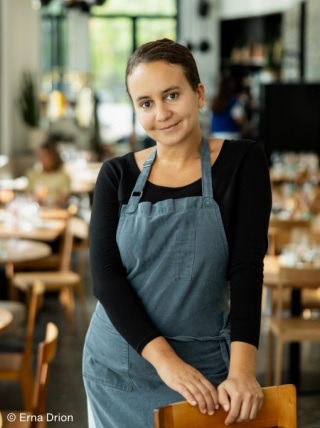
Representing the 2026 edition is Zineb Hattab, 36, a chef of Spanish-Moroccan origin who built her professional business in Zurich.
Her journey began far from professional kitchens. Hattab originally envisioned a career in engineering, but the experience she gained cooking for her classmates drew her to gastronomy. From there, she trained with some of the most renowned names in international cuisine, including Andreas Caminada, Massimo Bottura, and the Roca brothers.
Her style is described as strongly rooted in trust in relationships with producers, collaborators, and customers. Her cuisine, predominantly vegan and focused on local products, first gained recognition with the KLE restaurant, awarded 15 GaultMillau points and a Michelin star. DAR and COR, two projects with different characteristics but united by gastronomic research, then arrived in Zurich. The event has dedicated a dedicated page to the chef on its website: Zineb Hattab, Swiss Madrina del Gusto 2026
The nomination therefore brings to the forefront a figure who interprets cuisine as a meeting of cultures and territories, in line with the national character of the event.
The calendar also involves Ticino
The presence of the Week of Taste in Ticino is not limited to symbolic participation. The cantonal calendar includes gastronomic initiatives that showcase local products, recipes, and convivial experiences.
Among the events already announced is one organized by Casa Andreina in Lugano, from September 21st to 25th, with a series of lunches dedicated to local cuisine and regional flavors.
The general program of the Swiss Food Week also allows you to find initiatives using various search criteria. You can therefore directly check available events in Ticino and other Swiss regions by following the updates published on the official platform.
The event's Quality Committee also includes several representatives from the Ticino food sector, including Lorenzo Albrici, Paolo Basso, Giordano Bertolina, Meret Bissegger, Isabella Charbon, and Valerio Cimiotti.
Tradition and innovation in the same event
One of the distinguishing features of the 2026 edition is the attempt to combine consolidated gastronomic heritages with new ways of interpreting food.
The event promotes the diversity of Swiss food cultures, the preservation of traditions, and culinary innovation. Special attention is paid to artisanal skills and local, sustainable production.
Food is thus also considered a tool for questioning the origins of foods, seasonality, production methods, and the consequences of our choices. This approach also engages younger generations, through initiatives dedicated to food knowledge and the pleasure of cooking.
The topic of milk also reaches schools
The underlying theme of the 2026 Magazine del Gusto is milk, which has also been chosen as the theme for school canteens thanks to the collaboration with Fourchette Verte.
The publication, distributed in 100,000 copies in French, German, and Italian, has accompanied the event for years and is one of the tools through which the products, traditions, and protagonists of the country's various regions are presented.
A new collaboration with Terre&Nature Publications SA has also been announced for this edition, aimed at strengthening the Magazine's editorial component and its relationship with operators in the Swiss agri-food sector.
A reflection on the food system
Alongside the events, the 2026 edition offers a broader reflection on how contemporary society produces, purchases, and consumes food.
The editorial, written by the director of Swiss Food Week, Josef Zisyadis, highlights the growing prevalence of ultra-processed foods and the relationship between industrial food, health, and the environment. The document emphasizes the value of the home kitchen as a place for transmitting knowledge, memory, and identity.
The focus thus shifts from simple tasting to the cultural dimension of food. Cooking also means knowing the ingredients, recognizing agricultural labor, understanding seasonality, and maintaining a connection with the production areas.
Particular attention is paid to the role of peasant agriculture and women working in the sector, in a year the United Nations has dedicated to them. The editorial also highlights the Alpine food heritage candidacy project for UNESCO recognition, which involves the Alpine countries, with Switzerland at the center of the initiative.
From taste to sustainability
Sustainability is one of the guiding principles of Taste Week. This applies not only to product selection, but also to increased awareness of the environmental and social consequences of food production.
The 2026 program includes the so-called "Sustainable Love at First Sight" initiatives, dedicated to initiatives considered particularly attentive to the relationship between gastronomy and the environment. The official website also features a selection of proposals labeled "Our Committees' Favorites."
The published events include experiences related to agriculture, product processing, supply chain awareness, and waste reduction. This approach allows for an educational component to be combined with the gastronomic experience.
Young people also enter the program
The event also includes an initiative dedicated to young people through food vouchers that can be used in participating restaurants during the ten days of the event.
For the 2026 edition, the voucher is worth 60 francs and can be used from September 17th to 27th. The system allows for direct booking with the restaurant and the option to report any dietary requirements or allergies.
It's a way to introduce a young audience to the restaurant industry and, at the same time, to promote awareness of the gastronomic realities present in the different cantons.
Beat Jans officially opens the 2026 edition
The official opening of the event is scheduled for Wednesday, September 16th in Bern, with a gala evening at Bellevue Palace. Federal Councillor Beat Jans will open the 26th Swiss Food Week.
This isn't Jans's first involvement with the event. In 2022, when he was president of the Basel-Stadt State Council, he inaugurated the Week of Taste, the year Basel was designated the Swiss City of Taste.
This symbolic handover thus precedes the opening of ten days, from September 17th to 27th, which will place the topic of nutrition at the center of hundreds of initiatives spread across the country.
An event that starts from the table
Swiss Food Week presents itself as a gastronomic event, but its program goes beyond simple tasting.
The promotion of local products, the transmission of traditions, food education, support for producers, sustainability, and conviviality are all part of a single project. Within this framework, Ticino is participating in a national event that also offers the opportunity to showcase its products and gastronomic culture.
In 2026, as Zurich takes on the role of Swiss Region of Taste and Zineb Hattab that of patroness, the event returns to ask a simple but not obvious question: what does it mean to eat well today?
The answer lies in the products themselves, but also in the people who grow, process, and cook them. And above all, it lies in the time spent getting to know them.
The complete calendar of events is available on the official website of the Swiss Taste Week , with the updated program from 17 to 27 September 2026. Discover the program of the Swiss Taste Week 2026.