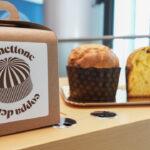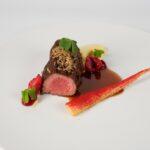

 One hundred and fifty years ago he was born Filippo Tommaso Marinetti, a key figure in the first half of the twentieth century. Poet and spiritual father of the Futurist movement, founded in 1909 to revolutionize art, literature, music, theater, dance, and ultimately cuisine, his theories rejected the styles of the past to embrace, through living forms, the dynamism of modern life.
Gastronomic paradoxes, like aesthetic ones, aimed at moral evolution: matter had to be shaken to awaken the spirit. Futurist cuisine, explicitly defined by Marinetti as a true culinary revolution, was described in manifestos and books complete with recipes, menus, and suggestions for hosting luxurious banquets or serving original meals.
The Futurists aimed to reject the mediocre daily pleasures of the palate and hoped for the advent of a chemical cuisine that would abolish old gastronomic patterns and replace them with new ideas in step with the times.
A manifesto published in 1913 by the French chef Jules Maincave ( Manifeste de la cuisine futuriste ) inspired the Culinaria futurista manifesto printed in 1920, which emphasized the colors and shapes of dishes rather than the flavors of the food.
Marinetti had been a longtime member of the tasting committee of the magazine La Cucina Italiana when, at a dinner hosted in his honor on November 15, 1930, at the Milanese restaurant Penna d'Oca, where dishes with extravagant names were served (moon ice cream, rose and sun broth, roast lamb in lion sauce, shower of cotton candy...), he publicly expounded the Futurists' views on nutrition. Crucial was the abolition of pasta, the national dish par excellence, which, he argued, "weighs down, dulls, deceives one about its nutritional value, makes one skeptical, slow, and pessimistic," and which therefore should be replaced by rice and bread.
 On December 28, 1930, it appears on the People's Gazette of Turin the Manifesto of Futurist Cuisine, in-depth version of the previous manifesto of 1920, and the following year the volume The futurist kitchenThe first point of the manifesto is precisely Against pasta, a food that, according to the Futurists, causes the "weakness, pessimism, nostalgic inactivity, and neutralism" typical of the Italian people. Only the abolition of this food can make Italians more agile and agile, and victorious in a potential war; furthermore, Italy can be freed from dependence on foreign grain in favor of its own rice industry.
Futurist culinary art exalts new flavors, created through extravagant combinations, paying particular attention to the shapes, aromas, and colors of foods, and the architecture of the dishes. It proposes contrasting flavor combinations (sweet/salty), engaging the sense of touch through alternating hot/cold, and direct contact with food (abolishing the fork and knife), all with a particular attention to the aesthetics of the dishes. The manifesto offers examples of some recipes with imaginative names prepared by the head chef of the Penna d'Oca restaurant: Alaskan Salmon with Sunbeams and Mars Sauce and Woodcock with Monterosa Sauce and Venus Sauce.
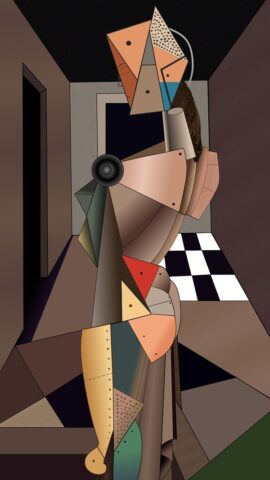 The manifesto sparked a series of controversies, and the Futurists themselves were divided on the issue: some begged Marinetti to spare the tagliatelle; others, the Ligurian Futurists, asked for a declaration of "loyal neutrality toward ravioli, for which we have profound sympathy and a duty of gratitude and friendship."
Marinetti organized a full-blown international promotional campaign to present Futurist dishes. At the inauguration of the Taverna del Santopalato in Turin, on March 8, 1931, the most curious Futurist recipes were served: the Antipasto intenso , the Carneplastico , created by the Futurist painter Fillia (a vegetable-filled meatball arranged vertically on a plate, topped with honey, sausage, and chicken meat spheres), the Pollofiat , and the Areovivanda , which, as Marinetti himself explained, was "a dish composed of various fruits and vegetables eaten with the right hand without the aid of any cutlery, while the left hand caresses a tactile surface made of sandpaper, velvet, and silk. Meanwhile, the orchestra plays loud, violent Futurist music, and the waiters spray the backs of each diner's necks with a strong clove perfume."
The futurist table thus becomes a playground for multiple experiments: colors, shapes, flavors, smells, and combinations constitute sensorial, tactile, visual, olfactory, and gustatory stimuli. In short, beware of eating just to nourish oneself.
The Futurists also made an effort to Italianize some terms of foreign origin: the cocktail thus became the “polibibita” that was drunk at the “Quisibeve” and not at the bar, the sandwich took the name “traidue”, the dessert “peralzarsi” and the picnic “pranzoalsole”.
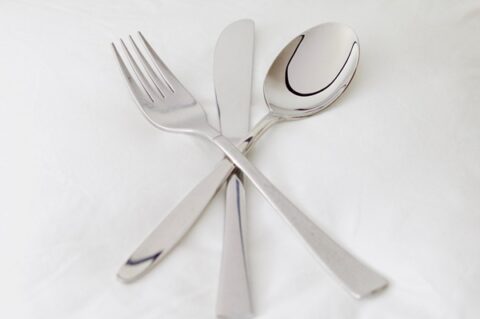
Everything contributed to enhancing the creative experience of food, such as the abolition of the fork and knife, which was part of the Futurist gastronomic strategy to foster "pre-labial tactile pleasure." The creation of simultaneous and ever-changing bites containing ten or twenty flavors to be savored in a few moments, and the use of the art of aromas to encourage tasting, were also part of the Futurist gastronomic strategy. Each dish was to be preceded by a scent, then blown from the table by fans. The rapid presentation of each dish between dishes, under the noses and eyes of the guests, further fostered curiosity, surprise, and imagination. Likewise, the use of music was to be limited during intervals, so as not to distract the sensitivity of the tongue and palate, and was to be used intelligently, like any other ingredient, to allow the flavors of a particular dish to be properly enjoyed.
The Futurist philosophy was to experiment and make the chef a true chemist of gastronomic intuition who knew how to condense the principles indispensable to life into food.
The Futurists achieved their greatest success with the public and the press with their "aerobanquets," and the one organized in Bologna in 31 was a memorable one. There were no tablecloths, replaced by aluminum foil and metal plates. The table was shaped like an airplane, with two appendages representing wings in the center, a motorcycle as the engine. After the course " Spicy Airport " (Russian salad), "Rombi d'asilo" (risotto with orange) was served , during which Marinetti proclaimed: "We're flying at eight thousand meters: feel how this nourishes and nourishes the stomach." A shouted demand then arose from the diners: " We want fuel ." They praised Lambrusco, decanted into gasoline cans. Also served were " Awake Stomach ," "Tyrrhenian Sea Foam," and " Steel Chicken " (roast stuffed with silver sprinkles).
Love history, art, and food? Read here!