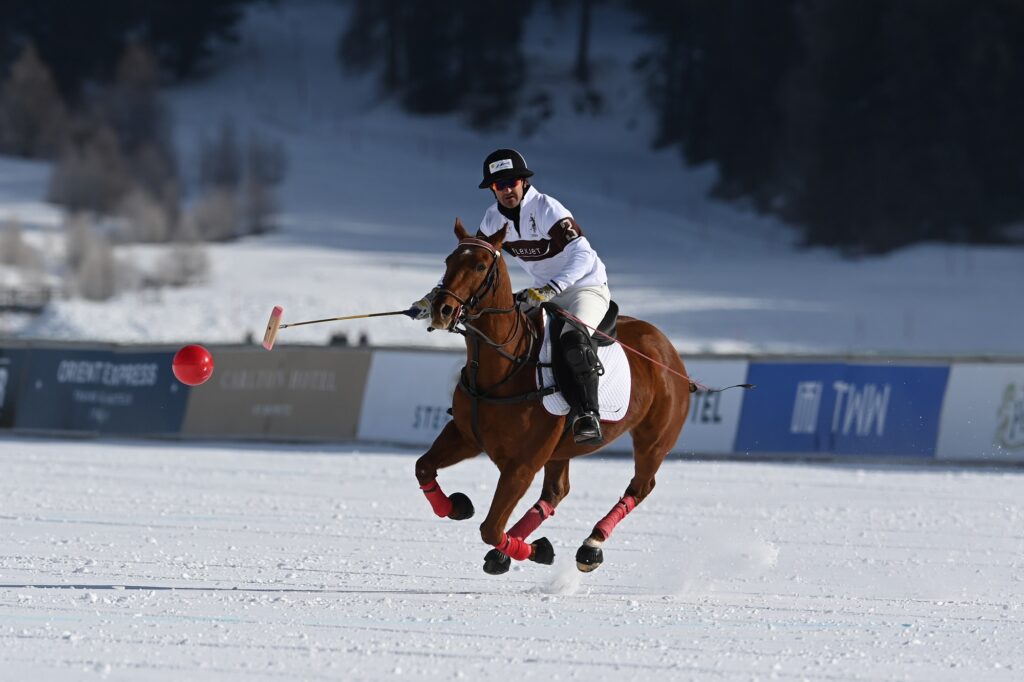
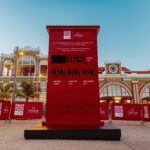
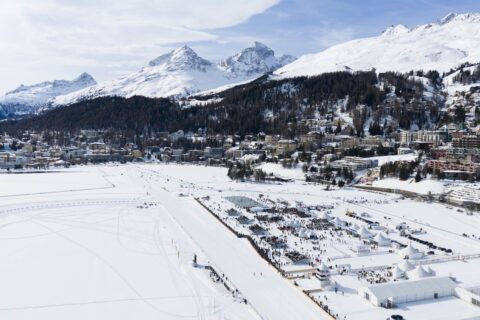
 For over a century, the White Turf St. Moritz 2027 connects winter horse racing to the unique sporting and tourism experience of the Engadin. The event, founded in 1907 on the frozen Lake St. Moritz, is preparing to celebrate its 120th edition in February 2027 with a program that reflects the event's history, but also its ability to reinvent itself over time. The theme chosen for the anniversary is "120 Years of Fascination – Snow | Dynamism | Mut | Elegance," four words that encapsulate the imagery built around the event over twelve decades.
The anniversary celebrations will not be limited to race days. The program also includes a historical exhibition, a celebratory parade on the lake, and a live artistic performance. In this way, White Turf intends to retrace the various phases of its history, connecting the evolution of the competitions with that of St. Moritz, winter tourism, and the social life of the region.
A story linked to the frozen lake since 1907
The first international race on Lake St. Moritz dates back to 1907. Since then, the event has become a recurring fixture of the Engadin winter, spanning many different eras.
Its development paralleled that of St. Moritz, a resort that during the 20th century consolidated its tourist vocation even during the cold season. Ice racing is therefore part of a broader history, in which sport, tourism, and social life have been intertwined for generations.
Over the decades, the protagonists, the organizational methods, and the context in which the races are held have changed. What has remained, however, is the relationship with the frozen lake, an element that decisively characterizes the White Turf experience and has accompanied its evolution.
Alongside horse racing, an important part of the event's history also involves skijoring, a discipline in which an athlete on skis is pulled by a horse. This discipline represents one of the aspects most closely linked to the unique sporting identity built on Lake St. Moritz.
White Turf St. Moritz 2027: Twelve Chapters Telling 120 Years
One of the main events planned for the 120th anniversary will be an exhibition set up in a marquee on the event site. The exhibition will be organized chronologically and will take visitors from 1907 to 2027.
The story will be divided into twelve chapters, featuring period photographs, documents, and testimonies from different periods in the history of White Turf. The aim will not only reconstruct the evolution of the races, but also place the event within the context of the changes experienced by St. Moritz and the Engadine.
Part of the documentation will also be dedicated to skikjöring, while other materials will allow us to observe how winter tourism and the social dimension of the resort have changed.
The historical sources will be complemented by digital content, designed to expand the documentary journey. A celebratory magazine will also be published for the occasion, featuring stories, episodes, and key milestones from White Turf's 120th anniversary.
The project thus takes on a dual function: to preserve the memory of the event and to offer an interpretation of the changes that have affected the town and Engadin tourism over the same period.
A parade to retrace the different eras
The history of White Turf will also be brought directly to the lake through a celebratory parade. The initiative is conceived as a journey through the event's various eras, from its pioneering years to the contemporary edition.
The performance will feature some of the most significant characters, events, and moments from the 120-year history. Historical elements will be combined with contemporary interpretations, aiming to avoid a simple museum reconstruction and transform the temporal journey into a spectacle.
Particular attention will be paid to the development of skikjöring and the transformations that have affected the competitions over time. The parade will thus become another tool to illustrate how a sporting event has spanned generations and cultural shifts.
Art comes to the ice
Among the initiatives planned for 2027 will be a project dedicated to art and craftsmanship. The protagonist will be Nora Engels, an artist and wood sculptor originally from Samedan, who will work with other artists in a live performance right on the lake.
The works will be made of wood and will take inspiration from some of the themes associated with White Turf: the horse, nature, movement, winter and tradition.
The project introduces a dimension beyond the strictly sporting. The transformation of the material and the manual labor will become part of the event itself, while the sculptures created during the initiative will later be auctioned off to benefit a good cause.
The initiative also confirms the choice to use the 120th anniversary not only to celebrate the past, but to engage contemporary languages and new forms of interpretation.
Sport, tourism and the identity of a region
Looking back on its 120-year history, White Turf represents a unique case in the relationship between sport and tourism development. The event was born at a time when winter tourism was still defining its characteristics and developed alongside St. Moritz's growth as an international destination.
Over time, lake racing has become part of the resort's winter identity, accompanying a transformation that has involved infrastructure, hospitality, sports, and social life.
The 2027 program emphasizes precisely this historical dimension. The celebratory initiatives will not focus exclusively on sporting achievements, but will seek to rebuild the relationships between people, events, and changes that have marked twelve decades.
It is also from this perspective that the president of the Rennverein St. Moritz, Thomas Walther, interprets the significance of the anniversary. "120 Years of White Turf" is presented as 120 years of history lived on Lake St. Moritz, with the aim of making visible the people and moments that contributed to building the event.
The anniversary is also seen as an opportunity to reflect on the relationship between tradition and innovation. This theme directly concerns an event called upon to maintain its recognizable identity while evolving its context.
Three Sundays of racing and two days dedicated to families
The 2027 calendar includes three Sundays dedicated to racing: February 7, 14, and 21. These will be the key days of the 120th anniversary program.
The calendar will also include two events dedicated to families. The White Turf Family Days are scheduled for February 13th and 20th , thus expanding the program beyond just competition days.
The calendar therefore spreads the events over three consecutive weekends, with races on Sundays and family days on the two intermediate Saturdays.
The 2027 edition thus presents itself as an event in which the sporting dimension will continue to be the starting point, but will be accompanied by a series of initiatives designed to tell the story of the event through documents, images, entertainment, and art.
120 years after the first race, the frozen lake will once again be the place where past and present meet. Not only through the races, but also through an attempt to reinterpret a history that began in 1907 and continues, with transformations and continuity, until 2027.