 La collection Master Art by Damiani It arrived in Korea for the first time with a presentation organized in Seoul from September 9 to 14, 2026. The initiative took place at Casa Damiani Cheongdam, the maison's space in the luxury and fashion district of the South Korean capital.
More than a simple jewelry display, the event offered an opportunity to connect two central elements in the brand's history: Italian artistic culture and the tradition of fine jewelry. This relationship is developed in the collection through references to the works and sensibilities of some of the greatest figures in art history.
Sources of inspiration include Vincent van Gogh, Claude Monet, and Jeong Seon, a Korean painter who lived between the 17th and 18th centuries, as well as other masters from different eras and traditions. The project thus begins with art to develop a language made of precious stones, metals, volumes, and craftsmanship.
From painting to jewelry
Arte Maestra 's starting point isn't the literal reproduction of a painting. Rather, the reference to artworks is used as a stimulus for a new interpretation, entrusted to the design and craftsmanship of artisans.
It's a transition that primarily concerns the way an idea takes shape. The artist's intuition is translated into an object of vastly different dimensions, in which elements such as light, surface, three-dimensionality, and movement play a key role.
In goldsmithing, every detail contributes to the overall perception of the piece. The choice of gems, the arrangement of the stones, the proportions of the metal, and the worked surfaces become tools through which an initial inspiration is translated.
This process includes the work of Damiani goldsmiths from Valenza, a Piedmontese city historically linked to the tradition of Italian jewelry. It is here that the maison's technical heritage is put to work in research that aims to combine artistic memory and contemporary design.
 Over a century of goldsmith tradition
Damiani's history is rooted in over a hundred years of experience in the Italian goldsmith industry. Arte Maestra continues this tradition, but it doesn't simply revisit codes from the past.
The collection interprets tradition as a technical heritage from which to experiment with different forms. The artisanal element remains central, while inspiration is also sought outside of jewelry, particularly in painting and figurative culture.
The result is a collection in which the selected gems play an important, yet not isolated, role. Stones, metals, and craftsmanship contribute to the construction of objects conceived as compositions, in which color, texture, and luminosity must find a balance.
This approach recalls the traditional relationship between decorative arts and fine jewelry. From this perspective, jewelry is considered not merely as an ornament, but as an artifact whose aesthetic value also depends on the quality of its design and execution.
 Seoul as the first Korean stop
The choice of Seoul for the collection's first Korean presentation is part of the maison's international presence strategy. South Korea has long been one of the most important Asian markets for fashion, jewelry, and luxury goods, with a strong focus on European brands and artisanal heritage.
The Casa Damiani Cheongdam event also served as a meeting point for the local public, allowing for the direct presentation of a collection built around a theme particularly tied to Italian culture: the relationship between art and manufacturing.
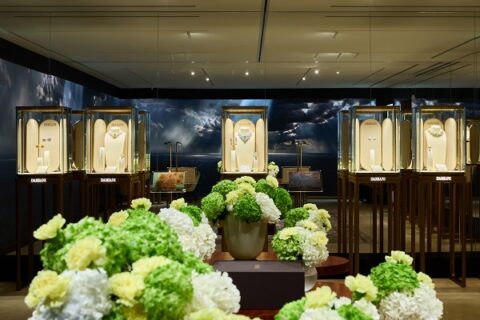
The exhibition was designed in a deliberately intimate setting, allowing guests to closely observe the creations and understand the creative process. This approach is consistent with the very nature of fine jewelry, where craftsmanship and attention to detail are paramount.
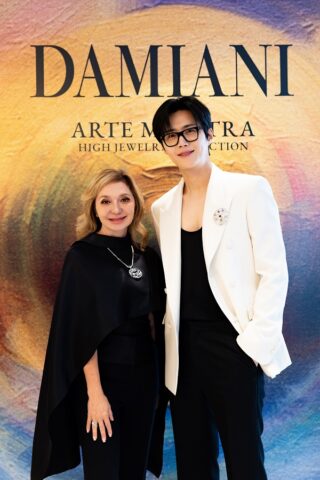 Silvia Damiani at the September 9th appointment
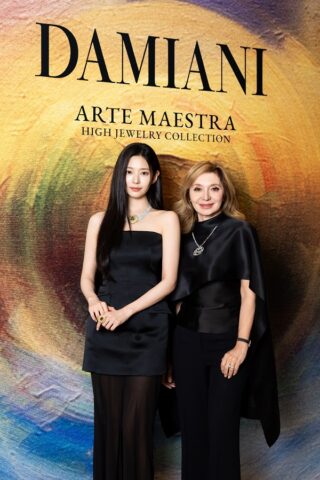
Among the guests at the September 9th event was Silvia Damiani, Vice President of the Damiani Group. She was present at the collection's first presentation in Korea, an event that brought together representatives from the worlds of jewelry, fashion, and entertainment.
Some well-known faces from South Korean cinema and television also contributed to the initiative's visibility. Actors Lee Na-young, Kim Seon-ho, and Kim Min-ju attended the photocall wearing Damiani creations.
The presence of celebrities fits into the traditional relationship between fine jewelry and the entertainment industry, where the choice of specific pieces can become part of an artist's public image. In the case of the Seoul event, each of the three performers showcased their creations with their own personal style.
A language built between technique and creativity
The Arte Maestra project highlights one of the central questions of contemporary jewelry: how to transform an artistic idea into an object intended to be worn.
The transition from canvas to jewelry involves a substantial transformation. A painting is observed head-on and comes to life through color, composition, and surface; a piece of jewelry, on the other hand, must engage with the body, with movement, and with light that continually changes depending on the environment.
Hence the collection's emphasis on texture, volume, and movement. The research extends not only to the object's visual appearance, but also to how it reacts to light and feels when worn.
The artisanal component thus becomes an integral part of the creative project. It's not just about executing a predefined design, but about finding the right solution through techniques and materials to transform a concept into a precious artifact.
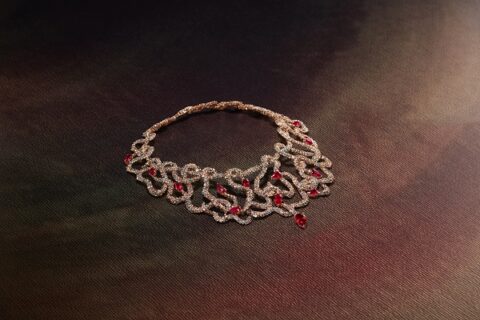 Art as a heritage to be reinterpreted
References to Van Gogh, Monet, and Jeong Seon also highlight the artist's desire to engage with diverse artistic traditions. The collection, therefore, goes beyond simply examining the history of Italian art, but builds a collection of references spanning diverse cultures and periods.
The result is a journey in which the past is used as research material. The works of the great masters become the starting point for reflections on color, movement, light, and perception, elements that can be translated into a completely different form.
It is precisely this transformation that defines the character of Arte Maestra : not the simple citation of art, but the attempt to translate some of its principles through the tools of fine jewellery.
Italian jewelry looks to Asia
The Seoul presentation also offers a broader understanding of Damiani's journey. The launch of a high-end jewelry collection in an Asian market particularly attentive to luxury brands highlights the role that Italian manufacturing continues to play in building the identity of fashion houses.
In Damiani's case, the artisanal component remains closely linked to the company's history and the goldsmith tradition of Valenza. Commercial expansion, therefore, doesn't necessarily mean abandoning its manufacturing roots, but can become a tool for bringing that heritage to different cultural contexts.
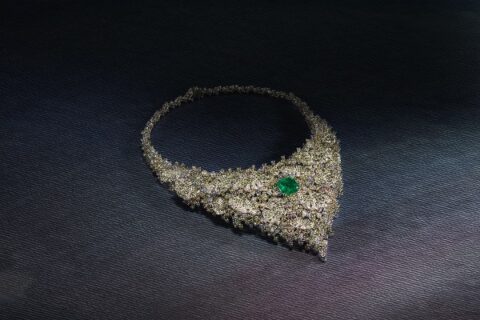 The first Korean presentation of Master Art fits into this dynamic: on the one hand, the valorization of the skills acquired over over a century of activity, on the other, the search for new interlocutors and new markets.
The collection thus also becomes a way to narrate Italian fine jewelry through a code that transcends national borders, relying on a common ground: art.
A project between memory and contemporaneity
With Arte Maestra , Damiani focuses on the relationship between artistic heritage and innovation. The collection draws on recognizable historical references, translating them into objects designed with a contemporary sensibility.
The Seoul presentation marked the project's first Korean event and allowed the maison to bring this approach to a new audience. This move connects Valenza's goldsmithing tradition with the quest for an increasingly broader presence in Asian markets.
The core of the collection lies in this balance between past and present: art provides inspiration, technique transforms it, and the jewel becomes the final result of a process in which creativity and manual skill proceed hand in hand.