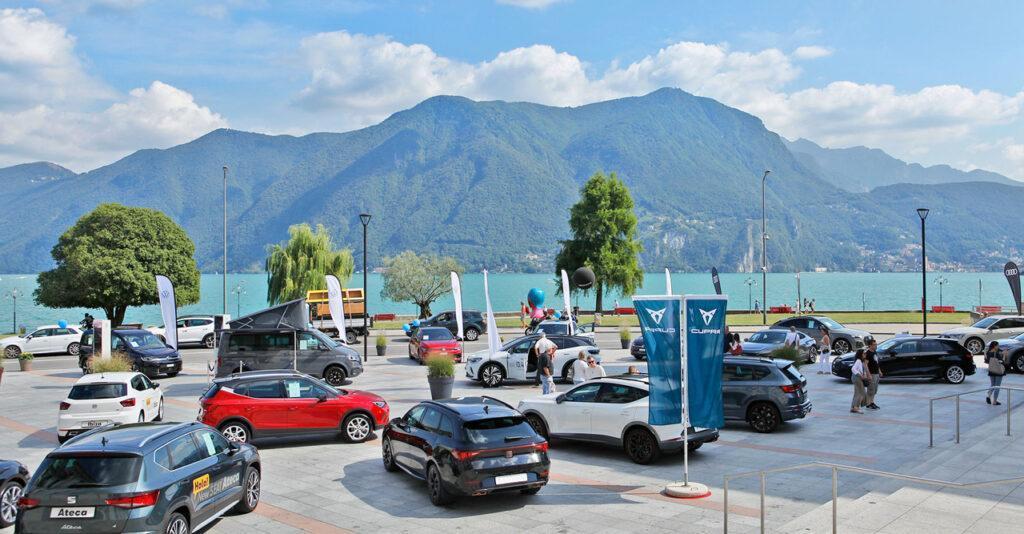

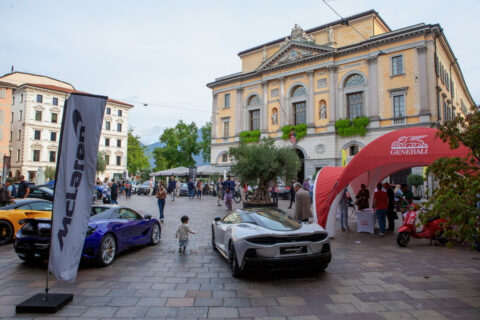
 The story of Lugano Autonassa It begins in 1979 – 45 years ago – when taking new cars out of the traditional exhibition spaces and placing them along a street in the city centre was anything but an obvious choiceForty-five editions later, the formula is still recognizable: the cars are presented directly in the urban fabric, in a setting frequented daily by residents, visitors, and businesses. The 2026 edition, scheduled for September 17-20, brings together 48 brands and 166 vehicles, offering the public a comparison of models, technologies, and different forms of mobility.
A project born in the second half of the seventies
The origins of the event date back to the mid-1970s. Angelo Vismara , then president of the UPSA Lugano Group and promoter of the first edition, recounts its birth.
The idea developed through a series of meetings with representatives of the Via Nassa Association, including then-president Gilberto Trombetta. The goal was to develop an event different from traditional car shows, generally held within trade fair facilities.
The idea was to bring cars directly to the people, allowing them to see a variety of models in one place without having to travel to a trade show or buy a ticket. At the same time, the initiative would help draw visitors to the city's shopping center.
What may seem like a natural formula today, however, in 1979 required a comparison with a trade fair system in which the Geneva Motor Show had exclusive rights to multi-brand exhibitions of new cars in Switzerland.
Vismara was part of the organizing committee of the Geneva Motor Show at the time. After negotiations, a compromise was reached: Autonassa could be held outdoors, with a maximum of six cars for each brand.
This is how the first edition took shape in 1979.
Via Nassa becomes part of the demonstration
The Lugano Group of the UPSA and the Via Nassa Association created a formula that was unusual at the time: an exhibition of new cars along a street in the city centre.
The inauguration of the first edition was entrusted to the then mayor of Lugano, Pelli. According to Vismara, the initiative exceeded the organizers' expectations and attracted attention even beyond the canton.
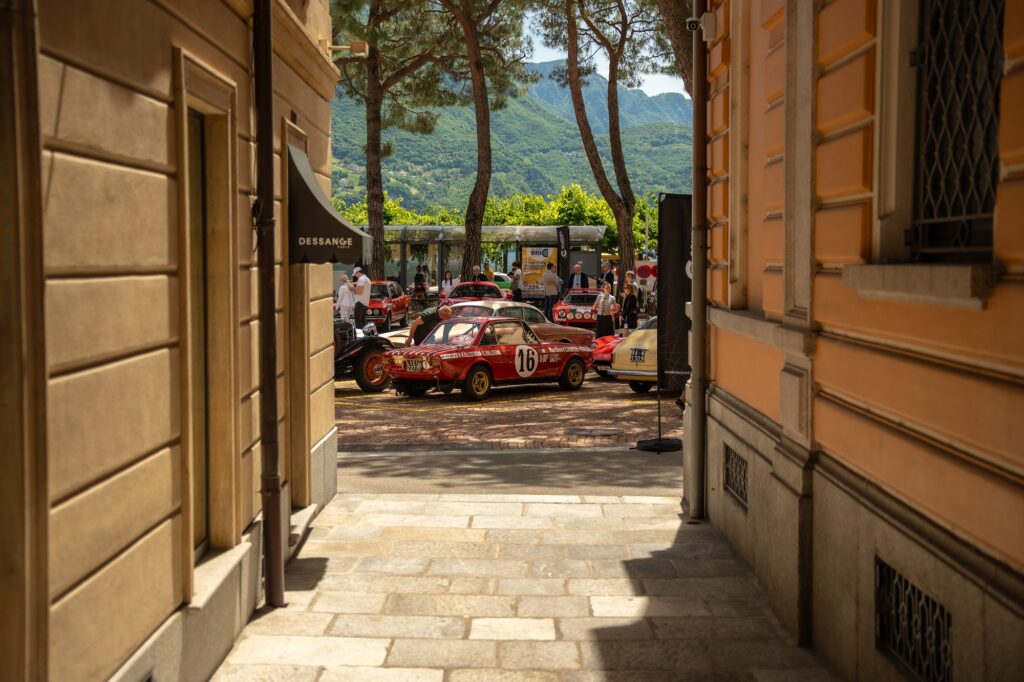
The uniqueness lay not only in the cars on display, but in their relationship with the urban space. The vehicles were removed from their purely trade fair dimension and placed within a city itinerary characterized by shops, arcades, and commercial activities.
This is an element that has remained central to the 2026 edition as well. Via Nassa is not simply the place where the cars are parked, but is a component of the Autonassa formula itself.
From the cars of 1979 to the mobility of 2026
Over the course of nearly half a century, the automotive industry has undergone profound transformations. Engines, safety systems, design, and the technologies available on board vehicles have all changed.
New manufacturers and new producing countries have also emerged within the market. More recently, electrification, digitalization, connectivity, and driver assistance systems have further changed the way automobiles are conceived.
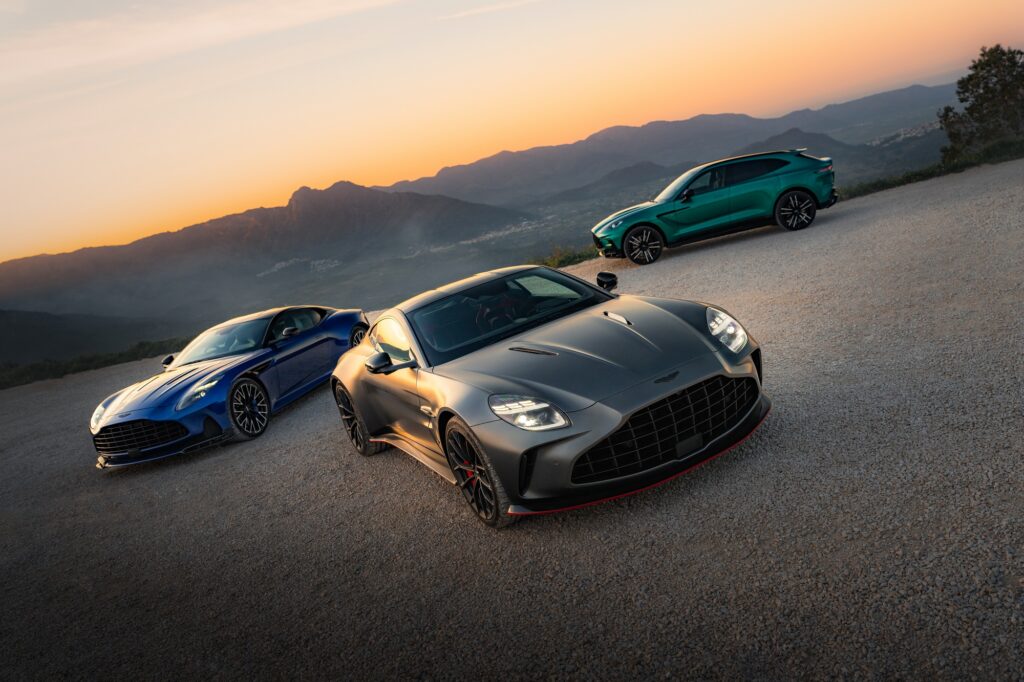
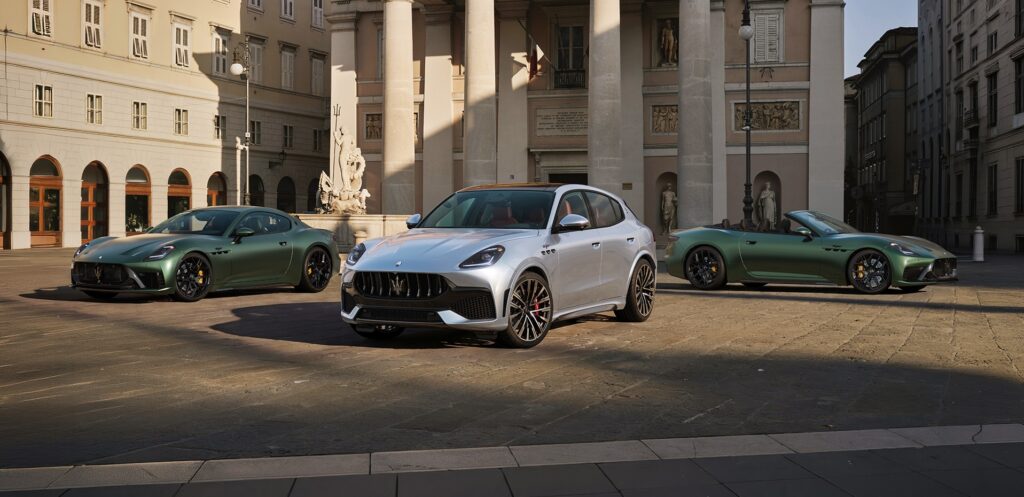
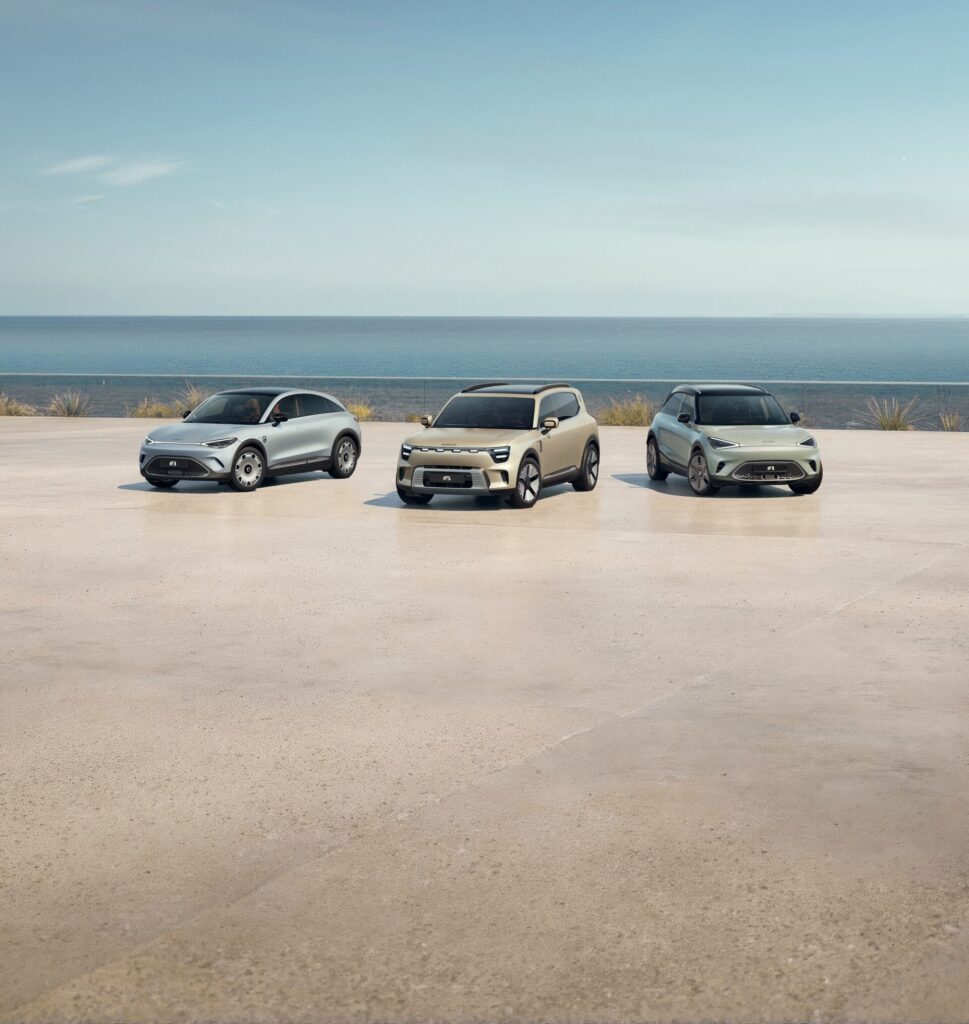
The 2026 edition showcases this diversity through 48 brands and 166 vehicles. The range includes city cars, SUVs, family cars, sports cars, and super sports cars, alongside models with traditional, hybrid, and electric engines.
Brands featured include Abarth, Alfa Romeo, Alpine, Aston Martin, Audi, BAIC, Bentley, BMW, BYD, Citroën, Cupra, Dacia, Ferrari, Fiat, Ford, Honda, Hyundai, JAC Motors, Jeep, Kia, Lamborghini, Land Rover, Leapmotor, Lexus, Maserati, Mazda, McLaren, Mercedes-Benz, MG, Microlino, Mini, Mitsubishi, Nissan, Opel, Peugeot, Porsche, Renault, Škoda, Smart, Subaru, Suzuki, Tesla, Toyota, Volkswagen, Volkswagen Commercial Vehicles, and Volvo.
The whole therefore allows us to read Autonassa also as a snapshot of the contemporary automotive market, characterised by the coexistence of different technological solutions and construction philosophies.
An exhibition model born before the great changes
After 45 editions, one of the most interesting aspects of the event concerns its original formula.
In 1979, taking cars out of the pavilions and directly into the daily life of the city was a radically different choice from the large trade fairs. Today, however, this characteristic has become one of the elements that distinguish Autonassa.
The relationship with Via Nassa connects automobiles, commercial activities, and urban space. This relationship was already present in the founders' vision and, according to Vismara's reconstruction, sought a meeting point between the city's tradition and technological innovation.
In 2026, this connection is further underscored by the collaboration with JardinSuisse Ticino. Floral arrangements and green installations complement the exhibition, adding a further element to the spatial organization.
The 1979 poster returns in the 2026 edition
The image chosen for the 45th edition also looks back to its origins. The 2026 poster is based on the one created in 1979 by Studio R. Chicherio.
The reference to the first poster establishes a visual connection between two very distant moments in time. It's not just a reminder of the first edition, but also a connection between the original project and an event that continues to engage with a sector profoundly different from that of almost fifty years ago.
Between 1979 and 2026, 45 editions followed, featuring different generations of cars and transformations that affected both technology and mobility habits.
However, the relationship between people and the automobile remains, which over time has taken on different meanings: a means of transport and a work tool, but also an object of design, technology, travel, and personal interest.
The TicinoSkills of landscape gardeners
The 2026 edition also includes a collaboration with JardinSuisse Ticino that goes beyond decorative compositions.
From September 17th to 19th, Piazza Rezzonico hosts the TicinoSkills for landscape gardeners, a cantonal professional championship reserved for young apprentices in the sector.
Eight competitors, organized into four teams, are tasked with creating four 3,5 x 3,5 meter landscape installations over three days. The challenge requires technical skill, precision, and creativity and can be watched by spectators throughout the event.
The winning couple will be announced in the early afternoon of Saturday, September 19th and will have the opportunity to represent Ticino at SwissSkills 2027, scheduled to take place in Bern from September 14th to 18th of next year.
JardinSuisse also features throughout the entire Autonassa itinerary with floral arrangements and green installations.
From the road to the simulator: the Racing Lab experience
The automotive dimension of the event is not limited to the cars on display.
For the second consecutive year, Racing Lab is participating in Autonassa with its Business-Racing Lounge, offering an experience dedicated to virtual motorsport.
The Autonassa SimRaceCup allows visitors to use professional simulators and compete against the clock and other participants on a virtual track.
The initiative thus introduces a digital component to an event that began almost fifty years ago around the physical display of automobiles. Here too, technological change becomes part of the experience offered to the public.
A program also aimed at families
The event also maintains an entertainment component.
The Disney Carousel returns to Piazza Manzoni, complete with inflatables and slides for children. The Generali Assicurazioni stand will also feature a Wheel of Fortune with personalized prizes.
In Piazza Riforma, PRINTED MEMORIES – Popular Photography offers photographic portraits printed and framed on the spot, with the aim of providing visitors with a personal image.
The collateral activities therefore complement the exhibition of 166 cars and help extend the event beyond the public directly interested in the automotive sector.
The inauguration of the 45th edition
The official inauguration ceremony took place on Thursday, September 17, at 6:00 pm, in front of Lugano Town Hall.
The ceremony was attended by the Honorable Marco Chiesa, Municipal Councillor of the City of Lugano and Head of the Consulting and Management Department, and Pasquale Ciccone, President of UPSA Ticino.
The event is organized by the Lugano Group of the UPSA – Swiss Professional Automobile Association, with the patronage of the City of Lugano and the Via Nassa Association.
Forty-five editions between memory and change
The return of the 1979 manifesto offers a starting point for reading the 45th edition beyond simply celebrating the anniversary.
The history of Autonassa shows how a formula born to bring cars to the center of Lugano has managed to coexist with profound transformations in the sector. The cars on display in 2026 belong to a market that combines traditional engines, hybrid and electric systems, digital technologies, and new driver assistance devices.
The event, however, retains its essential characteristic: using the city as a meeting place between cars and the public.
This is the thread that connects the first edition in 1979 to the 2026 event. Not so much the continuity of models or technologies, which have inevitably changed, but rather that of an exhibition concept that has chosen from the beginning to transcend the exhibition spaces and engage directly with urban life.