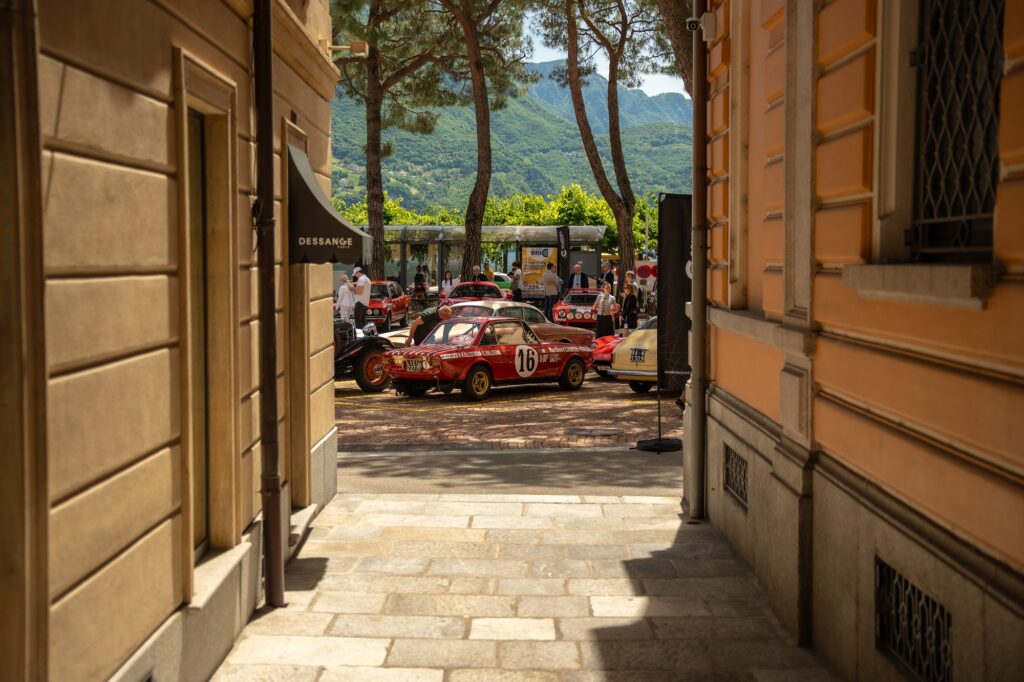
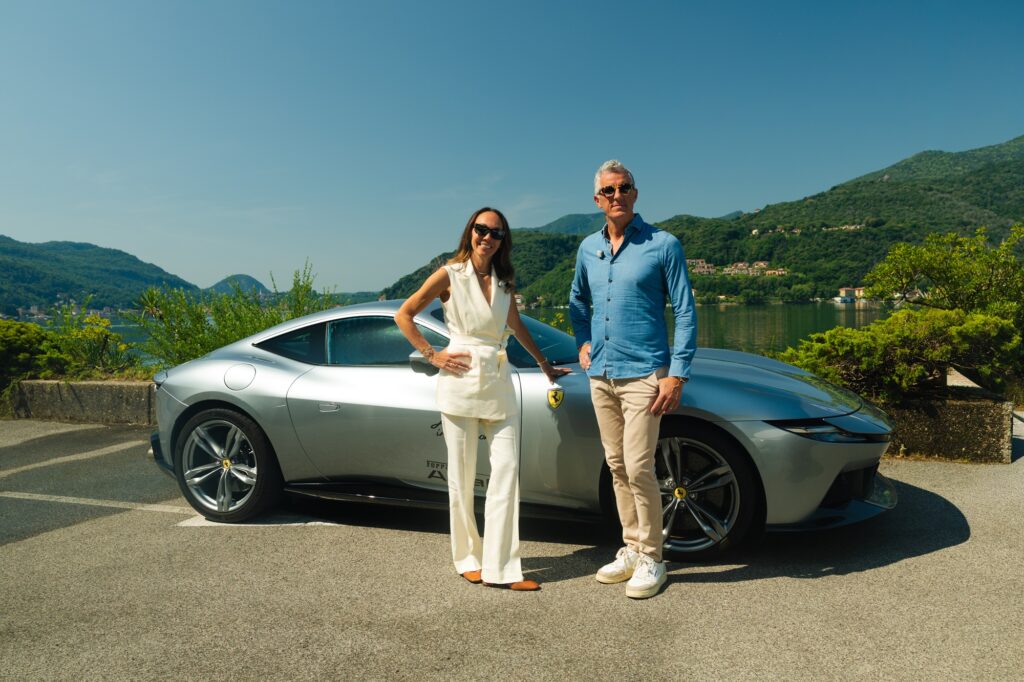
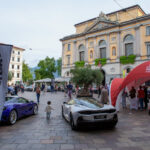
 Forty-five editions tell a story that begins with an idea born in the second half of the 1970s and extends to a car market profoundly different from the one of its time. From September 17 to 20, 2026 Lugano Autonassa returns to the city center streets with 48 brands and 166 vehicles, reviving a formula that, despite the changes in the sector, has maintained its distinctive element: taking cars out of the exhibition spaces and inserting them directly into city life.
The number is significant, especially when viewed in light of the event's history. In 1979, displaying new cars along a city street was anything but a given. Today, however, the presence of vehicles in an urban space may seem natural, but at the time, the prevailing model was large shows organized within trade fair facilities.
Autonassa was born precisely from the desire to change this approach. The project took shape thanks to discussions between Angelo Vismara, then head of the UPSA Lugano Group, and several representatives of the Via Nassa Association, including then-president Gilberto Trombetta. The goal was to bring automobiles closer to the public and, at the same time, connect the exhibition to the commercial life of the city center.
 A project that had to find a compromise
The event's launch, however, was not immediate. In the 1970s, the Geneva Motor Show had an exclusive position among multi-brand new car exhibitions in Switzerland. Therefore, the new Lugano initiative had to find a solution compatible with existing regulations.
Vismara, who was part of the Geneva Motor Show organizing committee, participated in the negotiations that led to a compromise. Autonassa could be held outdoors, with an initial limit of six cars for each brand.
The first edition arrived in 1979 and was inaugurated by the then mayor of Lugano, Pelli. The public's response helped the event quickly establish itself. Its strength lay in the combination of an automotive exhibition, commercial activities, and public space, a formula that departed from traditional trade fair models.
The initial experience had a resonance that extended beyond the Lugano area. According to the promoters, in the following days it was also discussed in Zurich, precisely because of the unique nature of a car show organized on the streets of a city.
From 1979 cars to 2026 models
The comparison between the first edition and the one planned for 2026 also allows us to observe the evolution of the automobile.
Over nearly half a century, engine options have changed, safety features have increased, and vehicle design has undergone profound transformations. Meanwhile, new manufacturers and new countries have entered the market, while the spread of electrification has added another layer to the industry's transformation.
Hybrid and electric cars have been joined by new forms of connectivity, driver assistance systems, and increasing integration between software and vehicles. The contemporary automobile is therefore not simply the result of engine evolution, but a product in which digital technology, safety, and user experience are increasingly important.
It is precisely this variety that emerges from the 2026 edition of Autonassa.
Forty-eight brands, from city cars to super sports cars
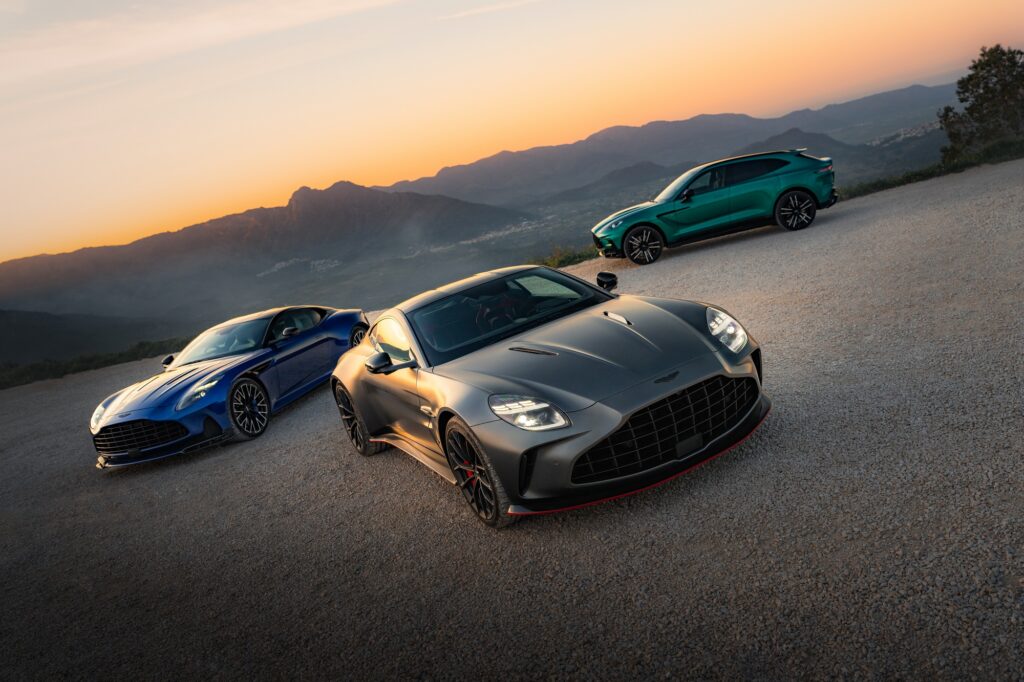
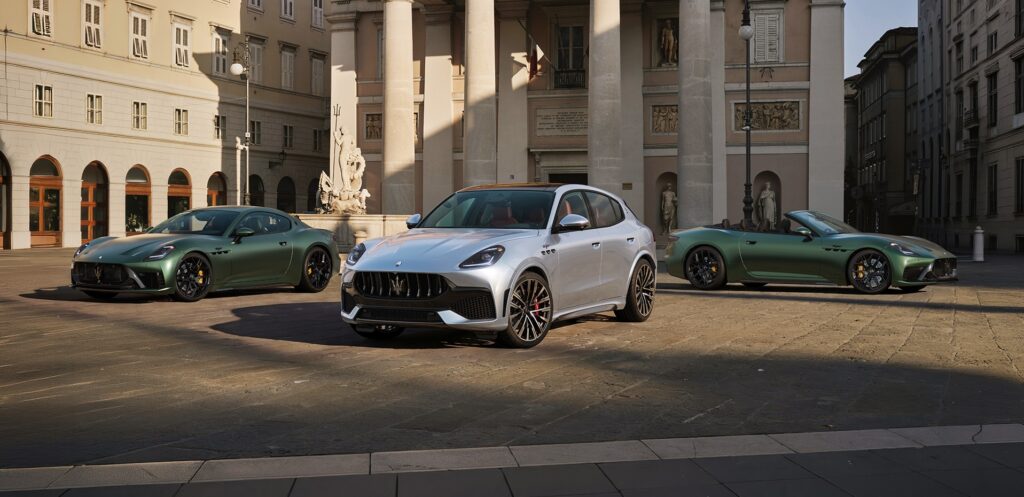
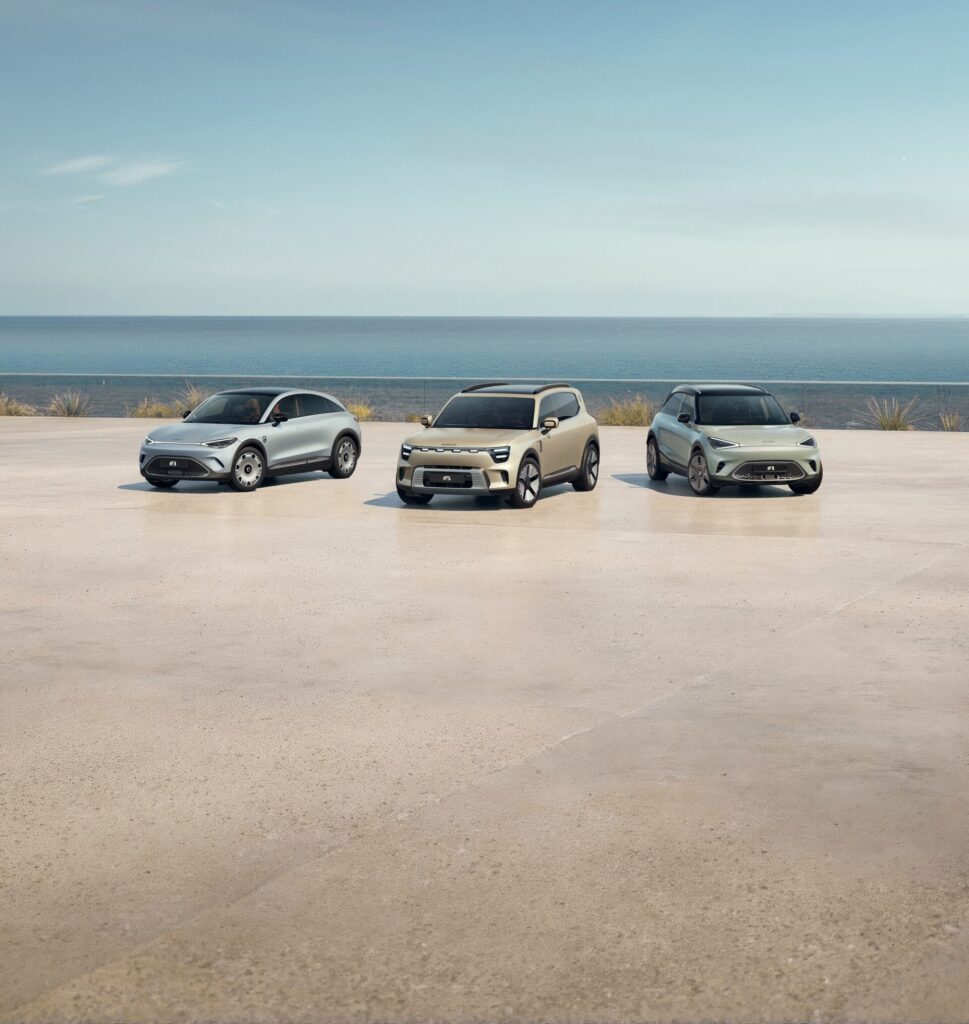
The 166 vehicles distributed throughout the center of Lugano represent a very broad selection, ranging from city cars to SUVs, from family cars to sports and super sports models, with a wide range of traditional, hybrid, and electric powertrains.
The list includes Abarth, Alfa Romeo, Alpine, Aston Martin, Audi, BAIC, Bentley, BMW, BYD, Citroën, Cupra, Dacia, Ferrari, Fiat, Ford, Honda, Hyundai, JAC Motors, Jeep, Kia, Lamborghini, Land Rover, Leapmotor, Lexus, Maserati, Mazda, McLaren, Mercedes-Benz, MG, Microlino, Mini, Mitsubishi, Nissan, Opel, Peugeot, Porsche, Renault, Škoda, Smart, Subaru, Suzuki, Tesla, Toyota, Volkswagen, Volkswagen Commercial Vehicles, and Volvo.
The presence of such diverse brands allows Autonassa to also be seen as a snapshot of the current market. Alongside manufacturers historically present in the European sector, there are also brands more recently arrived on the Swiss market, offering products that represent different approaches to mobility.
The event thus also becomes a place to observe the progressive diversification of the automotive offering.
Lugano city centre as part of the event
One of the elements that most distinguish Autonassa is its relationship with the city.
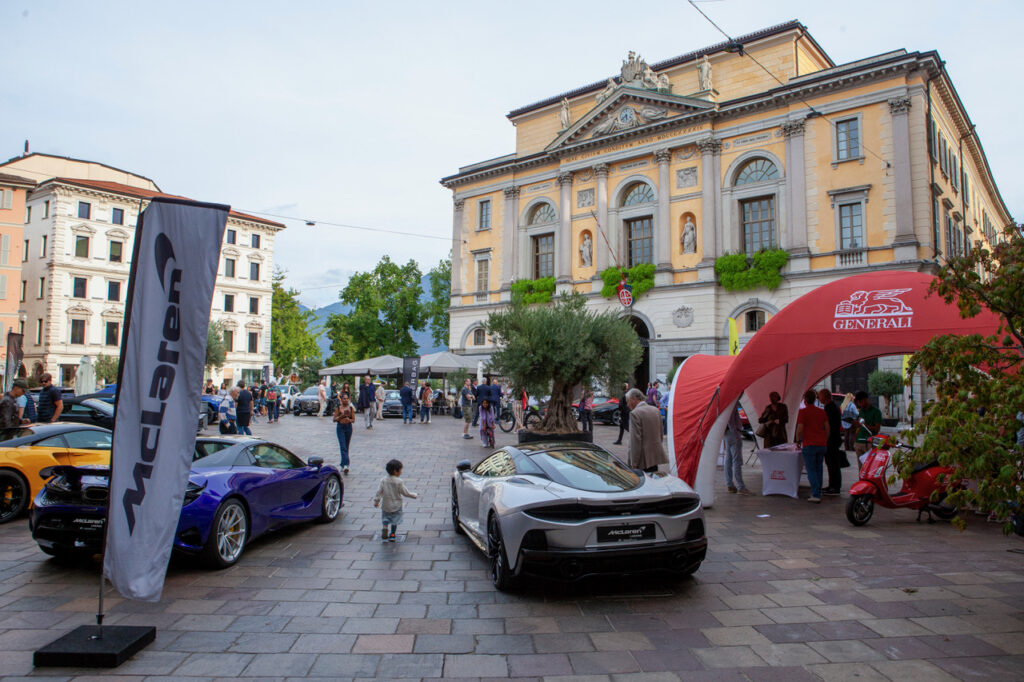
Via Nassa and the central squares aren't simply used as exhibition spaces. The presence of the vehicles overlaps with the commercial activities and normal city traffic, creating a different experience than a traditional trade fair.
This was precisely one of the aspects considered by the promoters as early as 1979: bringing cars closer to people without requiring a trip to a fairground or the payment of a ticket.
After 45 editions, the principle has remained essentially unchanged. The products on display have changed, but not the choice to integrate them directly into the urban fabric.
This year, the collaboration with JardinSuisse Ticino adds another element. Floral arrangements and green installations will be featured along the route, while Piazza Rezzonico will host an event dedicated to landscape professionals.
TicinoSkills arrives in Piazza Rezzonico
From September 17th to 19th, eight young people, organized into four teams, will participate in the TicinoSkills for landscape gardeners.
The test involves the creation of four 3,5 x 3,5 meter installations. The public will be able to follow the various stages of the process, observing a professional activity in which planning, precision, and manual skill must go hand in hand.
The winning team will be awarded in the early afternoon of Saturday, September 19th and will represent Ticino at SwissSkills 2027, scheduled for Bern from September 14th to 18th of next year.
The collaboration therefore introduces a moment linked to professional training and the skills of young people into an event dedicated to the automobile.
From the real track to simulators
Another element of the 2026 edition concerns the relationship between motoring and digital technology.
After last year's experience, Autonassa Racing Lab returns with the SimRaceCup. Visitors will be able to use professional simulators and compete against the clock and other participants in a virtual competition.
Driving simulation allows you to transfer part of the motorsport experience into a digital environment, focusing on driving skills, lap times and direct comparisons between participants.
This is another example of the transformation that has taken place in the way we experience the automobile: alongside the physical vehicle, a universe of simulators, video games, digital platforms, and technologies capable of reproducing increasingly complex driving situations has developed.
Space for families too
The program will not be limited to car enthusiasts.
The Disney Carousel will return to Piazza Manzoni, complete with inflatables and slides for children. A Wheel of Fortune will also be available in the Generali Assicurazioni space.
In Piazza Riforma, there will be RICORDI STAMPATI – Fotografia Popolare, with the possibility of having photographic portraits printed on the spot.
The overall goal is to broaden the event's audience by combining the car show with activities aimed at those who come to the city center for a family day out.
A 1979 poster to tell the present
The underlying theme of the 2026 edition is also the graphic design. The organizers have revived the poster created in 1979 by Studio R. Chicherio, using it as a reference for the communication of the 45th edition.
The reference to the origins doesn't seem to be simply a nostalgic gesture. Rather, it compares two very distant moments in the history of the automobile.
In 1979, the idea of displaying new cars along a city street was a novelty. In 2026, with 48 brands and 166 cars, the same setup allows for a comparison of vehicles powered by different technologies and belonging to very different segments.
In between, there are nearly fifty years of industrial and social evolution. Drivers' needs, purchasing habits, available technologies, and the relationship with urban mobility have all changed.
An event that follows the transformation of the sector
The value of an event like Autonassa therefore does not depend solely on the number of cars on display.
Its appeal also lies in the opportunity to observe, in the same space, the diversity of a sector undergoing a period of transformation. The transition to electric vehicles is proceeding alongside the presence of traditional engines; large SUVs coexist with compact cars and models designed for urban travel; technological research is combined with the more traditional dimensions of design and performance.
In this sense, the 45th edition also becomes an opportunity to understand some of the directions taken by the automotive industry.
The formula, born when the car was still presented primarily through its engine, bodywork, and performance, today must deal with issues such as electrification, connectivity, driver assistance, and digitalization.
The appointment with the inauguration
Autonassa 2026 is organized by the Lugano Group of the UPSA, the Swiss Professional Automobile Association, with the patronage of the City of Lugano and the Via Nassa Association.
The official inauguration of the 45th edition is scheduled for Thursday, September 17, at 6:00 PM at Lugano Town Hall. The ceremony will be attended by the Honorable Marco Chiesa, Municipal Councillor of the City of Lugano and Head of the Consulting and Management Department, and UPSA President Pasquale Ciccone.
From that moment on, four days will begin during which the city center will once again host cars of different categories and brands, along with collateral initiatives dedicated to families, professionals, and virtual driving.
Forty-five editions after its debut in 1979, the central question is not just how much the automobile has changed. It's also how an event born to bring cars out of the pavilions has managed to maintain its identity while the market, technology, and the very way we understand mobility have changed.