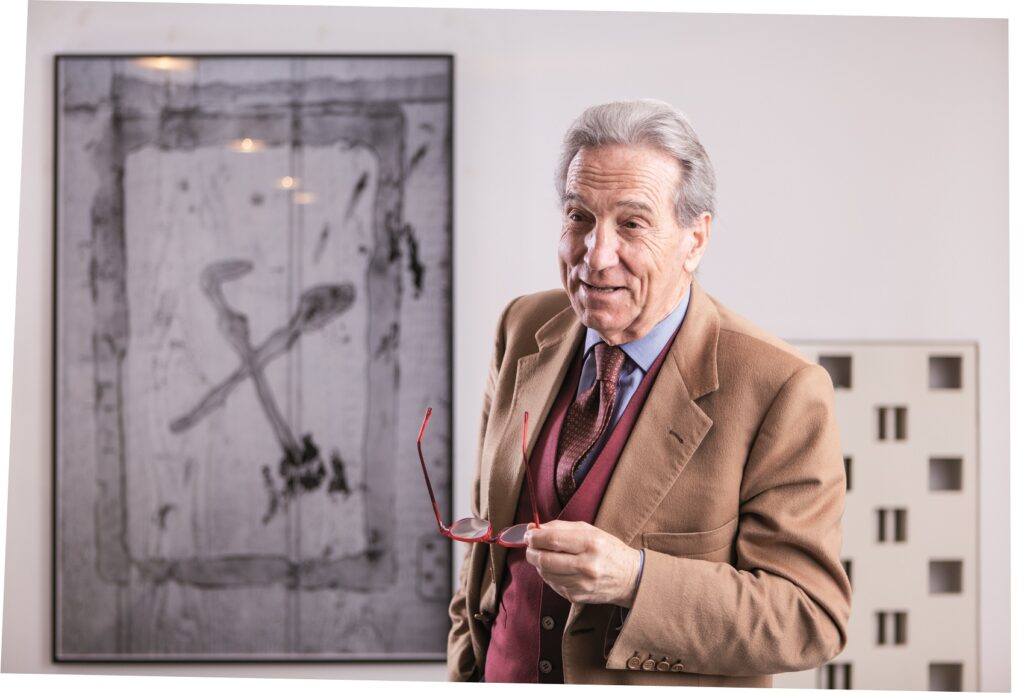

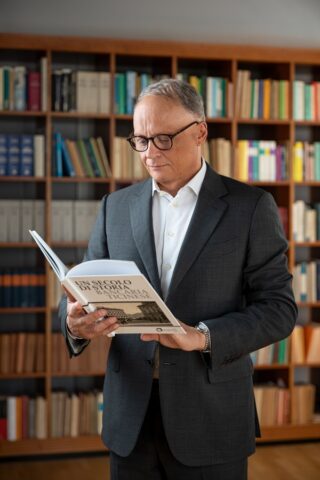
 Franco Citterio, born in 1962 in Lugano, has been the point of reference for the Ticino financial centre for over twenty years as director of theTicino Banking Association – a position he's held since 2003, following a career path that took him from economic journalism to the world of banking – and for twelve years also served as mayor of Porza, in addition to chairing Ticino for Finance. A long season of public engagement, filled with meetings, dossiers, and resolutions. But outside the office, who is he, really?
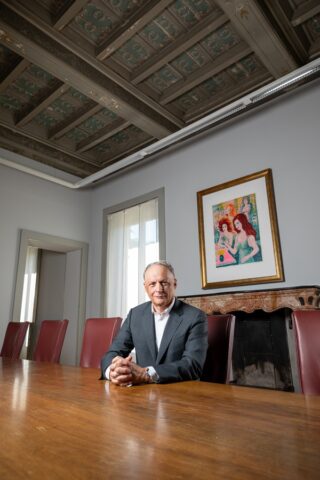
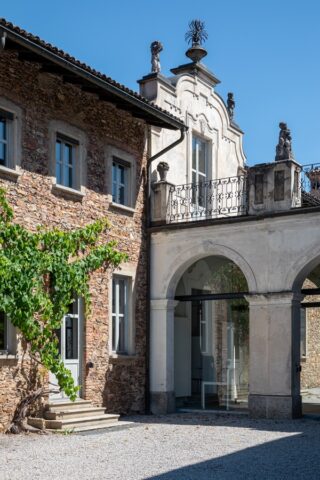
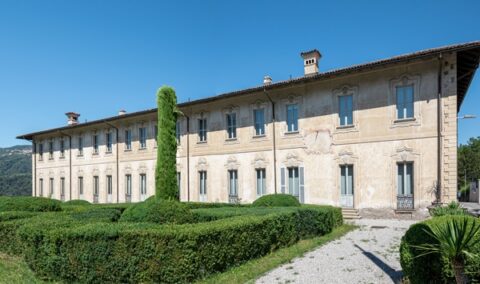
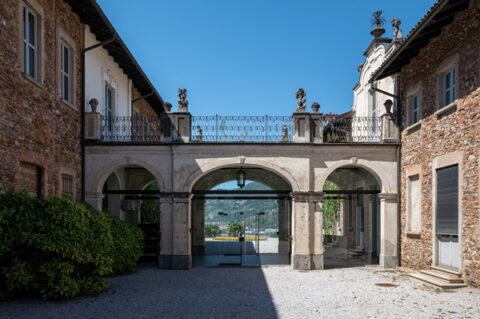
I arrived at Villa Negroni mid-morning . Always seen and admired only from the outside, I must admit it was my first visit inside the building , home to the Villa Negroni Study Center Foundation, of which Citterio is a board member. I entered in complete silence, wandering through rooms, imposing statues, corridors, and stairways. Fascinated, I ascended to the offices where, hearing me speak with his assistant, Director Franco Citterio popped his head in. After a few minutes of introductions and updates, we sat down for what turned out to be a truly flowing and interesting half-hour of conversation. In broad terms, here it is.
For over twenty years, you have embodied the transformation of Ticino's financial center. But who is Franco Citterio when he takes off his jacket, figuratively speaking, and goes back to being an ordinary citizen?
"I'd say a completely normal person. I was born and raised here, I went to school in Ticino, I'm married, and I have two daughters." His daughters are twenty-six and twenty-nine, "already quite grown up," he specifies. A life built on solid roots, without any particular upheavals. A true Ticinese, in short, but with one small detail: the university years he spent in St. Gallen studying economics left him with something more than a degree. "It gave me a mental structure," he says. "A certain systematicity in my thinking that you then carry with you into everyday life."
 Indeed, St. Gallen is synonymous with Swiss rigor, while Ticino is more synonymous with cheerfulness. Does one or the other prevail in your character?
"I think I'm more Latin. But it's true that my German education has brought me to a certain rigor." A rigor that isn't obtuseness, he's keen to clarify; it's not about being regulated, but about having a goal and pursuing it without getting lost in the maze of current events. "In the financial world, if you don't have a path to follow, you risk getting carried away by short-termism. You need a certain stability." He has fond but also very concrete memories of the city of St. Gallen: "All in all, it was quite provincial. It didn't have the international vibrancy of Zurich." However, he tells me, it was there that he met his wife. "We were both students from Ticino, she from Losone, I from Lugano. We met in St. Gallen, even though we were practically neighbors south of the Alps." Fate always has its plans.
I gather that, in addition to your many commitments, you're a sports enthusiast. How do you get around during the year?
"Two or three times a week I like to play sports. I consider it an important outlet, not just physically, but also mentally." His schedule is precise: mountain biking in the summer, basketball with former teammates in the fall (a little match and dinner, beautiful), skiing in the winter, and tennis in the spring. "I haven't invented anything special," he says. "They're normal sports. But for me, exercise is fundamental."
Basketball has endured over time. Did you play for a long time?
"It was my first sport. I played for the Lugano Federation from the youth team all the way up to the first team." Today he still meets up once a week with his former teammates. It's not just exercise, it's a ritual, a way to stay in touch with people who have known him for decades. "With old friends, you might not hear from them for months, but you know they're there," he says. "But we're entering a period where you lose some of these friends. They disappear. And then you realize how much you miss their presence." Family, sports, friends, roots. And then another hobby: travel.
 Is there a destination you haven't visited yet that you'd like to reach?
"Eastern countries are very attractive to me. Japan, India, but also the Silk Road, the former Soviet republics. These are cultures that remain relatively unknown to us." He knows the rest of the world quite well, although Africa remains a question mark: "I've been to the north and the south, but everything in between remains unexplored. We always go to the extremes." For now, these destinations remain on the list. "Maybe a little further down the line," he says.
What do you like to do when you really get away from it all?
"Literature, definitely. I read often." Italian novels, but also historical essays. "I like those books that tell the story of a character, a biography, and help you contextualize it in a broader context. You connect knowledge, you go back and forth in time." And then music, which always accompanies him. Classical music, but also modern music. For years he's been a huge fan of Jamiroquai. "A funky jazz genre that really captivates me," he says.
And do you and your daughters have similar musical tastes?
"I still haven't quite figured out what young people listen to. A bit of everything, I imagine, from old Italian singer-songwriters to more recent stuff." An honest answer, from someone who doesn't pretend to understand everything about the next generation. Peaceful coexistence, in short, between a Beethoven Fifth and a Jamiroquai "Cosmic Girl."
How do you imagine a perfect Sunday in Ticino?
"Very simple. Mountains, a walk, lunch with friends or family." Nothing artificial. The Sopraceneri region holds wonderful surprises. "The valleys, places you've always known and that always give you a thrill. It doesn't take much to fill your eyes with wonder in Ticino. You just have to get out there."
 When you invite friends over, does he cook or does he prefer to take them to a restaurant?
"A restaurant is more practical. And it allows you to truly stay in touch with your guests. When you host at home, you risk spending more time in the kitchen than with the people you've invited." And then he readily admits: "I'm not a great cook. Something grilled, some simple dishes, but up to a certain point. My wife is good and gets things done, but above a certain number, it's more convenient to go out. It costs a little, but you appreciate it more." Once again, Franco Citterio shines with honesty.
After twenty years between the City Council and the Town Hall, you've chosen not to run again. How does it feel to have a slightly less busy schedule?
"My schedule has benefited, so to speak." Being mayor means being available almost continuously, not just for formal meetings, but for small site visits, last-minute appointments, and evening phone calls. "Working close to home allowed me to manage it, but my schedule suffered, not just during the week, but also in the evenings and on weekends." Twenty years in politics, from forty-two to sixty-two. "It's been a very satisfying journey, but it's also taken away from my family," he says, without recriminations. "And it's right to leave room for the new generations."
 Lugano has changed dramatically in recent decades, evolving from a purely financial hub to a cultural and technological hub. As a resident, how have you experienced this transformation of your hometown?
I think the long period of restructuring of the financial center can be considered over. The banking sector has adapted to new international standards regarding fiscal transparency, introducing the automatic exchange of information with foreign countries. Meanwhile, Lugano has suffered the consequences of this transformation (employment, tax revenue, related jobs, etc.) but has also been able to respond by seizing new business opportunities (primarily commodity trading) and creating new attractions as a cultural hub. As a citizen, I have observed the repercussions of the financial crisis with regret, but I have also admired the ability of the operators and the community to react to these changes.
What advice would you give to a young Ticinese entering the world of work?
"First of all: choose based on your preferences, not on the opportunities that appear at the moment." It's not easy, she admits. At fourteen or fifteen, they're already asking you to choose a path. "But once you've identified your preferences, go in that direction." And then: don't necessarily stay in Ticino. "We have 350.000 inhabitants with a diverse economic structure. Opportunities are there, but not like in other contexts. You shouldn't be afraid to leave the cantonal or national borders, even just for a period of work. Experiences abroad are formative, and Ticino will always be there; you can always return home."
At fourteen, did she already know what she wanted to do?
"I just knew I wanted to continue studying. Nothing else." High school, then the choice between economics and architecture. "Architecture interested me, but it was a difficult time for the Ticino construction industry. My parents convinced me that economics offered more opportunities." And so it went. No regrets.
Is there a lesson you've learned over the years that Franco, as a newly graduated student, wouldn't have understood yet?
"The value of that mental structure that university gave me, but I say this also because I found it quite boring back then." Things that seem useless when you study them, and then turn out to be essential. "Not just for work. For everyday life, knowing how to prioritize, weighing things before making decisions." A rationality that isn't coldness, she specifies. It's simply a way of not getting confused and overwhelmed.
Last question: what's the greatest luxury that money can't buy?
"Family. Friendships." He answers without hesitation. "The risk with money is that you attract people who are close to you because of what you have, not because of who you are. When you let go of that, you can better understand who truly loves you." True friendships, he says, are those filtered by time, not by mutual benefit. "It's something more. Respect. And that can't be bought."
When he gets up, his agenda is already waiting for him. But for half an hour—"I said fifteen minutes, and we're already at thirty-two minutes," he notes—the Director has done something he rarely does: talk about himself. "I'm not used to it," he says. "In our industry, going beyond the professional is a bit strange." Perhaps. But every now and then, it's good, and I really appreciated this chat. I hope the same goes for you.