 In recent months, Ticino has been chosen for numerous audiovisual productions. What significance does this have for your promotional strategy?
Audiovisual media is becoming a highly attractive promotional channel because it allows a region to become part of a narrative and reach audiences that often go far beyond those of traditional tourism communications. A film, a music video, or a digital production doesn't simply showcase a destination: it transforms it into the backdrop for a story, connecting it with emotions, characters, and imagery. When artists or productions followed by millions of people are involved, the amplification potential becomes extraordinary. For Ticino, this means increasing its international profile and presenting itself through contemporary languages, capable of speaking to different generations and markets.
What makes Ticino particularly suitable for hosting film, music, and television productions?
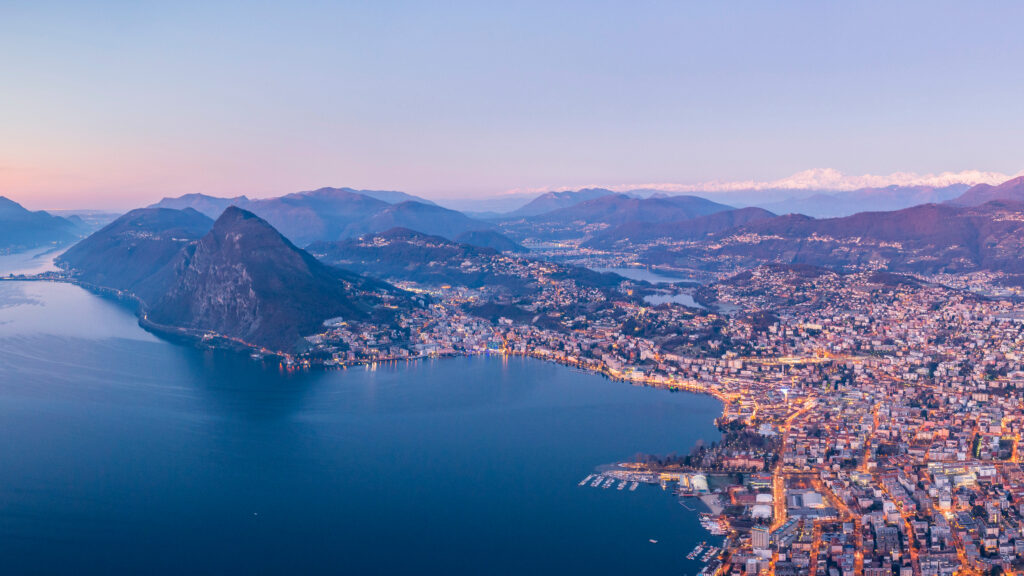
First and foremost, the extraordinary variety of landscapes concentrated in a relatively small space. In a short space of time, you can go from lakes to Alpine landscapes, from historic villages to cities, medieval fortresses, contemporary architecture, and environments with an almost Mediterranean character. For a production, this means being able to access a wide variety of locations, limiting time and travel. Added to this are the quality of the infrastructure, professionalism, and coordination capabilities. Collaboration with the Ticino Film Commission is crucial precisely because it allows us to provide concrete support for productions, from location scouting to permits and logistics. The pitch on August 10th, dedicated to presenting Ticino to industry professionals, goes exactly in this direction.
 A particularly significant example was Travis Scott's "When I'm Home" music video, largely shot at the Bellinzona Fortress. What did a production of this scale represent?
It was a powerful example of what Ticino can offer. The Bellinzona Fortress, a UNESCO World Heritage Site, possesses extraordinary visual power and was used in the video alongside other locations, including Gordola. But equally important was the region's ability to respond to the demands of a major international production in an extremely short timeframe. The project involved top-notch professionals and a song performed by Travis Scott and James Blake with Ludwig Göransson, linked to Christopher Nolan's film The Odyssey . These productions enjoy global visibility and allow iconic Ticino locations to be showcased to a huge audience. They also demonstrate that, when institutions, tourism boards, and the Ticino Film Commission collaborate, the Canton can compete effectively in the international audiovisual industry.
Music seems to have become one of the preferred vehicles for this new form of communication. I'm also thinking of Beatrice Egli and Schwiizergoofe...
They are two different examples, but they share the ability to create an emotional connection with the region. With Beatrice Egli, the collaboration reached its third edition in 2026 and this year it took a further step with the video clip for " Zyt zum heicho ," filmed in the Ascona-Locarno region. The song's theme itself—that of returning home and the connection to one's roots—relates very well to the Ticino landscape. With Schwiizergoofe, we developed LAGO MIO , a project aimed primarily at families that combines music, video, social media, movement, and storytelling. In both cases, it's not just about "showcasing" Ticino, but about making it an integral part of the story.
 Film can also contribute to building a less conventional image of the region. This is the case with "Becaària," recently released in German-speaking Switzerland.
Becaària represents perhaps one of the most profound examples of the relationship between cinema and territory, because Ticino is not just a backdrop, but part of the story itself. Erik Bernasconi 's film, based on Giorgio Genetelli's novel, recounts the growth of a boy in Ticino in the 1970s and was shot primarily in the Ascona-Locarno region and in Fusio, in the upper Maggia Valley. The landscape thus becomes part of the narrative and contributes significantly to its atmosphere. The film, awarded the Prix du Public at the 2026 Solothurn Film Festival, through screenings and related initiatives can also raise awareness of an authentic Ticino in German-speaking Switzerland, linked to its villages, its memory, and its identity.
But audiovisual media isn't just about movies and music videos. The "Culinary Grand Tour of Switzerland," for example, uses YouTube to tell the story of the region through gastronomy...
Exactly. It's important to think about audiovisuals in a very broad sense. In the fourth season of the Culinary Grand Tour of Switzerland , food creators Noah Bachofen and Nico Franzoni travel through Ticino, describing its producers, wines, cheeses, landscapes, and gastronomy. From Alpe Crestumo to Vico Morcote, from the cellars of Ascona to Castello del Sole, the culinary experience becomes a way to describe the region and the people who live there. It's a particularly effective language because today, a significant portion of travel inspiration comes from videos and digital platforms. The same goes for the collaborations established over time with Swiss and foreign television networks, documentaries, programs, and productions like RAI's Linea Verde .
 We can therefore speak of a genuine policy of attracting audiovisual productions. What could be the next step?
The goal is to continue building relationships with the production world and further publicize what Ticino has to offer. We can't just wait for someone to accidentally discover a location: we need to actively showcase the region, collaborate with the Ticino Film Commission, facilitate the work of visitors, and create an efficient network between tourism boards, municipalities, institutions, and local operators. Even productions born independently of our activities, like OneRepublic's appearance at Moon&Stars, confirm the region's spontaneous creative attraction. Every time a director, artist, or major production chooses Ticino, those images can begin a journey that reaches millions of people. And this is probably the most compelling strength of the audiovisual medium: promoting a destination without describing it, simply bringing it to life through a story.
For the cover image:
© Ti-Press