
 2025 marks a qualitative leap: more participants, greater economic impact, and a pipeline of applications already projected to 2027–2030. However, infrastructure constraints remain, which, according to the stakeholders involved, require a choice in vision.
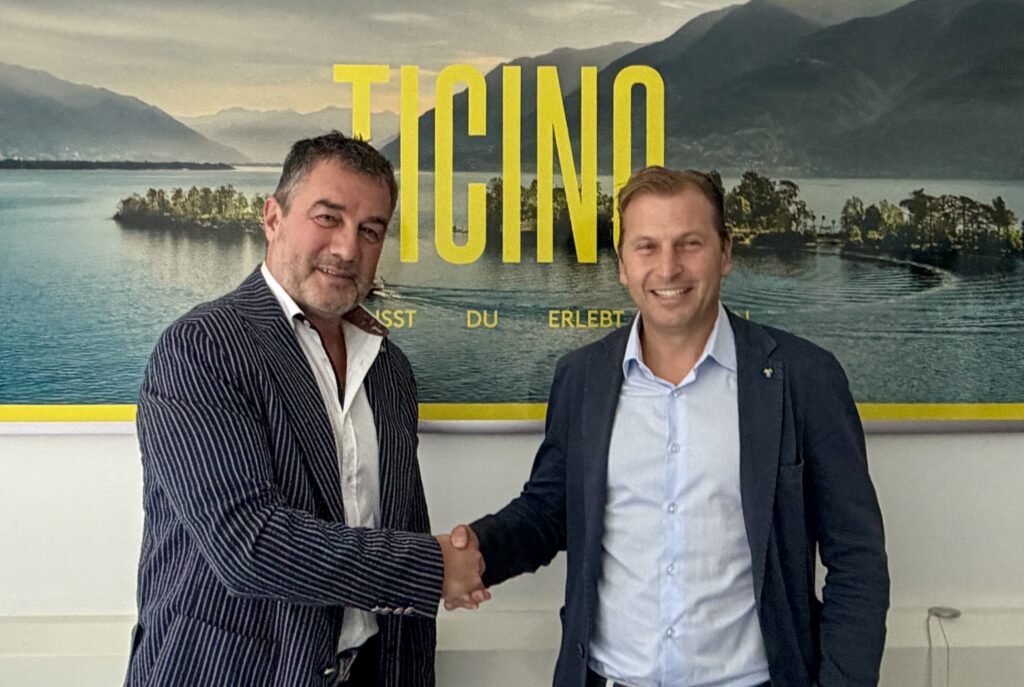
Attorney Rupen Nacaroglu ( ETL President ): "Conference tourism is not a niche segment: it is an economic multiplier and a positioning accelerator. With this first press conference, we want to raise awareness among the political world and the public about the strategic value of the conference sector for Lugano and the entire Lugano area. This is the beginning of a series of shared communication activities between ETL, the City, and the Ticino Convention Bureau."
What is your concrete vision for the destination?
Attorney Rupen Nacaroglu: "With a modern, flexible, and market-oriented conference center, Lugano could transform a significant portion of the demand it currently struggles to meet. The new facility would significantly expand the destination's supply chain. This supply chain extends beyond the conference industry itself, but also extends to hotels, restaurants, retail, transportation, and services, strengthening Lugano's seasonal adjustment and competitive positioning."
What are the numbers for 2025 at the Palazzo dei Congressi?
 Monica Besomi (Business Development Manager, Lugano Convention & Exhibition – City of Lugano): «In 2025, the Palazzo dei Congressi hosted a total of 24 conferences, including regional and cantonal ones. Looking at the data analyzed in detail, we focused on 16 conferences – 5 national and 11 international – which attracted approximately 14.500 participants. We are talking mainly about events in the medical, economic, and financial sectors. Using the Swiss Event Impact Calculator, the estimated direct economic impact for the destination in 2025 is 18 million Swiss francs, while the overall economic impact reaches 33,4 million Swiss francs. This is a very significant result since the value falls not only on the infrastructure, but above all on hotels, restaurants, services, and local commerce, helping to deseasonalize flows and consolidate Lugano's competitiveness».
What role does the Ticino Convention Bureau play in this ecosystem?
Samuel Righetti ( Ticino Convention Bureau Coordinator ): "The Ticino Convention Bureau promotes all MICE segments, with a particular focus on corporate events, incentive travel, and meetings, where the local offering is already well-established and competitive. We work closely with Lugano Convention & Exhibition on international conference tourism."
What are the main limitations today?
 Samuel RighettiThe current Palazzo dei Congressi's infrastructure capabilities impact its ability to host large-scale, simultaneous events. To accommodate future growth, more flexible spaces are needed, along with increased room availability for business guests, ideally close to the conference center.
How is the congressional pipeline built today?
Monica Besomi : "We're continuously working on acquisitions, combining a qualified presence at trade fairs and industry events—like IMEX or EuropeCongress—with institutional visibility and partnerships. Operationally, this means finding leads and ambassadors, analyzing opportunities (including using tools like ICCA Business Intelligence), feasibility studies, mediating between partners, formally submitting applications through BIDs, and organizing site visits and sales visits."
The Ambassador Program is often cited as a crucial tool. How does it work?
Samuel Righetti: "The Ambassador Program is a set of services and activities designed to support influential figures in their professional fields—academic, medical, and economic—who wish to actively promote Lugano as a conference venue. Today, it involves over one hundred cantonal representatives. The benefit is twofold: the destination gains credibility and access to international networks; ambassadors gain expertise, contacts, visibility, and prestige."
Can we give a concrete example?
Monica Besomi : "The ISPCAN 2027 candidacy is a case in point: the ambassador is Dr. med. Myriam Caranzano – Maître, with a scientific committee supported by five professors and researchers from USI and SUPSI. It took nine months of work, a 33-page application dossier plus a budget. The event is expected to be attended by 900 people, over five days, in November 2027, with an estimated economic impact of CHF 1,8 million."
 What are the most pressing critical issues facing the Palazzo dei Congressi today?
Roberto Badaracco (Deputy Mayor of Lugano): "The critical issues are well-known and recurring: the dual purpose of the facility, which must be both a civic and conference center; the limited modularity of the spaces; logistical constraints that make it difficult to manage multiple events simultaneously; and planning that requires 2–3 years' advance notice, with additional difficulties related to international calendars and ethical regulations in some sectors. Added to this is the issue of accommodations: to compete at larger-scale events, large hotels are needed nearby."
Why is the Campo Marzio Nord project considered a strategic solution?
Roberto Badaracco (Deputy Mayor of Lugano): "It represents a structural investment in the positioning of Lugano and the entire destination. The Campo Marzio Nord Tourism and Conference Center aims to create a modern, flexible infrastructure integrated with the hotel and urban amenities. It means strengthening national and international competitiveness and, above all, investing in the economic, tourism, and employment development of the region, creating lasting value. The project includes a modern and modular conference center, a hotel, residential buildings, services, and public green spaces, as well as parking. The idea is to build an ecosystem, not an isolated building: a place capable of connecting business tourism, the city, and urban livability."