
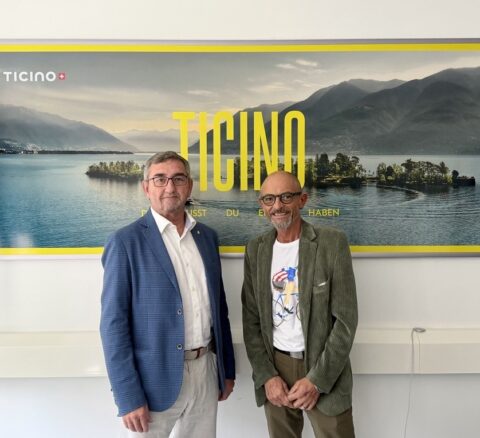
 Il tourism in Ticino opens a new phase with the change in the presidency of theTicino Tourist Agency SA (ATT). Effective September 24, 2026, Massimo Perucchi will be the new Chairman of the Board of Directors, succeeding Simone Patelli, who is stepping down after more than six years at the helm and having reached the maximum legally mandated term of twelve years. This appointment is part of a broader Board of Directors renewal, which also includes the arrival of Gabriele Beltrami and Mattia Galli and the appointment of Moreno Colombo as Vice Chairman.
The transition from Patelli to Perucchi
The succession comes at the end of a period in which the Ticino Tourist Agency has addressed some of the major changes currently affecting the sector. Simone Patelli joined the Board of Directors in 2015, the year ATT was founded, and assumed the presidency in 2021.
During his tenure, several projects designed to impact the organization and promotion of the destination were advanced and consolidated. These include the 2030 Tourism Strategy, the evolution of the Ticino Ticket, the digitalization of services, sustainability initiatives, and the strengthening of the business tourism offering.
The handover therefore does not coincide with a radical change in the organization's approach, at least not in the intentions expressed by the new president. Perucchi's appointment is presented as a choice geared towards continuity, with the aim of continuing the work developed in recent years while simultaneously addressing the transformations facing the sector.
Patelli, commenting on the conclusion of his tenure, described his years at the helm of ATT as an intense period marked by numerous challenges. In his assessment, he particularly emphasized the evolution of Ticino tourism, the collaboration between operators, and the launch of projects deemed crucial to the destination's future.
The Board of Directors thanked him for his work and his contribution to the growth and positioning of the Canton as a tourist destination.
Who is Massimo Perucchi?
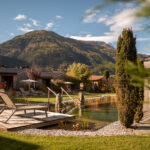
Born in 1967, Massimo Perucchi comes directly from the hotel industry. He is the hotelier and director of the Hotel La Meridiana Lake & Spa in Ascona and already has an insider's understanding of the workings of the Ticino Tourist Agency.
Perucchi has been a member of ATT's Board of Directors since 2019, when he joined as a representative of HotellerieSuisse Ticino. His professional career also includes several institutional roles in the tourism sector, a fact that contributes to his expertise in the field, with first-hand knowledge of operators' needs and the dynamics that characterize the sector.
In his first speech as president, Perucchi emphasized the continuation of the work already underway as a priority, acknowledging Patelli's role in developing and implementing the strategy in recent years.
Among the elements highlighted by the new president is the relationship with industry stakeholders. Dialogue between institutions, tourism organizations, accommodation facilities, and business sectors is highlighted as one of the tools to strengthen Ticino's position as an attractive year-round destination.
This theme is directly linked to the issue of deseasonalization, which has long been central to the canton's tourism strategies. The Ticino365 project, developed specifically with the goal of distributing visitor flows throughout the year and strengthening the attractiveness of the low-season months, aims to make the sector less dependent on the concentration of visitors during peak periods.
Ticino Tourism and the Objective of Deseasonalization
The desire to strengthen year-round offerings is a strategic focus for the canton's tourism. The official Ticino Tourism website presents the canton as a year-round destination, with offerings ranging from hiking to culture, from gastronomy to events, and from outdoor activities to lake and mountain experiences.
The issue isn't just about visitor numbers. A more even distribution of visitors could also impact the continued operation of accommodation facilities, employment, and the potential for generating economic benefits across the Canton's various regions.
This is a perspective that necessarily involves multiple categories. Hotels, restaurants, campsites, transportation, event organizers, cultural operators, and sports and leisure activities all contribute to the overall offering.
The very structure of the new Board of Directors reflects this diversity of interests. In addition to the hotel sector represented by Perucchi, the renewal also brings representatives from the restaurant and camping sectors to the management body.
Two new members join the Board of Directors
The renewal of the Board of Directors therefore does not exclusively concern the presidency.
Representing GastroTicino will be Gabriele Beltrami, director of the same association, replacing Massimo Suter. This change is also contingent upon reaching the maximum twelve-year term required for membership on the ATT Board of Directors.
The other new addition is Mattia Galli, head of the Southern Region of the national TCS Camping and active in the Ticino Campsites Association since 2019. Galli represents the Ticino Campsites Association, replacing Simone Patelli, who also held this role within the body.
Completing the new configuration is Moreno Colombo, designated vice president.
The Council's composition therefore brings together expertise from different segments of the tourism industry. This is an important characteristic at a time when a destination's competitiveness depends not only on its ability to promote its territory, but also on the quality and variety of services available.
Strategy, sustainability and digitalization
The new presidency inherits an agenda already defined on certain issues. The 2030 Tourism Strategy represents one of the Agency's key references, while the Ticino Ticket is one of the tools through which the Canton seeks to facilitate mobility and the enjoyment of tourism.
The Ticino Ticket system is now connected to a network of over 500 partner facilities and allows eligible guests to use public transport free of charge during their stay, as well as access various discounts.
Digitalization also remains a key aspect. The tourism sector is faced with profoundly changed ways of searching, booking, and accessing information compared to the past. For a destination like Ticino, this means focusing not only on promotion, but also on the ability to make information, services, and experiences accessible through digital tools.
On the sustainability front, however, the issue concerns both travel methods and the balance between tourist flows, the local area, and resident communities. The Ticino365 strategy identifies a more balanced distribution of visitors and a quality experience as some of the objectives to be pursued.
A sector also observed through data
The transition to the new presidency takes place against a backdrop of increasing scrutiny of cantonal tourism, including from a statistical perspective.
The Tourism Observatory of the University of Italian Switzerland monitors the evolution of cantonal tourism supply and demand through quantitative and qualitative data, with the aim of providing useful information for strategic decisions by tourism boards, administrations, and operators. Throughout 2026, the Observatory continued to periodically update data on arrivals and overnight stays in the hotel sector.
Perucchi's position is therefore that of a sector called upon to simultaneously address growth, seasonality, sustainability, and evolving visitor habits.
In this scenario, the continuity indicated by the new president doesn't necessarily mean maintaining unchanged tools and priorities. Rather, it involves building on existing projects and adapting them to a constantly evolving tourism market.
The role of operators in the next phase
One of the aspects Perucchi highlighted most strongly concerns dialogue with operators. This statement takes on particular significance given the new composition of the Board of Directors, which brings together representatives from hotels, restaurants, and campsites alongside the other expertise present on the body.
Tourism, after all, is a chain in which the individual components are closely interconnected. The ability to stay, travel, eat, attend an event, or visit a cultural site all contribute to the overall perception of the destination.
The challenge for ATT will therefore also be to coordinate different interests and needs, while maintaining a cantonal vision. The official Ticino Turismo website already articulates the offerings across the canton's various regions and offers a variety of experiences, from nature activities to culture, from gastronomy to sports.
A succession in the name of continuity
The change in the presidency of the Ticino Tourist Agency therefore marks the conclusion of a cycle that began with Patelli's entry into the Board of Directors in 2015 and continued with his presidency from 2021.
Massimo Perucchi's new mandate, however, begins with a predefined structure, ongoing strategies, and objectives that focus primarily on Ticino's ability to maintain its attractiveness throughout the year.
The new composition of the Council also introduces new representatives and responsibilities. Perucchi, Colombo, Beltrami, and Galli join a body called upon to address issues that go beyond tourism promotion in the strict sense: seasonal adjustment, sustainability, digitalization, mobility, competitiveness, and the relationship with the local area.
For Ticino tourism, the transition of presidency therefore represents, above all, a moment of institutional transition within a process already underway. The next phase will allow us to assess how the new leadership will translate the indication of continuity into operational priorities and how the strategies developed in recent years will develop.