
Conference tourism in the Lugano area returns to the center of the debate with a series of data that photograph a growing sector and, at the same time, called upon to confront now evident structural limitations.
At a press breakfast at the Asilo Ciani, Lugano Region , the City of Lugano and the Ticino Convention Bureau presented an updated budget and outlined a long-term vision looking to 2035–2040.
 The numbers for 2025: more participants, doubled impact
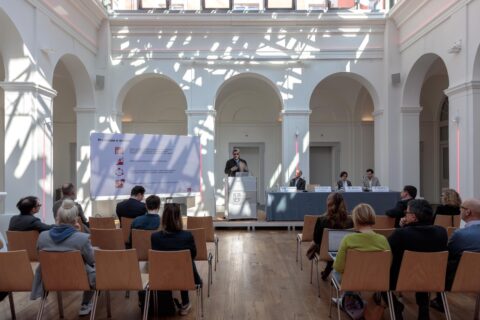
In 2025, the conference sector hosted 24 conferences, including regional, cantonal, national, and international events. Of these, 16—5 national and 11 international—were subject to a detailed economic impact analysis.
Approximately 14,500 people participated , up from 10,000 in 2024. The estimated direct economic impact is 18 million francs, while the total impact is 33,4 million francs. This represents a significant increase compared to the previous year, when the overall impact was calculated at 18,6 million.
The data confirms that conference tourism in the Lugano area is not just a specialized segment, but a concrete driver of the local economy: hotels, restaurants, services, retail, and transportation all benefit from concentrated but high-value flows. Another important aspect is the deseasonalization, as many conferences are held during traditionally less touristy periods.
Pipeline and acquisition: 32 dossiers in progress
On the acquisition front, 32 dossiers are under processing in 2025, with a conversion rate of 13% and applications already looking at the 2027–2030 period.
The business is developed through participation in international trade fairs, institutional partnerships and targeted bid-making (BID), which includes feasibility studies, coordination with hotels and local partners , and organisation of site inspections and sales visits.
One of the most emblematic cases is the ISPCAN 2027 congress , which will bring approximately 900 participants to Lugano for five days, with an estimated economic impact of 1,8 million francs and a direct return of over 100%. This result was achieved thanks to nine months of work and the involvement of local academics as part of the Ambassador Program.
Ticino's role in the MICE segment
The Ticino Convention Bureau promotes the region in the MICE (Meeting, Incentive, Congress, Event) segment, with a particular focus on corporate events, meetings, and incentive travel.
In 2025, 272 requests for proposals were received (a 24% increase compared to 2024), of which 83 were specific to the Lugano region and 119 were multi-regional, including the Lugano area. Thirteen requests were strictly related to conference tourism, 11 of which were for Lugano.
A total of 134 MICE events were held during the year (+30%), with a conversion rate of 52% and an estimated revenue of over 4,6 million francs, of which approximately 2 million was generated in the Lugano region. At the same time, the MICE segment accounted for over 20% of occupancy for the facilities that hosted this type of clientele.
The structural criticalities of the Congress Centre
While the numbers show a positive trend, critical issues remain. The current Palazzo dei Congressi suffers from a dual purpose—both as a civic center and a conference venue —which limits availability and planning well in advance.
Added to this are issues related to the modularity of the spaces, logistics (entrances, catering areas, exhibition spaces), the difficulty of hosting simultaneous events and the need for a greater number of large rooms in the immediate vicinity.
According to the stakeholders involved, these factors impact the ability to attract large-scale medical-scientific conferences, which are often governed by stringent ethical guidelines and complex organizational requirements.
The vision: the Campo Marzio Nord tourist and conference center
The project for the new tourist and conference center in Campo Marzio Nord fits into this context, with a time horizon between 2035 and 2040.
The plan calls for the construction of a modern and modular conference center , integrated with a new hotel offering, residential buildings, urban services, public green spaces, and parking. The stated goal is to strengthen Lugano's position as a hub between the northern and southern Alps, capable of competing nationally and internationally in conference tourism.
For local institutions, investing in infrastructure means consolidating a sector that generates widespread economic benefits and contributes to the destination's reputation.