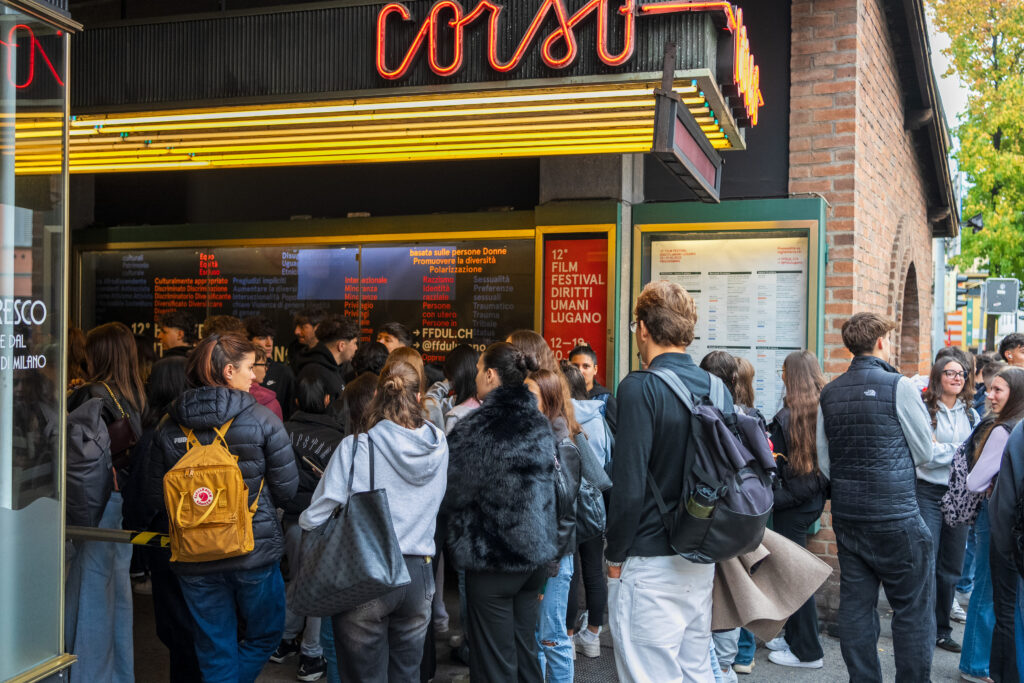

 From 11 to 18 October 2026 the Human Rights Film Festival Lugano, and we are already at the thirteenth edition of this "film festival" which puts human beings at the center, especially the most vulnerable, especially those who are never protagonists.
For eight days, not only screenings, but also precious meetings and moments of discussion, dedicated to some of the issues that affect contemporary society, with particular attention to the condition of people, to conflicts, migrations and environmental and social transformations, which in the last decade have probably reached the moment of worst humanitarian emergency.
A significant portion of the program will be—as usual—for schools. From Tuesday, October 13th to Friday, October 16th, eight screenings are scheduled during school hours, at 9:00 a.m. and 1:30 p.m. The initiative is aimed at students from vocational schools, high schools, and universities.
The goal is not only to bring cinema into educational activities, but to use films as a starting point to address complex issues in a direct and touching way. The screenings will be accompanied by meetings with experts and firsthand accounts, creating opportunities for discussion among young people, authors, and those directly involved in the stories being told.
The school programming, which has seen growing demand from institutions over the years , thus represents one of the festival's cornerstones: cinema becomes a tool for questioning reality and for connecting individual experiences and issues of collective interest.
Migrations, wars and memory through eight stories
The eight titles selected by co-directors Margherita Cascio and Antonio Prata , with the collaboration of the internal committee dedicated to schools, come from different parts of the world. Four will be presented as Swiss premieres.
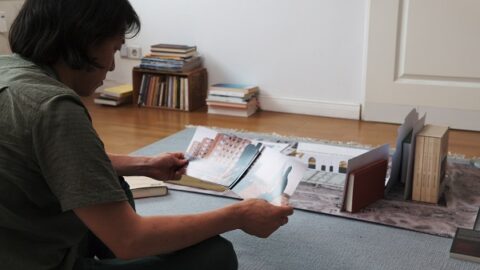
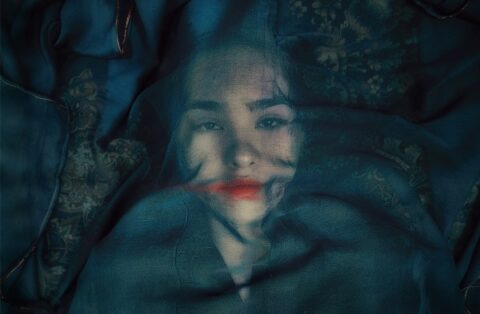 Among the works is A fox under the pink moon di Mehrdad Oskouei, dedicated to the story of a young artist fleeing first from Afghanistan and then Iran. In the film, the smartphone becomes a tool through which she recounts her own plight, while art represents a form of expression and resistance.
The theme of displacement and the search for a different life returns in Akio Fujimoto 's Lost Land , which follows the journey of two children from a Rohingya refugee camp in Bangladesh to Malaysia, where they hope to reunite with their families.
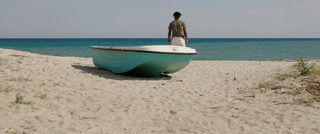
Francesco Del Grosso 's Nyumba , presented as a Swiss premiere, is dedicated to the memory of the thousands of people who died crossing the Mediterranean . The documentary transforms the memory of migrants lost at sea into a reflection on loss and hope.
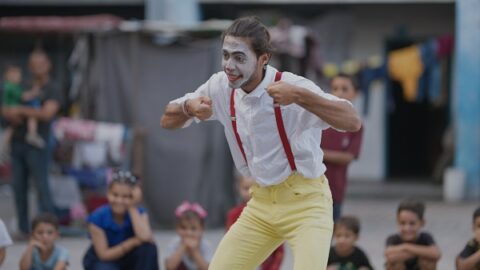
Ahmed Al Danaf and Mai Saad 's One More Show, on the other hand, tells the story of a reality marked by war . At its heart are the artists of the Free Gaza Circus company, committed to continuing their performances for children in refugee camps and on the streets of a devastated land.
 The story of Maysoon Majidi and the theme of freedom
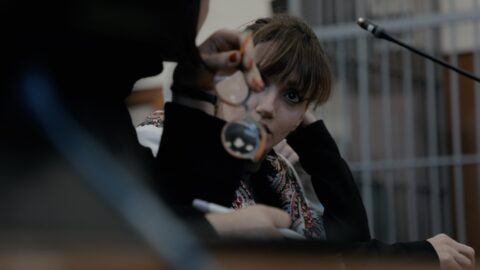
Among the titles previewing in Switzerland is also Domani – Il viaggio di Maysoon Majidi , directed by Vincenzo Caricari and Barbara Di Fabio.
The film reconstructs the story of Maysoon Majidi , a Kurdish director, actress, and activist forced to leave Iran because of her political and civil commitment against the Ayatollahs' regime. After arriving in Italy across the Mediterranean with 77 other migrants, she was accused of being a trafficker.
The individual story thus becomes the starting point for addressing broader issues related to migration, political persecution, and the way people who undertake a journey to Europe are welcomed and judged.
The relationship between memory, war, and pacifist commitment is at the heart of Fabian Chiquet 's Imagine Peace , a Swiss film dedicated to Edith Ballantyne . Having fled the Nazis in 1938, the centenarian has become a leading figure in the international peace movement. Faced with escalating conflicts in Ukraine and the Middle East, she continues to advocate for dialogue and disarmament.
 From American universities to the food system crisis
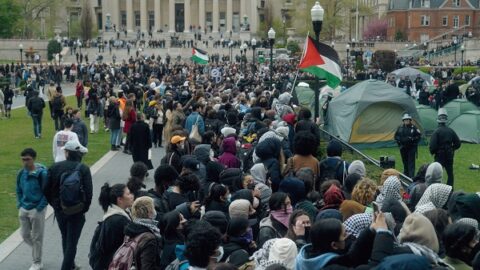
The program also looks at contemporary forms of activism. The Encampments , by Kei Pritsker and Michael T. Workman , chronicles the student protests that arose from a Gaza solidarity encampment at Columbia University in New York.
Through footage and interviews, the documentary follows the stories of those who chose to expose themselves publicly to demand justice, addressing the relationship between student mobilization, freedom of expression, and international conflicts.
The group of eight titles is rounded out by Francesco De Augustinis 's How to Feed the Planet , an international investigation into the contemporary food system. The underlying question is as simple as it is complex: how can we guarantee food for a growing world population without further compromising resources and environmental balance?
Overall, the eight works form a journey through conflicts, migrations, rights, memory, and the environment, offering students different perspectives on phenomena that are often addressed only through numbers and current events.
 A visual identity built on the explosion
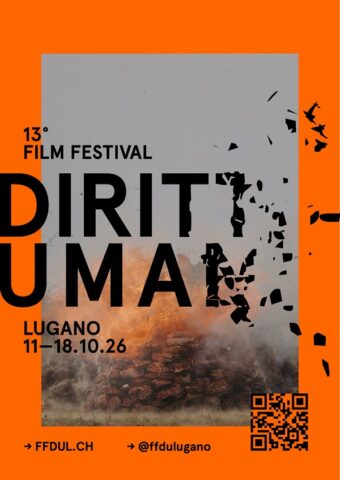
The thirteenth edition of the Lugano Human Rights Film Festival will also have a new visual identity, developed starting from the DEATH BY GPS project by artist Salvatore Vitale.
The project, comprising videos, photographs, and installations, analyzes the relationship between labor, algorithms, and automation in the context of postcapitalism. The focus of the research is Gauteng, a South African region historically linked to the exploitation of mineral resources and now also characterized by the presence of numerous freelance IT workers engaged in the gig economy.
Vitale connects contemporary technological transformations with the history of mining exploitation. The common thread is the relationship between people, work, and new technologies, with particular attention to the new forms of inequality that can emerge from automation.
 The festival's visual identity features slow-motion videos depicting obsolete electronic devices exploding. The destruction of these devices becomes a visual representation of a world rife with power relations, exploitation, inequality, and conflict.
The 2026 graphic identity thus presents the word "human rights" as if shattered by the explosion. The concept, however, doesn't stop with destruction: in the animated version of the image, the words gradually return to their original state, fragment by fragment. Reconstruction thus becomes a metaphor for a collective effort, to reassemble what has been divided and create new possibilities for dialogue.
The color scheme also follows this approach. The orange used for the visual identity is inspired by the Safety Orange required by the ISO 12402 standard for the visibility of life jackets. This reference also ties in with films about migration across the Mediterranean.
The festival starts before October
The festival's run will not be limited to the week of October 11th to 18th. In the preceding weeks, several events are planned, organized through collaborations with local cultural and educational organizations.
The first event is scheduled for September 12, 2026 at Parco Ciani in Lugano , where FFDUL will be present with a stand as part of Mondo al Parco , an event that has been dedicated for years to the themes of solidarity, integration and international development cooperation.
 Il 15 September at 13.50, in Muralto, the festival will also participate in the initiative Educating for Citizenship: Paulo Freire's Legacy in Dialogue with Contemporary Research, organized by SUPSI – Department of Education and Learning (DFA) on the occasion of International Democracy Day.
The meeting will feature a screening of The Librarians , previously presented at the festival, followed by a roundtable discussion. The event will be held at the Palazzo dei Congressi in Muralto with the support of the Municipality.
On September 17th at 21 pm , as part of the Babel literature and translation festival , the Bellinzona Film Club will screen Mehrdad Oskouei's A Fox Under the Pink Moon for the CineBabel festival. The film will also be included in the FFDUL school program.
 Oltrefestival: music, cinema, and local venues
On October 2nd , at 6:00 PM, the OLTREFESTIVAL will also kick off at the Cantine Riva Morcote on Via Besso in Lugano. The evening will combine music, food and wine, and discussions about the festival, followed by a film screening and a historical presentation of the venue.
A second musical event is also planned at the Cantine, while later in the evening, the evening will continue in the musical lounge set up at Cerchio 91, also within the same complex. The other OLTREFESTIVAL events will be announced at the press conference.
On October 10th at 18pm , at the Iride cinema, the collaboration with the FIT International Festival of Theatre and Contemporary Scene will bring A Fidai Film by Kamal Aljafari.
The work draws on the looting of Palestinian archives during the 1982 Beirut attack and explores memory and resistance through experimental cinematic language. Aljafari interrogates colonial archives and how they can be used to construct a narrative about identity and future possibilities.
A network of collaborations beyond borders
The thirteenth edition of the festival also confirms the national and international dimension of the event. The FFDUL is directed by Antonio Prata and Margherita Cascio , with Roberto Pomari as president, and is promoted by the Lugano Human Rights Foundation , chaired by Bruno Bergomi.
The festival maintains a network of collaborations with local and international associations and non-governmental organizations. Since 2015, the national network of Film Festivals and Forums on Human Rights has also been active, established together with the FIFDH in Geneva and the Human Rights Film Festival Zurich . At the cross-border level, the collaboration with the Human Rights Festival in Milan also continues.
The project is supported by the Confederation, through the FDFA, by the Canton of Ticino through the DECS, by the City of Lugano and the LuganoRegion, as well as by foundations and private entities.
A non-profit festival
The Lugano Human Rights Film Festival is organized as a non-profit cultural event. Its implementation faces growing costs and the need to maintain a comprehensive program, particularly for schools.
To support the project you can contribute through the dedicated page.
All information on the program and activities of the Lugano Human Rights Film Festival are available on the official website: Lugano Human Rights Film Festival
The calendar of events, therefore, begins in September and continues through the middle week of October. Cinema remains at the center, but the event's structure focuses primarily on exchange: between generations, experiences, cultures, and differing interpretations of the issues shaping the present.