
For a long time, Gertrud Dübi-Müller's name was primarily associated with the collection held at the Kunstmuseum Solothurn. Her personal story, however, tells much more than the story of an art collection. A collector, photographer, motorist, and mountaineer, Dübi-Müller navigated the first half of the twentieth century with an autonomy uncommon for a woman of her generation and forged direct relationships with numerous key figures on the European art scene.
It is to this figure that the Kunstmuseum Basel is dedicating the exhibition " Van Gogh, Hodler and a Cabriolet. The Collector and Pioneer Gertrud Dübi-Müller ," running from September 19, 2026, to February 7, 2027 , in the Neubau. Curated by Géraldine Meyer, the exhibition brings together around 80 works from the artist's international collection, along with previously unpublished photographs and documents.
The project thus allows us to reconstruct not only the artistic choices of a collector, but also the network of relationships, passions, and interests that accompanied her existence.
 A Van Gogh purchased when I was very young
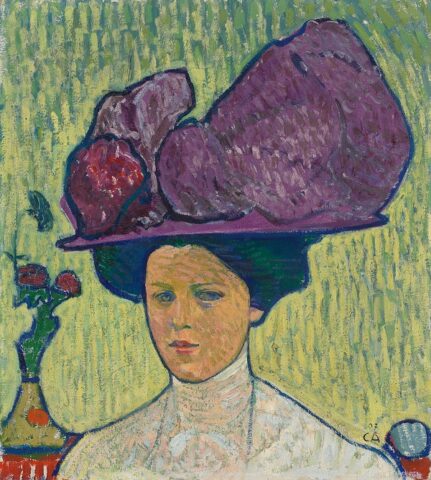
Gertrud Dübi-Müller was born in Solothurn in 1888. Her approach to art occurred already in her youth, also thanks to her encounter with the Swiss artistic community and, in particular, with Cuno Amiet, whom she attended during a painting lesson.
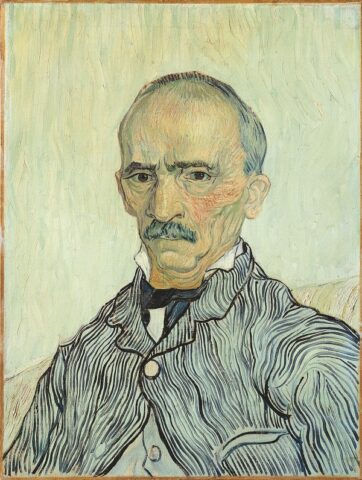
The loss of her parents when she was still a child contributed to her early independence, including financial independence. One of the decisions that best reflects her personality came shortly after she came of age: Dübi-Müller purchased Vincent van Gogh 's Portrait of Charles-Elzéard Trabuc , painted in 1889.
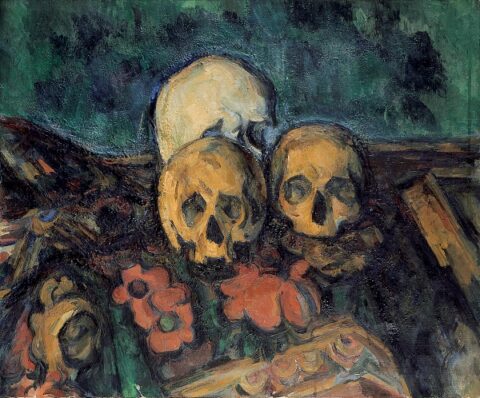
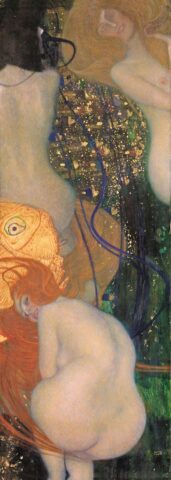
From that purchase, one of Switzerland's most important collections of modern art took shape. Over time, it acquired works by Paul Cézanne, Giovanni Giacometti, Ferdinand Hodler, Gustav Klimt, and Henri Matisse, alongside those of other Swiss and international artists.
The Basel exhibition traces precisely this particular ability to look at contemporary art without being confined by geographical boundaries or the conventions of one's own time.
 The special relationship with Ferdinand Hodler
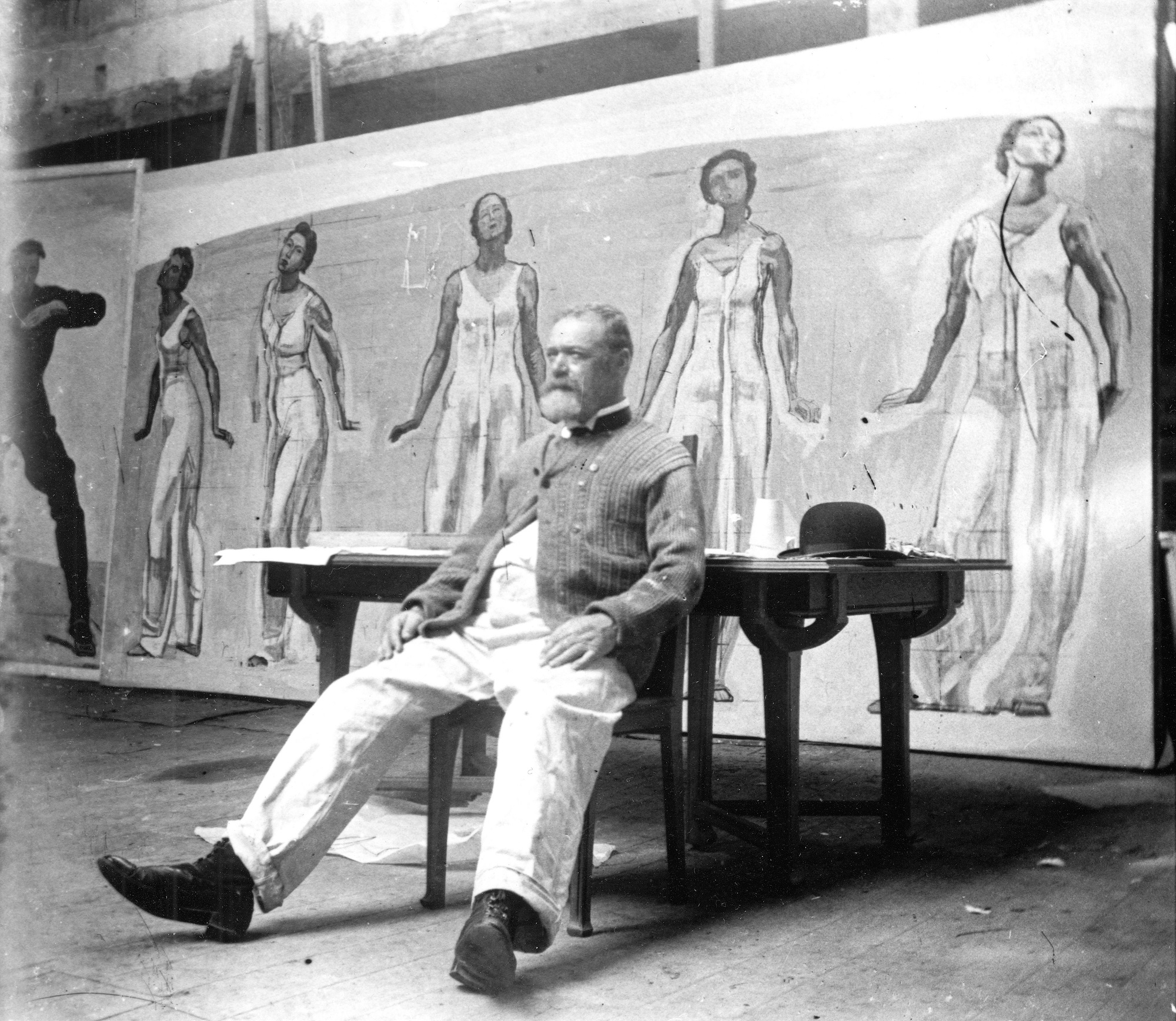
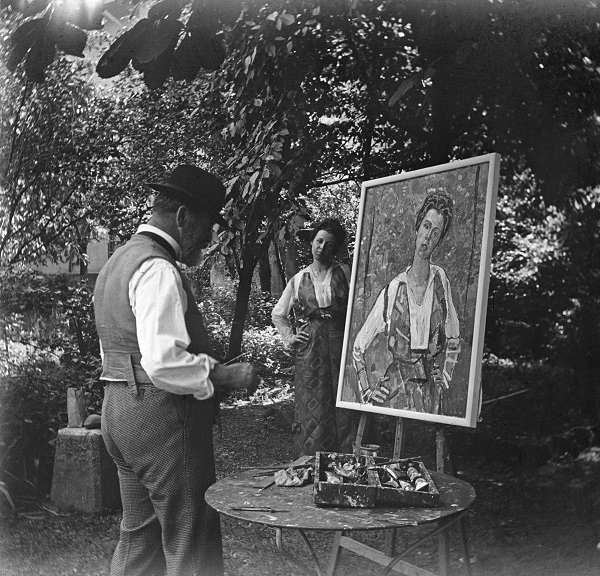
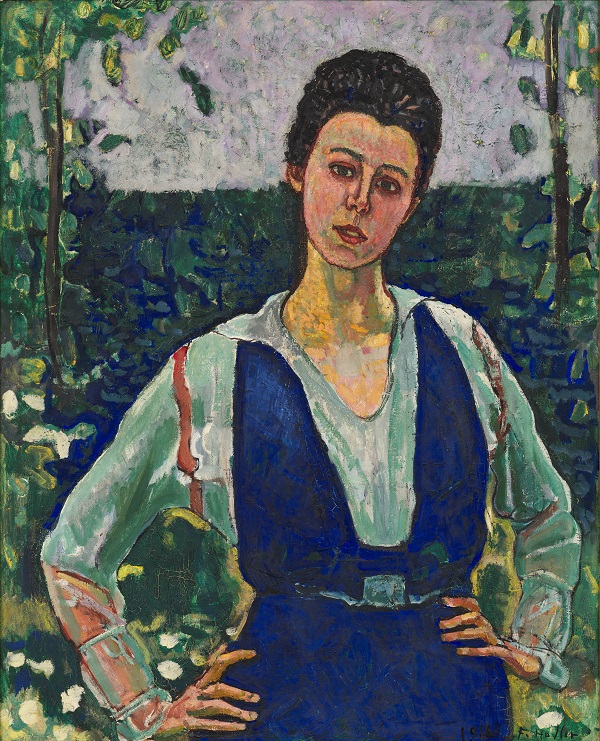
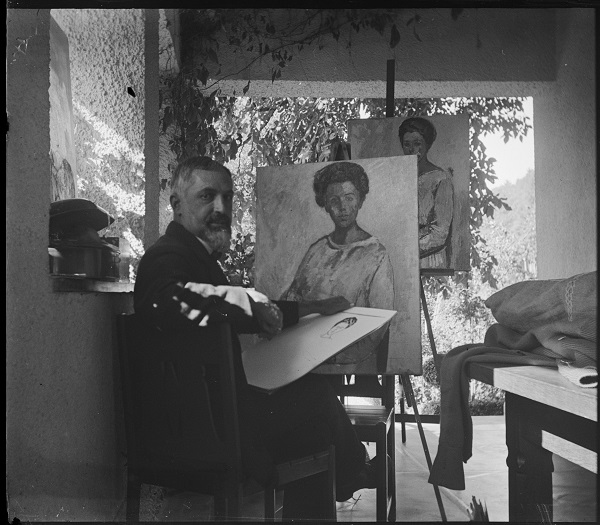
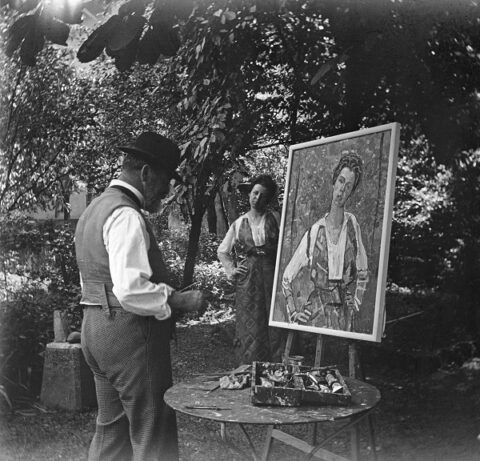
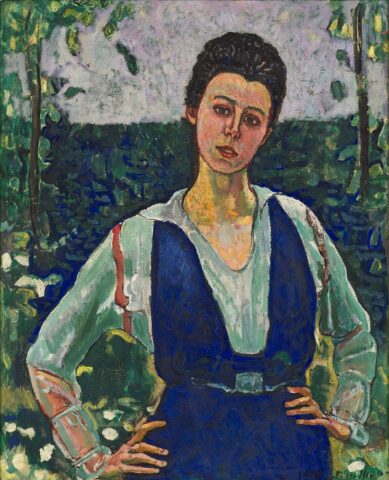
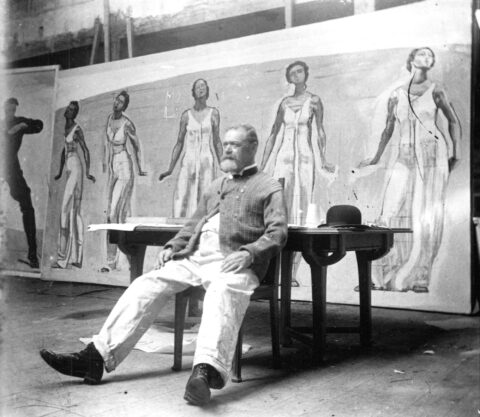
Among the most important artists in Gertrud Dübi-Müller's life was Ferdinand Hodler. The two shared a friendship and close association that went beyond the usual relationship between artist and collector.
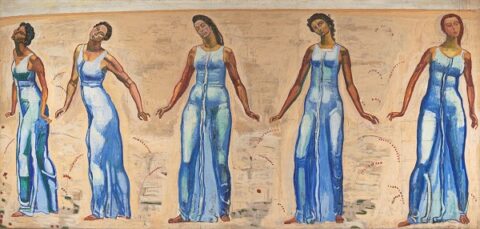
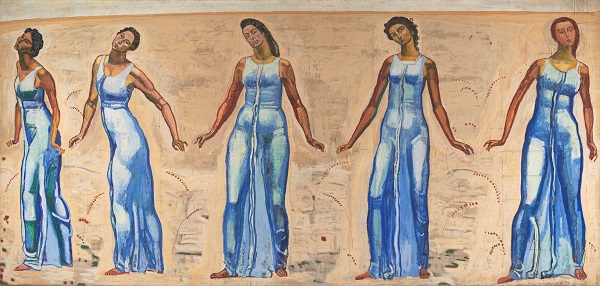
Hodler portrayed her on 17 occasions. Among the works that document this relationship is Blick ins Unendliche , created between 1913-14 and 1916 and now belonging to the collection of the Kunstmuseum Basel.
Their correspondence also reflects the informal nature of this relationship. In one letter, Hodler jokingly wrote to her about his car trips, urging her to drive slowly to Paris rather than risk her life on the road.
The reference to the automobile is no coincidence. A passion for driving was, in fact, a key component of Dübi-Müller's personality and is one of the elements through which the exhibition seeks to portray a woman who was difficult to fit into the traditional role assigned to women of her time.
 Photography, travel and cars
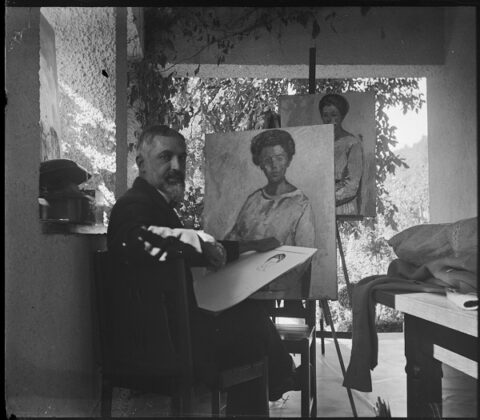
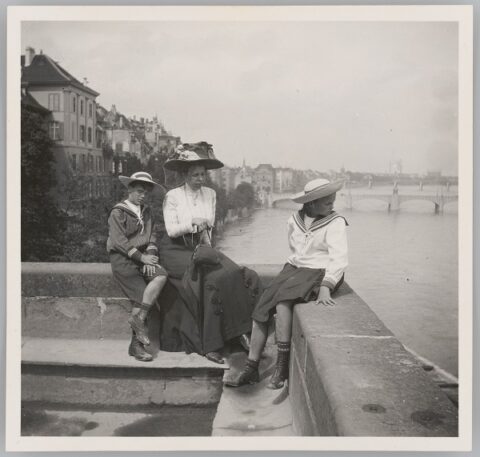
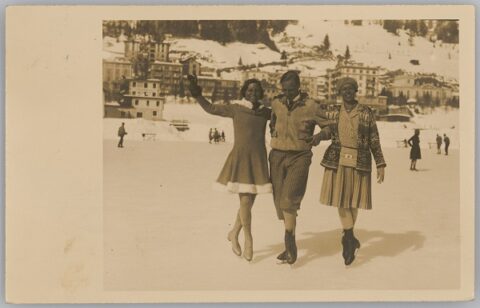
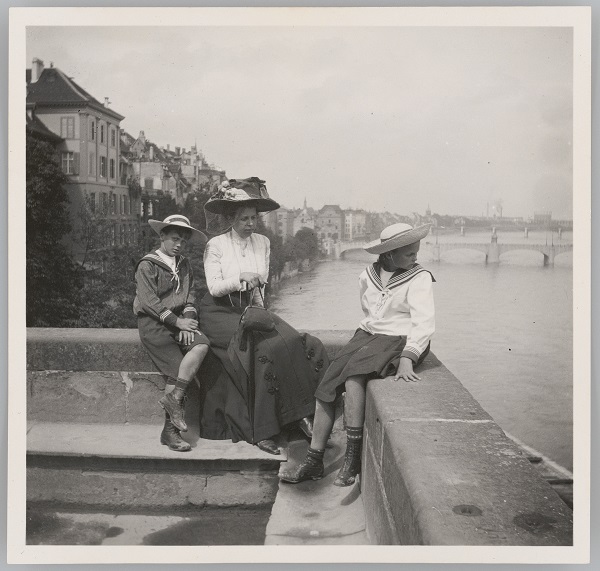
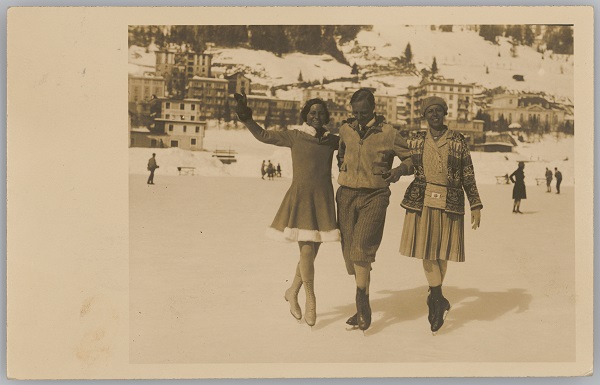
Photography was another of the activities to which Dübi-Müller devoted himself continuously. With his camera he documented the artists he frequented, but also episodes of his own daily life and his travels.
The images accompanied her on experiences that were anything but ordinary at the time: from flights in an airship to journeys across Europe and as far as North Africa.
What made his story even more special was his automobile. At the wheel of a Swiss Piccard-Pictet convertible, likely considered the first automobile to arrive in the canton of Solothurn, he undertook long journeys to some of Europe's major cultural capitals.
Berlin, Paris, Rome, and Vienna were among the destinations of his travels. But Dübi-Müller's personal journey wasn't limited to cities: the automobile also became a means of reaching the Swiss Alps and cultivating another of his passions, the mountains.
An independent woman between art and mountaineering
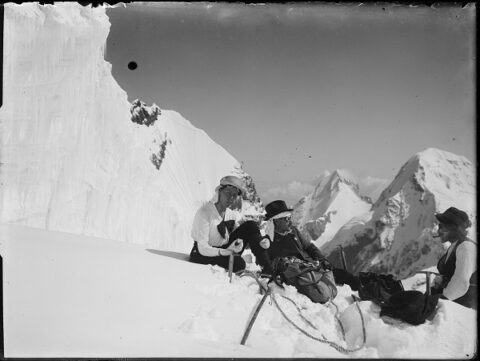
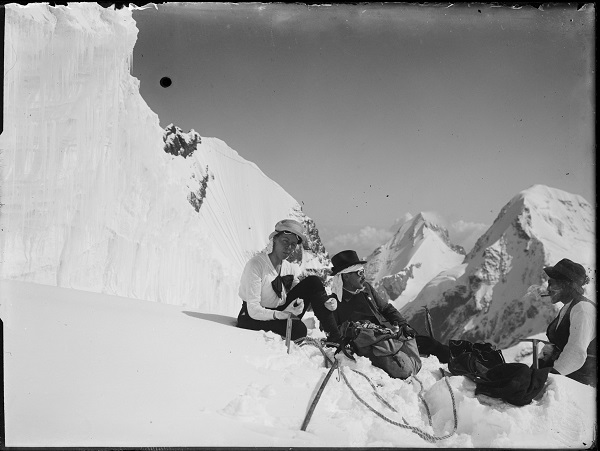
Mountaineering adds another layer to Gertrud Dübi-Müller's biography. She tackled challenging climbs, even reaching the Matterhorn.
These experiences, considered in the historical context in which they occurred, help to outline the profile of a woman endowed with remarkable personal autonomy. Her independence, therefore, extended beyond collecting: it encompassed mobility, photography, travel, and the ability to freely choose how to spend her time and resources.
 It is precisely this intertwining of art and biography that constitutes one of the most interesting aspects of the Basel exhibition. Dübi-Müller is presented not simply as the owner of an extraordinary collection of paintings, but as an active participant in the cultural life of her time.
An exhibition awaited for almost a century
The idea of dedicating an exhibition to Gertrud Dübi-Müller in Basel is not new. Wilhelm Barth, director of the Kunsthalle Basel from 1909 to 1934, had already attempted to organize an exhibition dedicated to the collections of Gertrud and her brother Josef Müller.
The contacts and requests were repeated, but the project never came to fruition. Almost a century later, the Kunstmuseum Basel is returning to that proposal, staging the first major exhibition dedicated to the collector in the Rhineland city.
The project thus also takes on a historical significance: bringing back to the center of attention a protagonist of European artistic modernity who, despite having had direct relationships with leading artists, remained less well-known than the works she helped collect.
 From Cézanne to Klimt, an international collection
The core of the exhibition consists of approximately 80 works. Among the names featured are Vincent van Gogh, Paul Cézanne, and Gustav Klimt, alongside important Swiss artists such as Cuno Amiet, Alice Bailly, Giovanni Giacometti, and Ferdinand Hodler.
The works come from the Kunstmuseum Solothurn, which houses the core of the Dübi-Müller collection, as well as from other Swiss museums and private collections. Some of the works originally belonged to Dübi-Müller's own collection.
The selection of works also allows us to observe the collector's approach to modernity. Her collection did not follow a single artistic movement, but encompassed diverse personalities and languages, building a network of references that spanned European painting between the late nineteenth and twentieth centuries.
 Photographs as a personal document
Alongside the paintings, photography will play a significant role.
The exhibition features images by Dübi-Müller herself and photographs by other artists, along with unpublished letters and hand-painted postcards sent to her by artists and cultural figures. These materials allow us to reconstruct her social environment and, at the same time, gain insight into the private dimension of her life.
A significant portion of the photographic collection is now managed by the Fotostiftung Schweiz in Winterthur, which has provided numerous loans for the exhibition. The project is also the result of close collaboration with the Kunstmuseum Solothurn.
The heritage entrusted to museums
The collection's history did not end with Gertrud Dübi-Müller's death. In 1964, the Dübi-Müller Foundation was established with the aim of preserving the collection and making it accessible to the public. The foundation comprised 190 works.
Five years later, Josef Müller in turn established the Josef Müller Foundation, with 55 works. The two foundations and their respective collections later merged into the Kunstmuseum Solothurn, inaugurated in 1981, where the core of Gertrud Dübi-Müller's collection is still housed today.
The Basel exhibition therefore allows for the temporary reunion of dispersed works and materials, providing a broader vision of that collecting experience.
 The role of women in art history
One of the themes addressed by the project also concerns the position of women in society at the time.
The exhibition and catalog focus in particular on the years preceding Gertrud's marriage to the Solothurn lawyer Otto Dübi. These are the years that reveal the profile of a woman who enjoyed a measure of autonomy and who knew how to use it to build her own network of relationships and interests.
Her work as a collector, photographer, traveler, and mountaineer is thus reinterpreted in light of the rights and opportunities available to women in the society of the time.
This isn't just an individual story. Dübi-Müller's case offers insight into the often under-documented role of women in the formation of art collections and the spread of European cultural modernity.
A catalogue to broaden your search
The exhibition is accompanied by a scholarly catalog edited by Géraldine Meyer and the Kunstmuseum Basel and published by Hirmer. The publication contains 240 pages and includes 92 reproductions.
The contributions are signed, among others, by Caroline Arni, Gabriela Christen, Bice Curiger, Anneke Lubkowitz, Géraldine Meyer, Peter Pfrunder, Nina Schweizer, Lara Eva Seeliger, Katrin Steffen and Oliver Wick.
The volume explores various aspects of Dübi-Müller's life: his collecting, his personal relationships, his support for Swiss and French artistic modernity, photography, and mountaineering. Special attention is also paid to recently studied photographic material from his estate.
The catalogue will be available in German and English editions.
A bridge between Solothurn and Basel
The exhibition also offers an opportunity to connect two Swiss museums. On the one hand, the Kunstmuseum Solothurn, custodian of the core of the Dübi-Müller collection; on the other, the Kunstmuseum Basel, which brings a comprehensive reconstruction of the collector's life to its home for the first time.
The result is a journey that brings together famous works, personal documents, and photographs, shifting the focus from the mere value of individual paintings to the story of those who chose them, collected them, and helped preserve them.
Gertrud Dübi-Müller thus emerges as a protagonist of twentieth-century Swiss culture: a woman capable of moving between artists, European cities, cars, and mountains, building a collection that still today constitutes a significant part of the country's artistic memory.
The exhibition "Van Gogh, Hodler and a cabriolet. The collector and pioneer Gertrud Dübi-Müller" can be visited at the Kunstmuseum Basel | Neubau from 19 September 2026 to 7 February 2027.