The Literary Breakfasts at LAC Lugano will return in the fall of 2026 with a tenth edition dedicated to democracy, civil rights, and individual responsibility. The series of meetings, promoted by the Dante Alighieri Society Lugano and LAC Lugano Arte e Cultura, will begin on Saturday, November 14th and will continue until spring 2027 with events that combine reading, historical reconstruction, and discussion of contemporary issues.
The Fall-Winter 2026/27 program is part of the LAC's theater season, which dedicates part of its reflection to the theme " In/Civiltà – Storia di una democrazia occidentale" (In/Civilization – History of a Western Democracy ). The transition from theater to books broadens the scope of the discussion and invites us to question how rights arise, what conditions allow for their defense, and how much their existence depends on people's participation in collective life.
Justice, freedom of expression, the ability to take a stand, and the relationship between the individual and the community are some of the themes that run through the meetings. These issues concern both historical memory and contemporary challenges, in a context where democratic institutions are called upon to confront inequality, discrimination, and new political tensions.
Literary Breakfasts at LAC: The 2026/27 Program
The calendar includes three events already scheduled, in November and January, while two more have been announced for February and March, with guests and content yet to be announced. The format keeps public dialogue at the heart of the initiative, entrusting writers, scholars, and civic leaders with the task of exploring complex themes through personal experiences, literary works, and historical and political analysis.
The first meeting will be dedicated to Polia Rusca Schenderowitsch, a physician and figure closely linked to the social history of Ticino. The second will bring writer and activist Pegah Moshir Pour to Lugano, who will address the theme of freedom through her experience between Iran and Italy. In January, political scientist Vittorio Emanuele Parsi will offer a reflection on the ambitions of the great powers and the prospects for European democracies.
November 14: Yvonne Pesenti Salazar talks about Polia Rusca Schenderowitsch
The cycle opens on Saturday 14 November 2026, at 11 am in the LAC Hall , with the meeting by Yvonne Pesenti Salazar entitled «We have done what there was to do». Polia Rusca Schenderowitsch (1884-1975) – A doctor at the service of the community.
The story of Polia Rusca Schenderowitsch spans nearly a century of European and Ticino history. Born in 1884 in the Tsarist Empire to a Jewish family, she arrived in Switzerland at a very young age and was among the first women to earn a medical degree from the University of Bern. In 1916, she opened an ophthalmology practice in Ticino, at a time when women's access to university studies and the professions remained severely limited.
Her professional career unfolded during years marked by war, migration, and profound social transformations. During the First World War, she served on the front lines as a surgeon, offering her skills to the wounded. Later, her commitment extended far beyond the medical field, intertwining with initiatives to assist those affected by conflict and promoting greater equity in access to healthcare.
Between 1940 and 1949, she played a central role in the operation that, under the aegis of the Red Cross, allowed thousands of child war victims to reach Switzerland, including Ticino. During the same period, she contributed to the assistance of refugee communities. In 1956, she returned to the reception sector, helping organize aid for Hungarian refugees arriving in Ticino.
A history of medicine, healthcare, and civil rights
Polia Rusca Schenderowitsch's commitment did not end with the emergency. After the war, she promoted home medical care courses and supported residents of remote areas through the distribution of clothing and food. These initiatives responded to immediate needs, but also contributed to developing more widespread and accessible forms of assistance.
Her work was also linked to the fight for women's suffrage. Women's ability to participate in political life and the right to adequate healthcare belong to different dimensions, but in her experience, they converge in a common vision of citizenship: a community is more equal when people can exercise their rights and find answers to their basic needs.
This is the thread the conference aims to reconstruct through Yvonne Pesenti Salazar's research. The physician's biography offers insight into the history of women in Switzerland and the contribution made by figures often less present in public memory to the development of social and healthcare services.
Yvonne Pesenti Salazar holds a PhD in history from the University of Zurich and has published extensively on women's history in Switzerland. Her presentation will explore Rusca Schenderowitsch's personal and professional journey, placing it within the political and social transformations of the twentieth century.
November 21: Pegah Moshir Pour and the Meaning of Freedom
The second appointment is scheduled for Saturday 21 November 2026, at 11 am in the LAC Hall , with Pegah Moshir Pour and the meeting Writing Freedom.
A writer and human and digital rights activist, Moshir Pour was born in Iran in 1990 and raised in Italy. Her personal experience living between two countries is key to how she explores the themes of identity, freedom, and social change in her books.
In her most recent novel, The Forgotten House , the rediscovery of a family history becomes an opportunity to question the relationship with one's origins and the possibility of imagining a different future. Private memory thus intertwines with collective history, while the literary narrative opens a reflection on the conditions that allow people to choose, express themselves, and build their own lives.
The audience discussion will begin with the books and expand to the author's civic engagement. The defense of freedom of expression, her stance against discrimination, and her connection to her roots will be some of the topics addressed during the meeting.
From the Iranian experience to rights in everyday life
The reference to Iran will allow us to address the democratic issue by focusing on people's aspirations and the difficulties they encounter in asserting their rights. Freedom, from this perspective, is not just about the principles enshrined in law or the functioning of institutions: it is also measured by the concrete possibility of speaking out without fear, participating in public debate, and challenging discrimination.
The meeting thus fits into the Literary Breakfasts program, adopting a different approach than the historical one of the first event. While the story of Polia Rusca Schenderowitsch demonstrates how individual commitment can contribute to the development of services and rights, Moshir Pour's testimony focuses on the relationship between personal freedom, belonging, and civic participation.
Author of The Night Over Tehran and The Forgotten House , Pegah Moshir Pour has developed a path that combines writing with awareness-raising activities on human and digital rights. Her presentation will shift the discussion from the literary to the public sphere, questioning the role that words and individual choices can play in processes of change.
January 16, 2027: Vittorio Emanuele Parsi analyzes the return of empires
After the November meetings, the calendar will continue on Saturday, January 16, 2027, at 11 a.m. in the LAC Hall , with Vittorio Emanuele Parsi and the book Contro gli imperi. Il futuro delle nostre democrazie nel nuovo ordine mondiale.
The political scientist addresses the ambitions of Russia and China and the changing orientation of the United States, questioning the consequences for Europe and the international balance of power. At the heart of the discussion is the possibility that competition between great powers will reduce the scope for shared rules, favoring relationships based primarily on force and the ability to assert one's own interests.
In this context, the stability of democracies depends not only on the internal dynamics of individual states. Relations between countries, international cooperation, and the ability of European institutions to respond to external pressures also impact the protection of freedoms and political autonomy.
The book thus offers an opportunity to discuss Europe's role in a changing world order and the conditions necessary to defend democratic systems in the face of new threats. This question concerns both the instruments of foreign policy and the ability of societies to uphold the principles on which their institutions are founded.
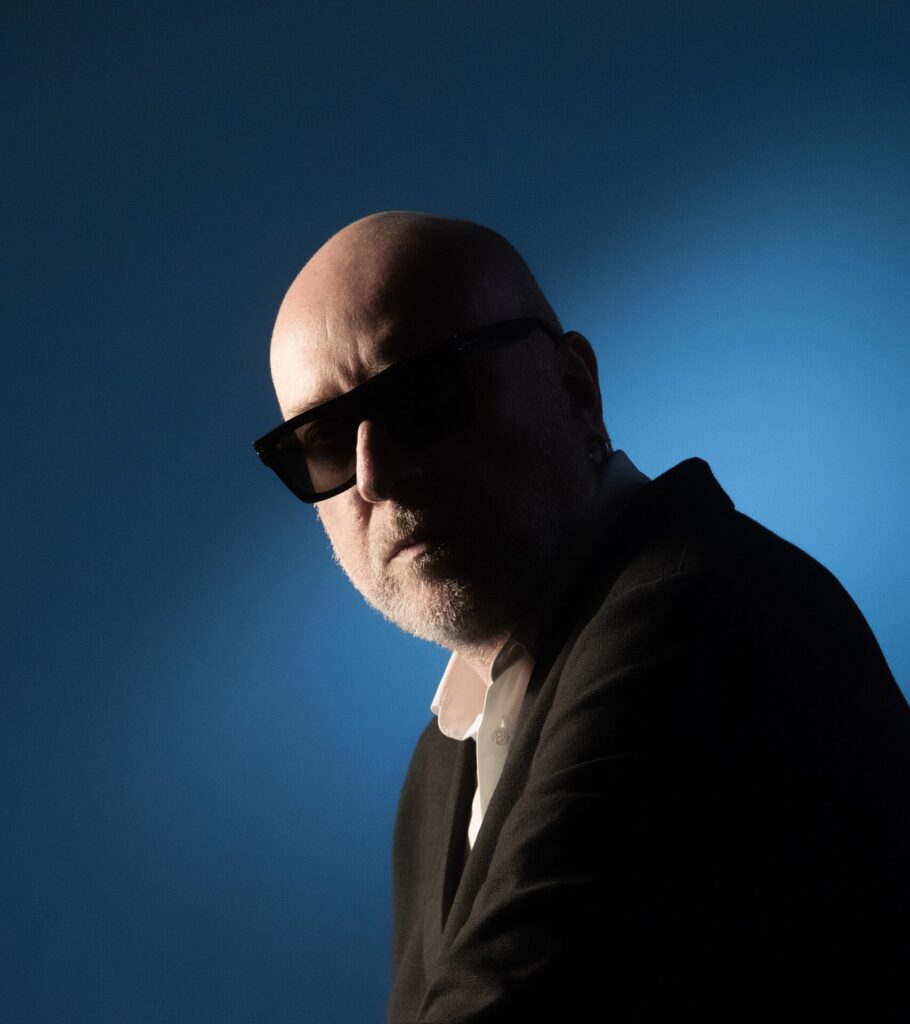
Vittorio Emanuele Parsi is a political scientist and full professor of International Relations at the Catholic University of the Sacred Heart. He is the author of numerous publications on international politics and the challenges facing contemporary democracies.
Democracy and participation: the topics of the upcoming meetings
The program won't end with the January event. The organizers have announced two additional meetings, scheduled for February and March 2027, with the guests and content to be announced later.
The series' structure brings together different perspectives. Historical reconstruction, the experience of human rights scholars, and the analysis of international relations approach democracy from complementary angles, without limiting it to the functioning of institutions or the electoral moment.
The common thread is the relationship between rights and responsibilities. The story of a doctor committed to women's health and suffrage, the journey of a writer concerned with freedom of expression, and a political scientist's perspective on power struggles demonstrate how the protection of democracy involves different levels of public life.
In this sense, dialogue with the public is a central component of the Literary Breakfasts. Books become tools for reconstructing events, understanding changes, and comparing experiences and interpretations, bringing political and social issues into an open discussion space.
Information and reservations for the Literary Breakfasts
All events in the series are free . Reservations are recommended through the official LAC website: www.laclugano.ch.
The Literary Breakfasts are promoted by the Dante Alighieri Society Lugano and by LAC Lugano Arte e Cultura , as part of the LAC edu cultural mediation programme , thanks to the contribution of UBS , the main partner of LAC edu.
The previously announced schedule includes meetings on November 14 and 21, 2026, and January 16, 2027. The February and March dates will complete the process, broadening the reflection on democracy through new contributions and perspectives.