
Signed by Visiva – visual.ch
When Marco Polo, returning from the East, reported seeing the legendary unicorn up close, his description was anything but enchanting. The creature he had observed in Java bore nothing of the creature described in European stories. It had thick skin like a buffalo's, a stubby black horn on its muzzle, a low-set head, and habits far from noble. He described it for what it was, a rhinoceros, and concluded that it had nothing to do with the graceful figure of tradition. The unicorn simply did not exist. There existed a real quadruped, clumsy and powerful, which someone at a certain point had imagined to be different from what it was.
It's worth keeping that disappointment in mind (that everyday life is made up of rhinos, not unicorns) every time a Ticino SME posts a job ad for a marketing and communications manager. Skills in strategy, writing, graphics, video editing, social media management, paid campaigns, and press relations appear casually along the same line. "Anyway, AI is here these days, isn't it?" No. Because they want to keep dreaming of the unicorn: a single person with superpowers who can do seven things well, which, in the real job market, are seven separate professions, each with its own learning curve and tools. The result is familiar to all entrepreneurs who have tried the internal route in search of the unicorn: polished copy but videos shot on a phone, well-managed social media but sketchy positioning, lots of operational skills and little strategy—the very strategy that was the initial reason for hiring them.
The market has recognized the problem and begun to move in the opposite direction. The most obvious trend in recent years is the demand for vertical skills: professionals who do a single job, but do it for many clients and therefore do it at a level that an in-house all-rounder cannot achieve. The professional who works for an agency on Monday and takes care of another project on Tuesday isn't a stopgap; it's the way to access depth today. Those who shoot videos every day for ten different companies stay up-to-date on the tools, on artificial intelligence applied to production, and on the formats that work. Those who shoot videos six times a year for a single company don't. Then there's the issue of timing and planning. A medium-sized business in the Mendrisiotto area needs a videographer perhaps six days a year, a strategist once a season, a copywriter intensively for two months and then much less, and a community manager every week but for a few hours. These are different intensities. Buying all this as a full-time job for one person means paying a fixed salary for what is needed intermittently, and getting the average of seven jobs instead of the excellence of each.
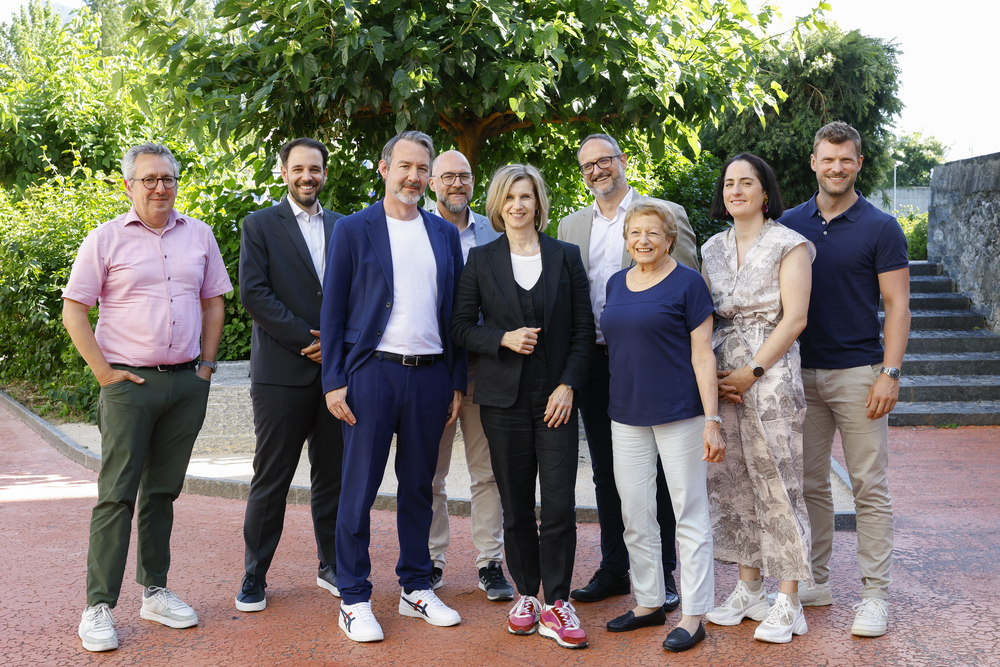
The solution, at this point, takes a precise form: an agency that accommodates this plurality of specialists in-house. Not a supplier reselling the work of a single individual, but a structure that brings together a videographer, a strategist, a copywriter, a graphic designer, a social media manager, and numerous other highly skilled professionals specializing in web design, SEO/GEO optimization, video motion, brand journalism, PR, and advocacy. Each individual is dedicated to their own craft and available to the company when their expertise is truly needed. It's the same depth the market seeks in vertical profiles, but brought together under a single point of contact who coordinates the direction. The technical model that underpins it is called T-shaped: a foundation of transversal skills shared by the group, with peaks of vertical specialization in each individual skill set.
For the SME, the quality and cost change. They don't hire the unicorn-rhinoceros on a fixed salary; they access a specialist agency and deploy them in the dose they need, usually paying less than that single full-time person would cost, and instead of the average of seven jobs, they get the excellence of each. The next time you're about to write "looking for someone who can do everything," remember Marco Polo: you can chase a unicorn across Asia and still find a rhinoceros. You might as well start looking for the creature that actually exists.