

 There are men who achieve success and men who leave a legacy. Henry Dunant He belongs to the latter. His life was marked by defeat, poverty, and loneliness, but the strength of his vision survived it all, becoming one of the greatest moral legacies of contemporary civilization.
If we were to judge his life by the usual criteria, we would find ourselves talking about a long series of failures. A mediocre student, an unsuccessful entrepreneur, overwhelmed by financial ruin, marginalized by Genevan society, and even expelled from the organization he had founded, he spent many years in isolation and poverty, far removed from the prestige he had once known. Yet, while his personal story seemed destined to disappear, his idea continued to silently conquer the world.
 The Monograph Courage and perseverance. The power of ideas. It doesn't simply tell the story of the founder of the Red Cross. Through contributions from historians, scholars, and leading figures in contemporary humanitarianism, it paints a portrait of a man far more complex than official iconography has often suggested. Neither a saint without doubts nor a hero without shadows, but a restless personality, sustained by a profound faith and a determination capable of withstanding even the most bitter defeats. Perhaps this is the best way to approach him: starting not from the institution he helped create, but from the man who made its birth possible.
As Costantino Cipolla observes in the introduction to the monograph, after the financial failure, Dunant was almost "buried alive": he lost his wealth, his social prestige, and even his role in the institution he had helped found. This dramatic and seemingly contradictory trajectory makes the strength of his moral legacy even more striking.
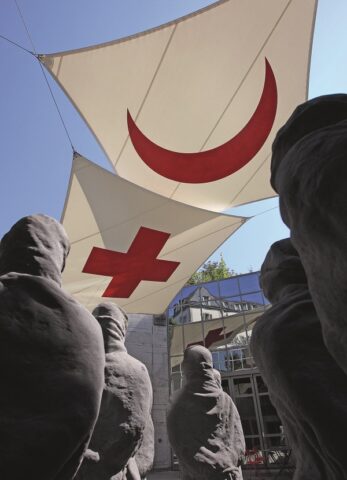 To understand Henry Dunant, we must return to Geneva in the first half of the nineteenth century, an austere, industrious city deeply imbued with Protestant culture. Jean-Henry Dunant was born on May 8, 1828, into a wealthy family. His father, Jean-Jacques, was a successful merchant, often away from home for his business; his mother, Anne-Antoinette, belonged to an evangelical environment that made charity, social commitment, and individual responsibility a true rule of life. Roger Durand observes that it was above all from this religious upbringing that young Henry drew the intense faith that would accompany him until his final days.
His youth, however, did not bode well for an extraordinary destiny. He did not excel at school; in fact, he was expelled from Calvin College for poor performance. This episode could have negatively affected his future, but it already revealed a trait that was destined to remain constant: Dunant possessed neither the rigor of a scholar nor the method of a jurist, but rather the restlessness of a visionary. He was drawn much more to people than to books, to action rather than theory.
While serving an apprenticeship at a Geneva bank, his free time was devoted almost entirely to social work. While still very young, he promoted Bible study groups, organized Christian youth associations, and contributed to the creation of the international network that would become the YMCA. Already then, a characteristic emerged that would accompany him throughout his life: the ability to transform an intuition into a concrete project, involving different people, institutions, and countries. For Dunant, ideas only acquire value when they are translated into action.
In June 1859, Henry Dunant reached Italy for anything but humanitarian reasons. He was seeking to meet Napoleon III to gain support for his business ventures in Algeria. But fate took him elsewhere. In Castiglione delle Stiviere, in the aftermath of the Battle of Solferino, he found himself immersed in one of the most shocking scenes of suffering of the 19th century. Thousands of wounded lay unattended, churches were transformed into makeshift hospitals, and local women aided both friends and enemies, repeating that simple "Tutti fratelli" (All brothers), destined to become a universal symbol.
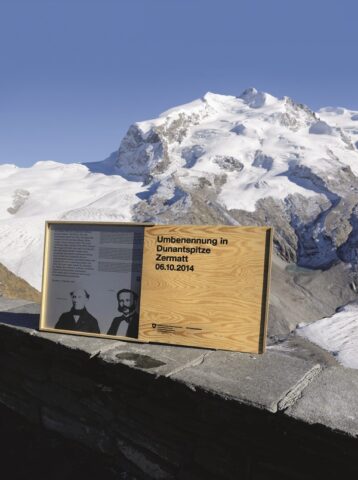 The episode is well-known and now part of history. What's less well-known is what happened next. Dunant doesn't simply preserve the memory of that tragedy. He does something far rarer: he transforms emotion into a project, compassion into a method, indignation into a concrete proposal. As Roger Durand observes, those images will never abandon him and will eventually find a voice in the book. A memory of Solferino, the book destined to start one of the most extraordinary humanitarian revolutions of the modern age.
And it is precisely here that Henry Dunant's true originality emerges. He is not the first man to be moved by grief, nor the first to aid the wounded. His genius lies in his intuition that solidarity cannot be based solely on momentary generosity. To be effective, it must organize, establish rules, prepare men and resources before tragedy strikes. It is from this intuition, even more than from the Battle of Solferino, that the Red Cross was born.
The image that history has handed down of Henry Dunant risks, paradoxically, obscuring the most authentic side of his life. We are accustomed to remembering the founder of the Red Cross, the first Nobel Peace Prize winner, the philanthropist celebrated worldwide. Far less well-known is the man who paid for that vision with a long season of solitude.
While the idea of the Red Cross took shape and rapidly conquered Europe, Dunant's private life began to collapse. His investments in Algeria failed, his debts became unsustainable, and in 1867 he was forced to declare bankruptcy. In strict Calvinist Geneva, economic failure was not just a financial setback: it was a moral condemnation. Dunant lost his prestige, his friends, his social standing, and was gradually shunned even by the International Committee of the Red Cross, the institution to which he had devoted his best energies.
The growing tensions within the International Committee also contributed to making that period even more painful. Between Henry Dunant and Gustave Moynier, an authoritative jurist and extraordinary organizer, profound differences in character and vision quickly emerged. On one side, the visionary, often guided by intuition; on the other, the man of institutions, attentive to the organization's solidity and credibility. Dunant's financial collapse transformed those differences into an irreversible rift. It would be unfair, however, to reduce that affair to a simple personal conflict: rather, it was the confrontation, not always easy, between two different approaches to serving the same cause, one focused on the ideal, the other on building an institution destined to last. In the end, it was Dunant who paid the highest price.
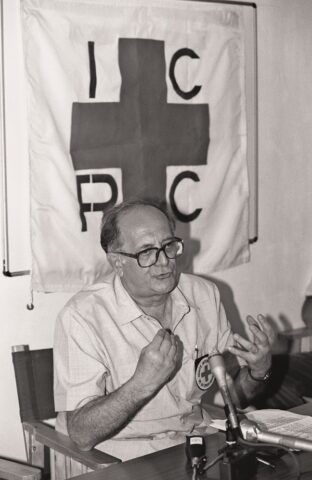 Despite going through extremely difficult years, marked even by poverty and a life spent wandering between different European cities, Dunant never stopped dreaming of new projects. He continued to write, reflected on the future of humanitarian law, considered the protection of prisoners of war, supported international arbitration as a tool for conflict prevention, and engaged in dialogue with the first peace movements. His life seemed to be fading, but his ability to look beyond never faded. Roger Durand captures this trait well when he describes the Heiden years not as a melancholy wait for the end, but as an extraordinary test of moral resilience.
When, in 1901, Henry Dunant received the first Nobel Peace Prize in history, the award came near the end of his earthly journey. It was a belated moral compensation for a man whose time had too hastily forgotten. It did not erase the suffering he had experienced or the years spent in obscurity, but it restored dignity to a human story that seemed destined to remain on the margins of history.
The monograph "Courage and Perseverance: The Power of Ideas" ultimately suggests a reflection that goes beyond biographical reconstruction. Henry Dunant's strength lay not only in his ability to see what others could not, but in his ability to transform a personal experience into a universal principle. Many witnessed the horrors of war; few were able to imagine a response destined to change humanitarian law and the very way we conceive of assistance to the victims of conflict.
Perhaps this is the most timely lesson to emerge from the book's pages. Ideas capable of changing the world don't necessarily arise from strength, power, or personal success. Sometimes they take shape in the most fragile of lives, experiencing defeat, misunderstanding, and loneliness, but they continue their journey well beyond the life of those who conceived them.
Henry Dunant was not a man of power, nor a great leader or statesman. He was a deeply flawed man, often defeated by events, but capable of remaining faithful to his vision even when everything seemed to be crumbling around him. Perhaps this, even more than the founding of the Red Cross, is the reason why he continues to speak to us after more than a century.
History remembers victors. More rarely, it remembers those who lost without giving up their ideas. Henry Dunant belongs to this second category. And perhaps it is precisely for this reason that the defeated visionary has entered history forever.