Martina Vondruska, when asked to introduce yourself beyond labels and professional titles: what elements of your personal and intellectual development do you find most revealing of the person you've become?
I'd like to start with my cultural and family roots. Born and raised in Zurich, the dialogue between Italian, Swiss, and Eastern European cultures shaped my identity from an early age and taught me that perspectives are never unique. As an only child, my relationships with women were particularly significant. My mother, a strong woman, and my Italian grandmother shaped my understanding of resilience and care, which continues to influence my actions today, perhaps also because I'm now the happy mother of three daughters (laughs). Emotional bonds and learning within a group are essential; siblings and friendships strengthen us. My studies in political philosophy further shaped my intellectual development, pushing me to ask normative questions and seek answers that bring us closer to an ideal form of coexistence in society.
What youthful experiences made you first understand how closely intertwined culture and human potential are?
Beyond linguistic dialogue, I was profoundly influenced by my grandparents' philosophy of life. They were fervent anthroposophists and advocates of a holistic worldview that sought to unite body, mind, and heart. Thinking, feeling, and acting had to coexist in harmony. From an early age, I encountered the ideas of Rudolf Steiner and Joseph Beuys. I internalized concepts such as: dolls don't necessarily have to have faces, numbers and letters can be accompanied by clapping and singing, houses can be round and without corners. Culture is more than just decoration. It transforms our perception of reality; it opens spaces for creativity. At the same time, I also questioned these concepts. Even today, dialogue remains important in my family: it shapes and educates us in equal measure.
Looking back on your life journey, what encounters or pivotal moments have most profoundly shaped your sensitivity and sense of responsibility toward the world?
After completing my studies, I had the opportunity to work on a cultural project at the Consulate General in New York. The energy and passion with which they tackled complex problems and achieved their goals deeply impressed and fascinated me. Upon my return, I decided to join our small family business, while continuing to cultivate and support my passion for art and culture. I learned that the two are not mutually exclusive. On the contrary, contributing to society and taking on responsibility from the inside out brings immense strength and joy.
How has your relationship with art evolved over time, from initial curiosity to a deeper engagement with its ability to transform, destabilize, or reshape our reality?
Ultimately, the relationship with art is a relationship with oneself and with the reality in which one lives. I find the idea of interpreting this relationship as a form of psychoanalysis both fascinating and fruitful. The masterpieces of van Gogh, Monet, and Picasso possess a transcendent power; they permeate perception and strike deep, often unconscious, resonances within us. Precisely because art affects us so personally, my perspective has gradually become more sensitive to context. For me, the provocative Young British Artists exhibition Sensation (1997) marked a decisive turning point: it offered me a new and stimulating understanding of art.
In what sense?
The turning point was the realization that art was no longer perceived simply as aesthetic. On the contrary, it challenged social conventions and sparked intense public debate. Female artists, in particular, radically broke taboos and addressed issues related to the body, identity, and social role models.
" Signals that say what you want them to say, not signals that say what someone else wants you to say" is the title of a photographic series by Turner Prize winner Gillian Wearing. "Radical honesty and self-determination fascinate me. That's why I'm always interested in what women artists' works reveal about biographies, social structures, and the ways we relate to one another."
Was there a particular work of art or cultural site that marked a moment when art revealed itself to you not only as an object of contemplation, but as a form of knowledge?
Ten years ago, Valeria Napoleone invited me to her women's salon in London. She is an art collector and philanthropist who has exclusively collected works by women artists for over thirty years and supports them in many different ways. It was a revelation. The way the works were arranged in the rooms and communicated with each other created a spatial choreography that connected biographies, visual languages, and social echo chambers. Looking back, I realize I had always collected works by women artists intuitively; yet that pivotal moment became deeply rooted in my consciousness and shaped my mindset. Georgia O'Keeffe put it beautifully: "I discovered I could say things with color and shape that I could not say in any other way."
How do you interpret the role of cultural institutions today, at a time when society oscillates between technological acceleration and the search for symbolic depth?
«This dilemma facing our society had already been described by Guy Debord in La Société du Spectacle (1967). The world presents itself as a spectacle: people become passive spectators rather than active participants, a phenomenon particularly evident in social media.»
Beyond the traditional mission of collecting, exhibiting, and archiving, cultural institutions today have an additional responsibility: to create spaces that encourage visitors to think, question, and actively participate. This challenge is particularly significant given the financial pressures many institutions face. The Kunsthaus Zürich has set an innovative example with its ReCollect program, which directly engages artists and curators in the reflection process. Similarly, the museum's spacious entrance hall invites visitors to linger, while the new Monster Chetwynd mega-sculpture in the courtyard has even become a gathering place for families.
What does philanthropy mean to you when it is understood not simply as generosity, but as an ethical stance: a conscious redistribution of opportunity, attention, and care?
You can be generous and still get nothing. Philanthropy is a personal attitude and a philosophical school of thought. It's crucial to focus precisely on the problem and its implementation. Political philosopher John Rawls remains highly relevant to philanthropy thanks to his Theory of Justice , which explores issues of fairness and equal opportunity. His concepts continue to shape our thinking about equitable philanthropy and support for vulnerable groups.
How can all this be put into practice in the context of supporting the arts?
My primary goal is to systematically support women and develop their potential. Whenever I'm presented with an idea or project requiring support, I first examine the underlying values and ethical stance. Partners must share the same values, be motivated, and collaborate as equals; integrity and transparency are essential to me. For this reason, I founded my nonprofit platform, Brand of Sisters . Continuity is important to me in order to create long-term change, but so is agility when talent or exceptional achievement urgently requires visibility and recognition.
Through "Brand of Sisters," we create a dynamic intergenerational space that promotes female potential, supports cultural and social initiatives, and contributes to an open and conscious society. "Brand of Sisters" means creating visibility, dialogue, networking, and mutual support among women. Depending on the project, this can also mean funding educational initiatives or supporting long-term charities. In this regard, the Beyeler Patroness Program also does exemplary work.
What does Kunstfreunde Zürich mean to you?
For me, Kunstfreunde Zürich represents an important forum for cultural exchange, bringing together and stimulating diverse perspectives. As an active network, it fosters dialogue between various art world players beyond Zurich's borders, thus strengthening our city's international reputation as a leading art hub. Personally, I find it deeply inspiring to be part of a community committed to diversity and creativity, and to creating a space where art can thrive. This commitment is essential to a vibrant cultural environment in Zurich.
As you imagine the future of Kunstfreunde Zürich, how would you hope to see its intellectual, social, and cultural role develop? And what contribution do you hope your work can make?
"I hope for a broader dialogue between generations and different perspectives. Cultural engagement should remain accessible without losing its depth."
The board of directors represents a cultural identity shaped by a healthy balance of genders and roles. The association is committed to enriching the collection with significant works. I hope we can inspire more young people in this city and throughout Switzerland to engage with art. If my contribution helps strengthen the bonds between people and institutions, then it will have achieved its purpose.
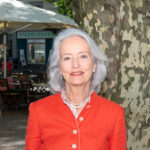
Martina Vondruska was born in Zurich and grew up in an Italian-Swiss family. After studying political science with a focus on political philosophy and completing a postgraduate course in business management at the University of St. Gallen, she worked on a cultural project for the Swiss Consulate General in New York before joining the family business. In addition to her professional career, she is deeply involved in the cultural sector, supporting institutions such as the Kunsthalle Zurich and serving on the board of directors of Kunstfreunde Zurich. Martina Vondruska lives in Küsnacht with her family.