
 What do the rivers of contemporary Europe tell us? This question is at the heart of the new edition of IN THE FUTURE 2026, the review promoted by the Association Making art IN our time, which between September and November in Lugano offers five meetings dedicated to the relationship between water, history, culture and societal transformations.
The series, entitled Europe Through Its Rivers , resumes the reflection begun in 2025 on the continent's future and develops it by choosing water as a vantage point. This choice allows for a range of different fields: from the climate crisis to mythological imagery, from contemporary art to European history, and even the changes brought about by digital communication.
The events will take place at the LAC , the Lugano Cantonal Library, and the Italian Consulate General. The event is organized with the collaboration of several cultural institutions and under the patronage of the City of Lugano. The project will continue in 2027.
Rivers before borders
The idea of observing Europe starting from its waterways stems from a historical consideration: rivers crossed the continent long before the current political borders were defined.
They were routes for trade, for the movement of populations, and for the circulation of ideas. Cities, economies, and communities grew around their banks, while the waters represented both a separation and a means of connection.
Their history is thus intertwined with that of Europe and its transformations. But today the issue also takes on an environmental dimension. Droughts and floods highlight the changing climate and bring the issue of water resource management and the relationship between human activity and the landscape back to the forefront.
The exhibition thus attempts to bring together different perspectives. The river is simultaneously a geographical feature, a historical document, an artistic subject, and a place of the imagination. In the final exhibition, it also becomes a metaphor for the flow of information that passes through smartphones and digital devices daily.
 The first event dedicated to water
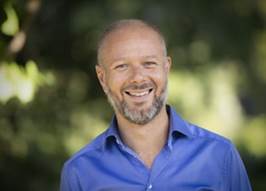
The calendar opens on Tuesday, September 22, 2026, at 5:45 p.m. in the Hall of the LAC in Lugano with "Water between Excess and Shortage. Drought, Floods, and Society in the Anthropocene ."
The speaker will be Giuliano Di Baldassarre , professor of Hydrology at Uppsala University, who studies the interactions between society and water resources, as well as drought and flood phenomena.
The first meeting will address an increasingly pressing issue in public debate: how extreme events are linked to climate change and how human decisions, from urban planning to land management, can influence its effects.
Di Baldassarre has also conducted research at the University of Bristol and directed the Centre of Natural Hazards and Disaster Science in Sweden from 2016 to 2025. His awards include the 2025 International Hydrology Prize and the European Geosciences Union's Plinius Medal.
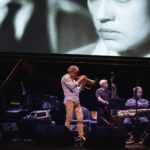
The evening will conclude with the screening of the video "8 Artists on Water ," produced by the Louisiana Museum of Modern Art in Copenhagen. In six minutes, eight artists—Marina Abramović, Kunlé Adeyemi, Elina Brotherus, Olafur Eliasson, Klara Hobza, Roni Horn, Superflex, and Bill Viola—examine the relationship with water through art, literature, and human experience.
The meeting is organized in collaboration with LAC Edu and the L'Uomo e il Clima Association.
 From real waters to imaginary rivers
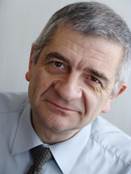
The second event shifts attention from the environmental to the cultural dimension. On Monday, October 12th, at 6:00 p.m. , at the Lugano Cantonal Library, philologist and scholar Philippe Walter will speak about " Good and Bad Geniuses in Some European Rivers ."
The meeting, held in French, will be presented and moderated by Stefano Vassere, director of the Cantonal Libraries, and organized in collaboration with the Cantonal Libraries.
Before becoming natural infrastructures used for trade and travel, rivers occupied an important place in the collective imagination. Their waters were associated with deities, spirits, benevolent creatures, and menacing figures.
Philippe Walter, a PhD from the Sorbonne and professor emeritus of Medieval French Literature at Grenoble III University, directed the University's Center for Research on the Imaginary. His studies include medieval mythology, Merlin, the Grail, and the relationship between pagan and Christian traditions.
His talk will therefore propose a journey through the representations of European rivers, in search of common elements in the continent's culture.
 Art's perspective on environmental transformations
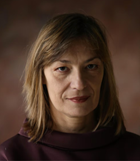
On October 20th at 5:45 pm , again in the LAC Hall, it will be Angela Vettese's turn with Nel nostro gerundio personale. La visione degli artisti.
Art historian and critic, Vettese will address the way in which contemporary artists observe water and territories modified by environmental changes.
Contemporary art has, in fact, transformed the ecological question into one of its fields of research. Scientific phenomena, such as climate change or the transformation of ecosystems, are translated into images, works, and forms of experience.
Vettese chaired the jury of the Venice Art Biennale in 2009 and was Councilor for Culture and Tourism of the Municipality of Venice between 2013 and 2014. She also directed Arte Fiera in Bologna from 2016 to 2018 and has taught at various Italian and international academic institutions.
Her current roles include directing the master's degree program in visual arts and fashion at IUAV University of Venice. She also serves on several scientific committees, including those of the National Museum of Digital Art, Villa Panza-FAI , and the Madre Museum in Naples.
 The question of Europe's decline
The fourth meeting directly addresses the theme evoked by the general title of the event. The date is yet to be determined, but it will take place in November, with the scheduled time being 6:00 PM . The venue will be the Cattaneo Room of the Consulate General of Italy in Lugano, at Via Pelli 16.
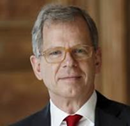
Europe and its decline? will be entrusted to historian Emilio Gentile , in collaboration with the Consulate General of Italy in Lugano.
The question arises from the geopolitical transformations of recent years, from wars to new international balances, through institutional difficulties and shifts in collective identities. The historical approach, however, will serve to remove the concept of "decline" from a mere reading of current events.
 Europe has already undergone profound transformations. The question therefore becomes what decline really means and whether the current difficulties can be interpreted as a period of crisis or a new transformation of the continent.
The presentation will conclude with a discussion with Bernardino Regazzoni , PhD in philosophy and former Swiss ambassador to Sri Lanka, Indonesia, Italy, France, and China. Regazzoni served as chief of staff to the Foreign Minister until 2022 and currently focuses on international affairs, with a particular focus on China.
Gentile, professor emeritus of Contemporary History at the University of Rome La Sapienza, is known for his studies on modernity, the nation, totalitarianism, mythical thought, political religions, and Italian fascism. He has also taught in Australia, France, and the United States.
 When the river goes digital
The program concludes with another transformation of flows. On Thursday, November 26, at 6:00 PM , at the Lugano Cantonal Library, Gabriele Balbi and Massimo Cerulo will present Rivers of Words. The Smartphone and Us. Tools, Languages, Influences, Transformations in Progress.
The starting point is once again the river, but this time metaphorically. Instead of water, words, images, and information flow through smartphones, devices now integral to everyday life.
 The meeting will explore the effects of this presence on communication and personal relationships: how do they change the way we learn, remember, communicate, and experience emotions? And above all, what relationship is established between people and the digital tools they use every day?
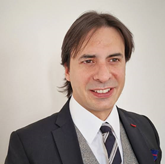
Balbi is a full professor of Media Studies at the University of Italian Switzerland and Pro-Rector for Education and University Life. In 2023, he published Imperfect Communication: Obstacles, Misunderstandings, and Adaptations with Peppino Ortoleva ( Einaudi).
Massimo Cerulo teaches Sociology at the University of Naples Federico II and is a research associate at the CNRS at the Sorbonne. The two scholars published Sentirsi. An anthropology of the smartphone in 2026 with Il Mulino.
The event is organized in collaboration with the Cantonal Libraries, the Möbius Foundation, and the University of Italian Switzerland.
A project that looks beyond the calendar
The Nel futuro 2026 exhibition isn't limited to these five events. Work on the NEL Archive , built over the years by the Fare arte NEL nostro tempo Association, continues in parallel.
This collection of video-recorded lectures features presentations by scholars, scientists, historians, artists, and cultural figures. The goal is to make content and interpretations available to an Italian-speaking audience, fostering opportunities for learning and discussion between generations and backgrounds.
According to the data reported in the review and updated to September 2026, the Archive's website exceeds 70.000 users , while the YouTube channel has 4.300 subscribers and the conferences have reached over 734.000 views.
The material will continue to grow with the new conferences in 2026 and with those of future editions.
A cultural network between Ticino and the cross-border territory
The project also develops through a complex network of collaborations. It includes LAC Edu, Cantonal Libraries, the University of Italian Switzerland, Franklin University, L'Ideatorio of the University of Italian Switzerland, CLUB delle Culture MUSEC, the Carlo Cattaneo Association, the Ticino Society of Fine Arts, the Philosophical Society of Italian Switzerland, FAI SWISS, the Lugano Agenda of the City of Lugano, the Association of Friends of the Museums of the Canton of Ticino, Agorateca Lugano, the Man and the Climate Association, Artphilein Editions, the Rolla Foundation, the Erich Lindenberg Art Foundation, the Dante Alighieri Society of Lugano, the Association of Classical Culture Delegation of Italian Switzerland, and Chiassoletteraria.
The network also includes organizations in the Como area, including Parolario-Como Cultural Association , MSE Association – Multiculturalism Solidarity Europe of Cernobbio-Como, Caracol Como Cultural Association, Arte@Arte, The Art Company Como and LaRivistaCulturale.com.
The event is supported by the DECS Cultural Support Office with the Swisslos Funding Office, the City of Lugano, the Supper in Emmaus Foundation, ProLitteris, and AIL.
From the river a question about the future
The underlying theme of the events is therefore broader than simply analyzing waterways. Rivers become a tool for observing what flows through Europe and continually alters its balance.
The climate crisis highlights the increasingly complex relationship between society and natural resources; myths recount the continent's long cultural stratification; art records and interprets environmental transformations; history allows us to assess the idea of a possible European decline from a more distant perspective; and finally, technology brings the concept of flow into the digital dimension.
From this perspective, Switzerland, located at the geographic center of Europe and crossed by major waterways, also becomes a starting point for a broader reflection on relationships, common roots, and the continent's ability to adapt to change.
The initial question therefore remains open: if rivers have continued to connect territories and communities while Europe was changing its borders, identities, and political structures, what new flows are destined to shape its future?