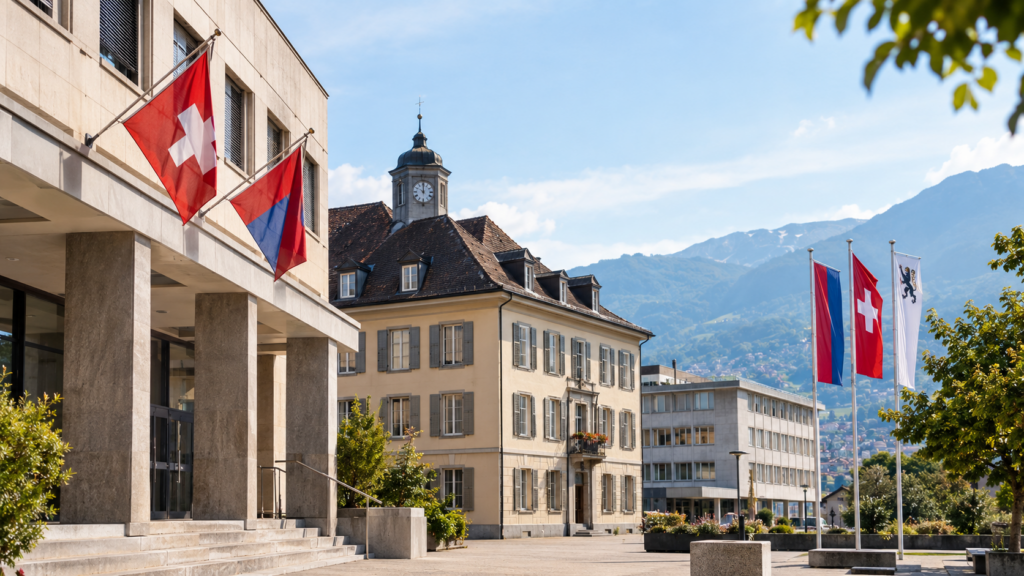
The federal elections of 2019 and the previous administrative in Ticino have led to a wide range of questions on national politics.
On Sunday we return to the polls and do so with a year delay, after covid made it impossible to organize the votes in 2020.
This will therefore be a short term, of only three years, yet the results of the major cities - which again due to the pandemic will arrive no earlier than Tuesday 20 - could give precise indications on the mood of the population.
Participation
Although Ticino is one of the cantons with the highest turnout, especially when compared to those of German-speaking Switzerland, administrators fear a low turnout. The further push forward of the postal vote could mitigate fears related to the pandemic, but the number of total votes will give an idea of the interest of the population in the choice of those who manage it, the sense of trust or the opposite of the disenchantment.
The national green wave
The federal elections of 2019 showcased what in the newspapers we called the "green wave", with the environmental party having seen its support greatly increase. Today the elections in Ticino will be able to deny or consolidate this data, especially starting from the big cities, where attention to these issues seems stronger.
The effects of the covid 19 pandemic
What to expect from these elections compared to the previous ones? In all the big cities (we will see it in detail) the mayors try to keep the role and reapply. The question is - beyond the results achieved or missed by the first citizens during the entire mandate - how much the pandemic will weigh on the choice of voters once they enter the polling station. Will citizens tend to abstract the historical moment and judge the political in a general sense? Or on the contrary, will his choices regarding the management of the pandemic weigh? And again, will the fear and the effects of the economic crisis linked to Covid 19 lead voters to radicalize their positions?
The alliances
While the Lega / Udc alliance is not under discussion in any polling station, the Greens and Socialists do not show up everywhere together and this certainly may not favor the left. However, there is also some problem on the other side and these elections will be a strong signal to understand if the right-wing alliance is destined to see its internal relations change, with the UDC increasing its consensus in Ticino too, in this case compared to the Lega, and which could have a further boost from the economic crisis linked to the pandemic.
These local elections will also be useful to understand the resistance of the Liberal Party, which had lost consensus in the federal 2019: historically the strongest, has had quite a few jolts in the last three years.
The cities
- A Lugano the outgoing mayor Marco Boradori challenges the former national councilor of the Popular Democratic Party Filippo Lombardi, who has lost his seat on the National Council and tries to secure a place for his coalition in the municipality.
- A Mendrisio outgoing mayor Samuele Cavadini of the Liberal Radical Party is re-nominating. The plausible opponent will be Paolo Danielli, now deputy mayor and who represents Democrats and Greens. Impossible to make a prediction in this city that has often changed administrators (and colors) over the years.
- A Locarno instead the ending seems obvious, because while Alain Scherrer, outgoing mayor, presents himself with a compact coalition, the socialists arrive to the vote divided.
- A Chiasso no surprise: the outgoing mayor Bruno Arrigoni (PLR) challenges his deputy, Roberta Pantani of the Lega.
- Particular the case of Bellinzona, where we are only in the second election after the new political / territorial order. The First Citizen Mario Branda of the Left Unity will not be challenged by his deputy Andrea Bersani, but the reference opponent remains the PLR.
- Among the smaller municipalities, several tacit elections.
Also to XNUMX. Paradiso - which is not very small - an agreement was reached to avoid the vote and reconfirm the mayor Ettore Vismara, thanks to the sale of a seat, bringing the PS / Verdi coalition back to the town hall thanks to Marco Foglia, surgeon and already experienced in politics. Vismara has repeatedly stated that this choice comes from the desire to guarantee continuity and strength to the municipality, in this moment of economic, health and social criticality.