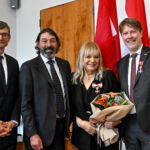

There are those who say NO, quoted a very famous song by Vasco Rossi, which could be the soundtrack of the initiative that brings together exponents of different political parties, representatives of the agricultural, economic, patrician and tourism worlds.
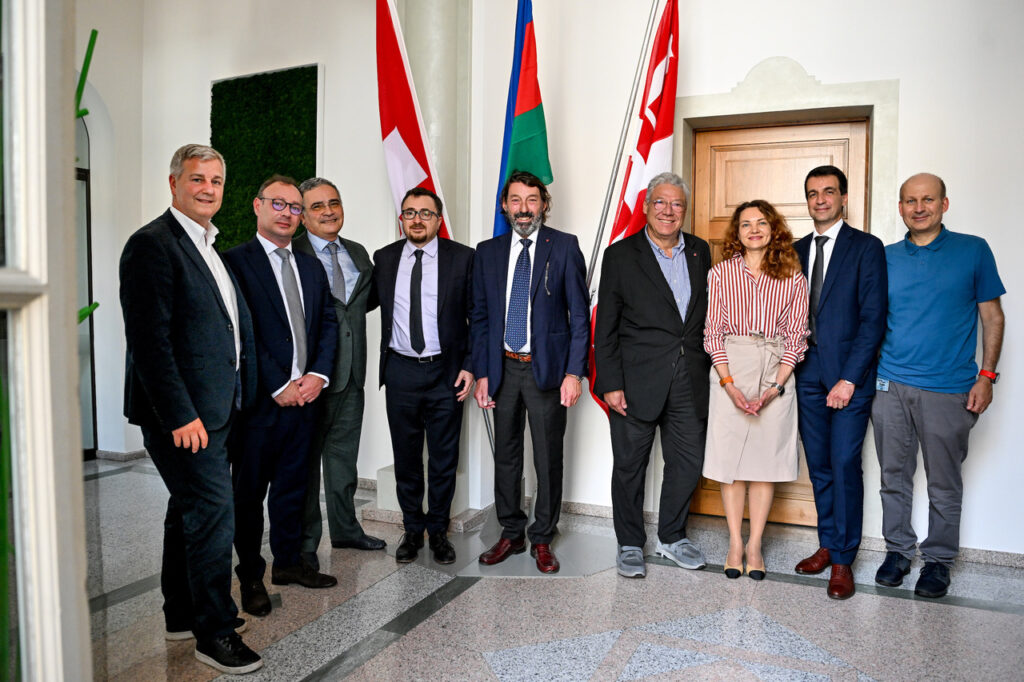
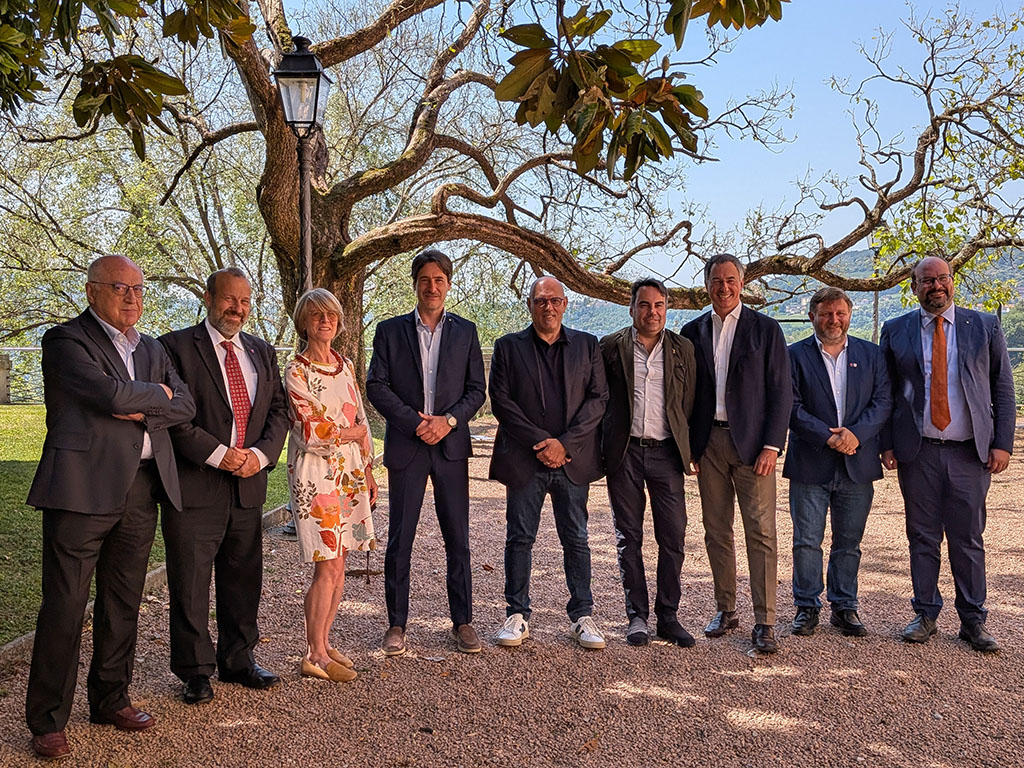
On September 27, Swiss citizens will be called to express their opinion on thepopular initiative for safe foodIn Ticino, the debate is heating up with the emergence of a broad coalition in favor of the "No" vote. Its position was presented on Wednesday, August 26, during a press conference moderated by Omar Pedrini, president of the Ticino Farmers' Union. The message from the speakers is clear: according to the Ticino Committee for the "No" vote, the initiative's stated objectives do not sufficiently take into account the characteristics of the Swiss territory and the potential economic consequences of its implementation.
Opponents are particularly targeting the goal of increasing net food self-sufficiency to at least 70 percent, the required changes in agricultural production, and the increased focus on plant-based foods. The Committee argues that such a far-reaching change, concentrated in a relatively short timeframe, would risk impacting the entire agri-food chain.
The question of prices and purchasing power
One of the main arguments raised by the "No" camp concerns the potential cost implications. Alessandra Alberti, speaking on behalf of the Federation of Swiss Food Industries and the Ticino Chamber of Commerce, drew attention to the consequences of a structural transformation of the system.
According to this interpretation, any new restrictions would affect not only agricultural production, but also processing, logistics, distribution, and catering. Some of the additional costs could therefore be reflected in final prices.
The topic was taken up by Daniele Piccaluga, coordinator of the Lega dei Ticinesi and Grand Councilor, who linked the debate to the daily concerns of families: wages, health insurance premiums, inflation, and the general increase in the cost of living. In his view, the priority should be to avoid a further weakening of purchasing power.
For opponents, food security is not just about the quality and availability of products, but also about people being able to purchase them at affordable prices.
Mountain agriculture and the Ticino reality
A key aspect of the discussion focused on the specificity of Alpine regions. Alessandro Corti, vice president of the Ticino Society of Alpine Economy and Grand Councillor of the Center, argued that the initiative risks applying uniform criteria to territories characterized by very different production conditions.
In Ticino, in particular, a large portion of mountain agricultural land consists of meadows and pastures. These areas cannot simply be converted to the cultivation of cereals or other crops. Livestock farming therefore plays an economic and productive role that involves, in addition to farmers, dairies, butchers, transporters, artisans, hotels, and restaurants.
According to Corti, a reduction in animal production without a corresponding decrease in consumption could result in an increase in imports, with the risk of transferring added value and jobs abroad.
A position that, in some respects, was also shared by Lea Ferrari, Grand Councilor of the Communist Party. Ferrari emphasized that strengthening food sovereignty remains an important goal, but questioned the modalities envisaged by the initiative.
Support for local supply chains, according to his analysis, should start from the specific characteristics of the territories and the production they are able to guarantee, avoiding imposing production models that could generate unsustainable costs, especially in peripheral and mountainous areas.
Even crop production fears new constraints
The "No" alliance challenges the idea that greater attention to plant-based products automatically represents a favorable solution for the entire agricultural sector. Giacomo Bassetti, president of the Young Farmers of Ticino, emphasized that even businesses producing fruit, vegetables, and grains could face new restrictions.
In his speech, he recalled the difficulties the sector has already faced, from extreme weather conditions to the spread of new pests, and emphasized the need to ensure stability for companies.
Uncertainty is considered a key issue: farming families make investments that will last decades, while the regulatory framework and agricultural policies are constantly changing. Also in the background is the debate on the future Agricultural Policy 2030+, which will define new conditions for the sector.
The 70 percent milestone
Among the most controversial points is achieving a net self-sufficiency level of 70 percent. Opponents believe this target is difficult to reconcile with Switzerland's current geographical and demographic characteristics.
Denis Vanbianchi, a member of the Ticinese Patrizia Alliance, also drew historical comparisons with the Wahlen Plan, developed during World War II to increase the country's production capacity. According to data cited at the conference, even under those exceptional conditions, Switzerland failed to reach the level required by the initiative.
The Committee's reasoning is that, with today's larger population, greater urbanization, and various environmental constraints, achieving this goal may require significant changes in production and consumption patterns.
The political debate and the precedent of 2021
Roberta Soldati, UDC Grand Councilor, focused her remarks on the relationship between the new initiative and previous popular consultations. She recalled the rejection, in June 2021, of the "Clean Drinking Water and Healthy Food" initiative, rejected by 60,69 percent of voters.
According to Soldati, the fact that some of the issues are returning to the electorate so quickly risks fueling disaffection with direct democracy. This political consideration is one of the reasons the Committee has included in its No vote.
The interventions also revealed a cross-party consensus that sustainability and food security are shared objectives. The divergence, however, concerns the tools identified by the initiative to achieve them.
Tourism, hotels and restaurants
The potential consequences would not only affect agriculture and the food industry. Federico Haas, vice president of Hotelleriesuisse Ticino and member of the Ticino Chamber of Commerce's UP, highlighted the impact that new restrictions could also have on the hotel and restaurant industries.
The tourism sector, he argued, must meet the needs of an international clientele and cannot forgo the availability of products that cannot be grown or found in sufficient quantities in Switzerland.
According to Haas, the food system already has rules and regulatory tools in place, and introducing further requirements could increase pressure on the margins of companies already faced with high costs.
The theme of freedom of choice
One of the most politically relevant aspects of the campaign concerns the relationship between the proposed constitutional objectives and individual eating habits.
The Ticino No Committee argues that, to achieve the expected level of self-sufficiency, it would be necessary to significantly reduce the production and consumption of foods of animal origin. Hence the accusation of possible state intervention in the population's food choices.
This is one of the interpretations that opponents place at the heart of the campaign: the initiative is described as a project capable of changing not only the production system, but also consumer behavior through new constraints and economic conditions.
Last Cervelat Day
After the press conference, the political debate gave way to a convivial moment linked to the "National Last Cervelat Day," an initiative organized in several Swiss locations as part of the campaign against the text being voted on.
The lunch featured cervelat, accompanied by vegetables and potatoes from Ticino and Switzerland, transforming one of the products most associated with the country's food tradition into a symbol of the referendum campaign.
An interactive map of the events of Last Cervelat Day is also available on the campaign website , with the initiatives organised in the different regions of Switzerland.
A No that crosses different sides
Perhaps the most striking aspect of the Ticino conference was the composition of the front opposing the initiative. From the League to the UDC, from the Center to the Communist Party, including representatives of agriculture, business, the patricians, and tourism, the Committee brought together political positions that are rarely found on the same side on other issues.
The agreement concerns the assessment of the proposed instrument, not necessarily the overall vision for the future of agriculture or food policies. The solutions remain different, as do the priorities of the individual parties and associations involved.
Ahead of the September 27 vote, the Ticino "No" camp is pursuing a common goal: protecting local production while taking into account the characteristics of mountain regions, avoiding new costs for families and businesses, and leaving greater room for consumer freedom of choice.
The popular vote will now determine whether the initiative will convince a majority of voters. For its part, the Ticino Committee calls for the text to be rejected, deeming it too costly and unsuitable for the country's productive environment.