
Q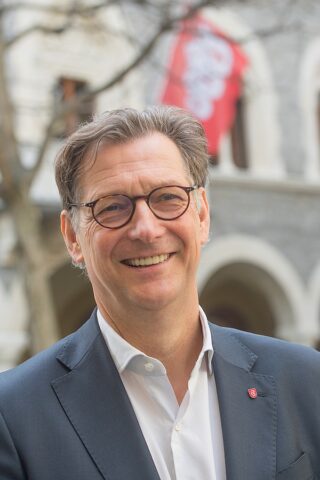 These weeks mark the beginning of a political season, culminating in the cantonal elections scheduled for April 11, 2027. Municipal leaders in our Canton will be tasked with developing administrative and planning strategies that will not only have to cope with a predictably lively election campaign, but will also have to deal with a Grand Council and a Council of State renewed by popular vote. The people, in turn, will also vote on the renewal of municipal political balances in 2028. We ask the mayors of the Canton's main cities for their forward-looking opinions on the developments that will inevitably impact the citizens.
"While I remain convinced," recalls Mario Branda, Mayor of Bellinzona , "that the City will, as always, be called upon to continue along the path undertaken in recent years of consolidation of the new Municipality, and therefore to maintain substantial decision-making autonomy with respect to external dynamics, the future configurations of the political bodies at the cantonal level will inevitably have repercussions on the 'lower' institutional level. I am thinking in particular of the decisions made regarding the distribution of burdens between these two levels, which in recent years—I imagine also as a consequence of the Canton's self-inflicted budget difficulties—have proven detrimental to the Municipalities and to a City like Bellinzona, eroding their already limited financial resources and, therefore, limiting their scope for action in terms of services and projects for the population. It is essential that the new government emerging from the upcoming elections truly changes course."
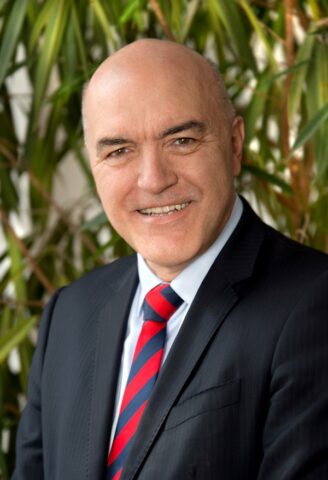 «In recent years», specifies the Mayor of Chiasso Bruno Arrigoni, "The key municipalities of the Canton of Ticino have found themselves faced with ever-increasing financial burdens from the Canton. These are difficult to predict and pose challenges to annual financial planning, which is especially crucial for the five economic hubs of the canton. We will soon also have the "bills" from the two health insurance initiatives approved by the vote last September, which will partially burden our municipal coffers. In this context, tax revenues are unable to offset the increased burden levied by the Council of State. Another issue that concerns us as the Municipality of Chiasso is the future of the so-called "S permits" for Ukrainian citizens, which expire next year. Currently, in Chiasso, we have a large community from Ukraine, consisting of approximately 400 people. If the Confederation does not change its mind, 25% of any cantonal welfare contributions will be borne by the municipalities, and here too, the largest municipalities will primarily bear the consequences. In this challenging economic climate, fulfilling the primary role of driving the cantonal economy is not easy. It will therefore be essential to engage in direct dialogue with the new Council of State, developing, if possible, a shared multi-year financial plan. Medium- and long-term revenue and expenditure planning will be crucial for the canton's main centers.
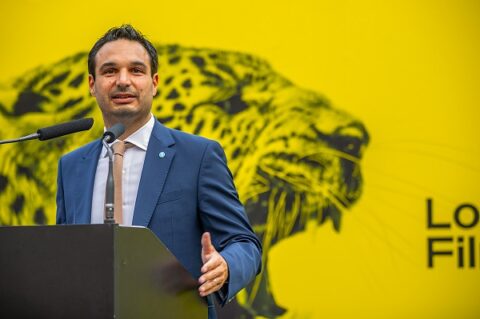 "It's inevitable," he continues. Nicola Pini, Mayor of Locarno, "that what happens at the cantonal political level has an impact on what we are doing, both as a Roundtable of Urban Centers and as individual Cities. We must always remember ourselves, and especially remind cantonal institutions, that ultimately, for citizens, there is only one public body, and it is called upon to propose and resolve matters in the general interest: it is of little use to pass on burdens and responsibilities, just as it is counterproductive to implement uncoordinated cantonal and municipal public policies. This is an important aspect that we, as Municipalities and as Mayors, feel deeply about, also because we are fortunate to represent the institutions closest to the citizens, with whom we interact constantly. In any case, I hope that the renewal of cantonal and municipal powers will lead, on the one hand, to greater agreement on some issues that currently see us holding differing positions, while, on the other, allowing us to advance important projects on which we are working together. For Locarno, I'm thinking in particular of the planned Cantonal Museum of Natural History with the related redevelopment of the strategic Santa Caterina area, which will perfectly complement the investments made not only by the City, which has included the redevelopment of Rotonda, Piazza Grande, and Largo Zorzi, but also by private investors, such as the Grand Hotel and the Varenna shops. I'm also thinking of the renovation of the Pretorio, school buildings, and the development of the strategic audiovisual sector, so as to exploit, rather than simply suffer, digitalization. These are all important projects not only for Locarno, but for Ticino as a whole.
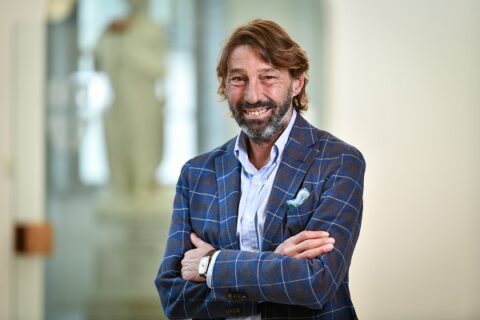 «Making predictions at this time is absolutely not easy», comments the Mayor of Lugano, Michele Foletti: However, it's already predictable that it will be a highly uncertain race, given several factors we know today: Christian Vitta's unwillingness to run again, the split between the League and the UDC, and the left's embrace of the single PS-Greens-MPS list. Thus, many scenarios open up regarding the possible future composition of the Council of State. It will then be interesting to understand what balances or imbalances there will be in the composition of parliament, which could regain the ability to collaborate or continue in constant opposition. We'll understand everything on April 11, 2027, but the important thing is that the election campaign doesn't prevent this Canton from finding responsible solutions that allow us to look to the future with a modicum of optimism. The risk is that, in the hope of gaining a few more votes, decisions will be made for unworkable solutions that risk causing more problems than they were intended to solve.
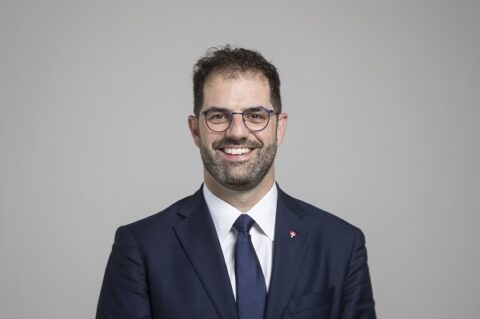 «The City of Mendrisio», observes Samuele Cavadini, Mayor of Mendrisio, "builds its vision on its strengths: the university hub, a dynamic economy, an extraordinary cultural and landscape heritage, proximity to towns and cities, and a strategic location at the center of important transport links. From this awareness, projects like Mendreasy were born, which portray an area worth living, working, studying, doing business, and building one's future in.
Mendrisio embraces its role as the regional capital with conviction. Through the expertise, services, and networks it provides, it contributes daily to the development of the entire Mendrisiotto region. This is a responsibility it shares with the other regional capitals of Ticino.
The new political season is an opportunity to more clearly recognize the strategic role of cities. All municipalities are essential, but not all perform the same function. Those who generate services, opportunities, and development for an entire region must be able to count on solid institutional relationships, adequate tools, and constructive dialogue with the Canton. It is from this collaboration that balanced and shared growth arises, benefiting the entire Ticino. Investing in Mendrisio means investing in one of the drivers of cantonal development. If the role of the capitals is clearly recognized, even decisions over the next four years become…easy.