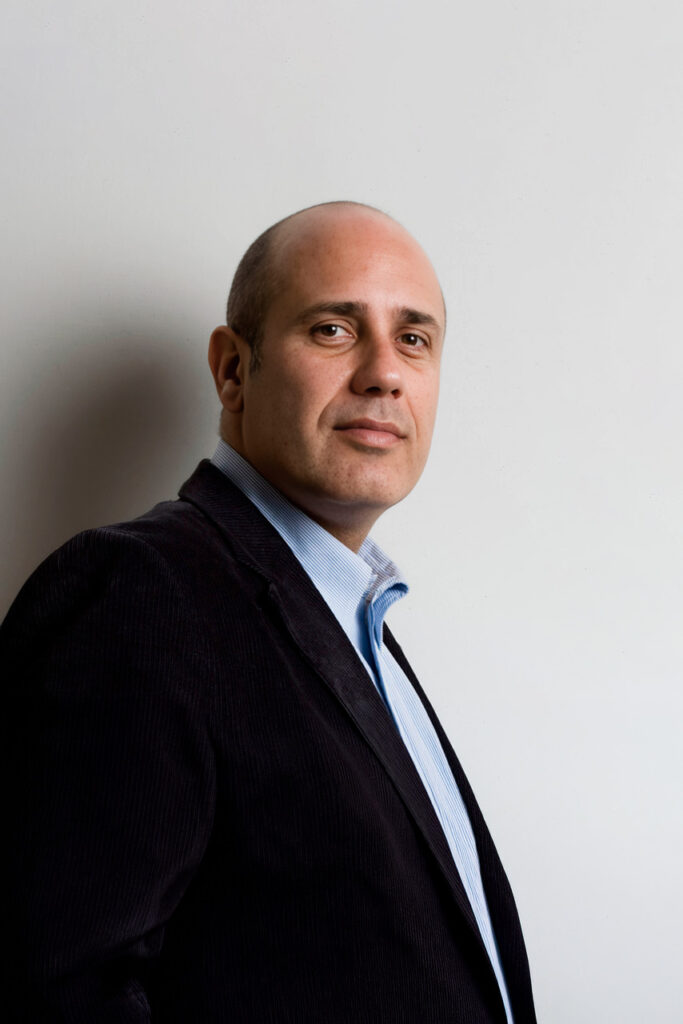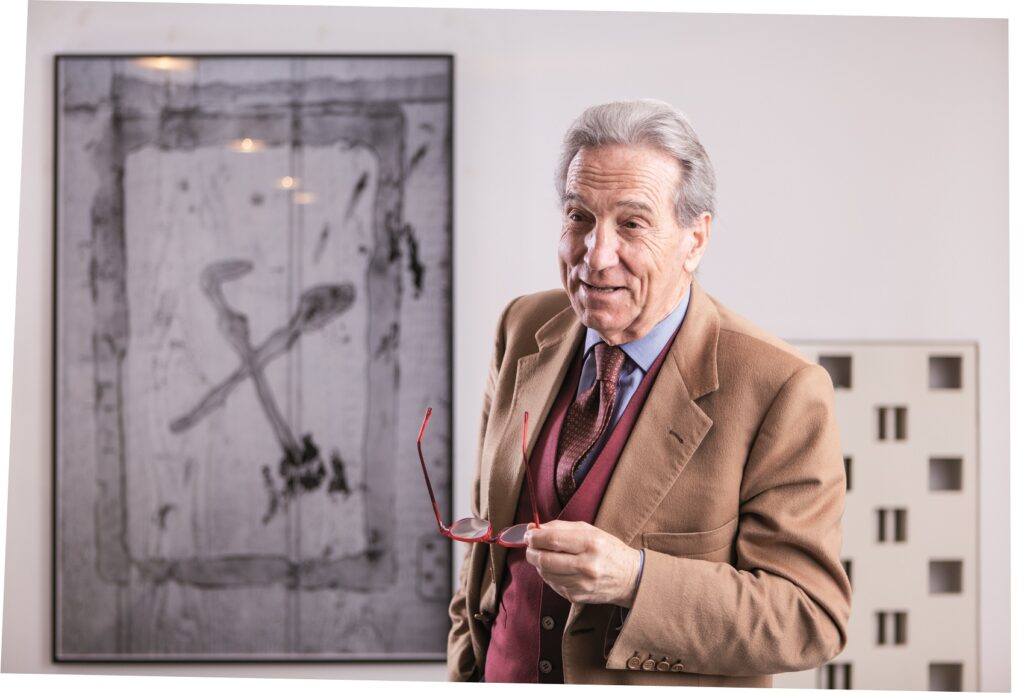

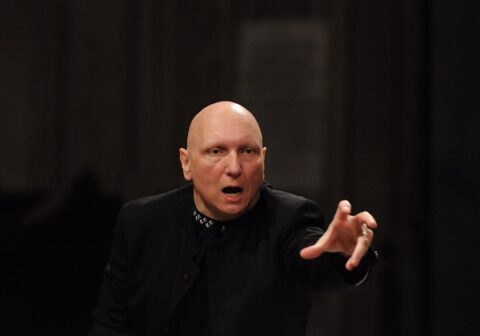
 In over fifty years of career, you have performed and conducted in every theater and concert hall on the planet. Can you recall your first steps in the world of music?
I come from a family of musicians; my grandfather and his brothers were all renowned instrumentalists, and my father, a high school professor, also devoted time to music criticism. My mother's grandfather, a boatbuilder, played the accordion, and my mother, Flavia, had the voice of a nightingale. I started playing the piano at age 4, and at age 10, I gave my first public concert at the Carlo Cattaneo Hall in Lugano. I loved the organ in my church in Pazzalino (Pregassona), but to reach the pedals, I had to play standing… I then trained musically in Zurich, studying organ with Eric Vollenwyder, piano with Verena Schaufelberger and Jürg Von Vintschger, singing with Carol Smith, and conducting with Klaus Knall. I subsequently perfected my organ studies and historical performance practices with Gaston Litaize in Paris and with Michael Radulescu in Vienna and Cremona.
In the 1980s, I embarked on an intense career as an organist, performing thousands of concerts, and in 1993, I was appointed permanent director of the vocal and instrumental ensembles of Radiotelevisione della Svizzera italiana. Over thirty years of collaboration, RSI has allowed me to realize my vision of creating a group of highly talented individuals eager to work together, combining professionalism with the ideals of art and brotherhood. In 2026, we will celebrate 90 years of the Choir and 30 years of the Baroque Choir , and the work continues, continually integrating new and younger talents. What seemed like a fad in the 1950s has now become established, and many orchestras have turned to performing on historically informed instruments and practices (HIP). I founded the orchestra for historical instruments at La Scala, and I have been doing the same for ten years with the Vivaldi project at the Teatro la Fenice in Venice, and I am regularly invited by many European orchestras seeking to update themselves on these aspects.
The ensemble I Barocchisti represents the realization of a project to which you have devoted considerable energy, human resources, and ideas. What challenges does playing with historical instruments entail?
"'Historically informed' performances require the use of original instruments or faithful copies. The timbre of wind instruments, as well as bows fitted with gut (not metal) strings, is absolutely incomparable to the sound of an orchestra with modern instruments. Historical instruments certainly present pitfalls regarding intonation and the need, for wind instruments, to change instruments depending on the key of the piece. The work carried out over many years has allowed this ensemble to acquire all the expertise, combined with a love for the composers and the pieces performed, necessary to achieve technical precision, an inspired vision, and a connection with the audience's soul. The goal is to move and educate."
You've repeatedly expressed criticism of the canton's music policy. What are your specific concerns?
Lugano can, in a certain sense, be described as the city of missed opportunities. Despite possessing all the necessary conditions to become a "European capital of music" (the climate, the pleasant landscape, the hotel facilities, the location between Zurich and Milan, etc.), it often proves incapable of fully exploiting its potential. Consider the difficulties encountered by the "Primavera Concertistica" in the late 90s, which, despite being firmly supported by many private individuals, including the Mantegazza family , played a leading role , failed to find the international outlet it deserved. Even more sensational is the case of Marta Argerich, whom Ticino let slip without realizing that her festival was an absolute must-follow model. A real shame, because there is no valid reason why Lugano (but we should speak of the City of Ticino, combining the strengths and characteristics of cities less than two neighborhoods apart in Milan) cannot be a Salzburg of the south. There's a high-level, culturally significant , and often wealthy, music tourism industry just waiting to discover new destinations. The Canton of Ticino simply needs to decide to emancipate itself. First with education, then with action.
So what is Lugano missing to align itself with a musical programming of the highest international standard?
Our cultural landscape should look, and not just for linguistic reasons, to Italy, which doesn't always showcase its repertoire. Lugano, through its own operatic-instrumental festival, could become the musical hub of the great, forgotten Italian tradition. Think of the dozens of composers whose works have been almost entirely abandoned, but who deserve rediscovery and proper recognition. When Lugano's programming takes a leap forward in terms of courage and a desire to innovate, success is almost always assured. I give the recent example of Gaetano Donizetti's opera Anna Bolena , directed by Carmelo Refici and performed by the Barocchisti, which received rave reviews not only at the LAC but also on tour in Italy's bel canto theaters.
We therefore still have a lot of work to do to fully exploit all the potential that the LAC, the Conservatory, and the exciting upcoming City of Music are capable of expressing."
The prospects for the Orchestra della Svizzera Italiana and I Barocchisti don't seem very rosy at the moment...
As is well known, the Orchestra della Svizzera italiana (formerly Radiorchestra) , which celebrated its ninetieth anniversary in 2025, is one of fifteen professional orchestras recognized throughout Switzerland. This orchestra plays an important role in the Canton's cultural, tourist, and economic landscape, and in recent years has expanded its concert offerings and the resulting impact on the Ticino region. Furthermore, thanks to the quality of its work, it serves as a cultural ambassador of excellence throughout Switzerland and internationally. The proposed renewal of the agreement on the provision of annual financial support to the OSI Foundation is therefore a fundamental step towards ensuring the continuity of the Orchestras' activities and the numerous other related initiatives. I have always aspired to join forces between the RSI Choir, the Barocchisti, and the OSI to create a synergistic production center with nearly a millennium of repertoire at its disposal, and to do so with the appropriate instrumentation and style.
It must also be said that these institutions are dear to the people of Ticino, and private individuals have contributed on several occasions to their support to ensure its functioning and the development of ambitious projects. Geo Mantegazza, I am certain, would never have failed to provide his support, and not only financially: he was a bridge builder, capable of establishing the connections necessary to achieve the desired results.
The Civica is another institution that survives partly thanks to private contributions…
Absolutely yes. The Lugano Civic Philharmonic was founded in 1830 by the initiative of about twenty amateur musicians from Lugano. Today, this association is the longest-running in the city. Its musical history is marked by a constant commitment to always improving and persevering in the pursuit of excellence, also promoting, together with the musical societies of Bellinzona, Chiasso, and Locarno, musical culture among young people and citizens. But the Lugano Civic Philharmonic would not be what it is today if, in its more recent past, it had not been able to develop and integrate complementary activities that qualify its vision, among which the teaching of a musical instrument is one of the main ones. To this end, since 1977 it has enhanced its educational activities by launching the creation of a Music School, which later became the Lugano Music School.
Regarding the musical education of young talents, an important contribution also comes from the Foundation you created in memory of your wife Adriana Brambilla…
"It was Claudio Mantegazza who introduced me to Adriana, whom I married in 1989. Adriana was a very discreet and profoundly generous person. During her long illness, we had time to decide how to enhance our legacy. With my mother, Flavia Brivio, and my parents, Jeannine and Adriano Brambilla (all now sadly deceased), we decided to honor Adriana's memory through a foundation called "pro musica et natura," which would help young music students on the difficult path to professional commitment, while respecting nature. I like to call ours a "silent patronage," and we've already helped about thirty students graduate from the Conservatory of Italian Switzerland. In particular, some very talented young people from Latin America.
And as for nature…
We are always working to offset the pollution generated by our activities. This is important because culture also generates pollution, and it is our duty to address it. I recently completed the first phase of a project that has kept me deeply engaged, even emotionally, over the past few years. After various bureaucratic hurdles, I managed to purchase a large property in Vernate, once owned by the Austrian actor, mathematician, and intellectual Professor Otto W. Fisher. It is a sort of spacious chalet surrounded by a 20,000-square-meter park. An extraordinary natural environment that immediately inspires peace, reflection, and meditation, but also ideal for fully dedicating oneself to music. In this context, I oversaw the restoration of several annexed buildings intended to host musicians, conductors, composers, and students who wish to pursue new musical experiences. I like to think of this place, which fully reflects the aspiration for spiritual well-being among the woods, plants, and animals—there are deer, foxes, wild boars, as well as a wide variety of birds and insects—as a sort of small Monte Verità in the heart of Malcantone.
When do you plan to open this fascinating and spiritually stimulating place?
After five years of working early every morning, with only the assistance of an assistant, on all kinds of building and restoration work, last December 21st, after purchasing a Mozart piano, we held a concert with the members of our foundation. It was exactly 10 years since its establishment, and it was a truly moving and engaging moment. In September, we will present the new season, and in the fall, another concert will be held, which, in addition to being a celebration, will also mark the official inauguration of this special place.
You will be very happy, in agreement with Mario, to soon organize in this unique setting that inspires reflection and silence, a concert expressly dedicated to the memory of Sergio and Geo Mantegazza."
Finally, after many musical endeavors and countless international successes, what personal joy do you still feel in making music today?
My grandfather, Michelangelo Fasolis, a musician and co-founder of the Radiorchestra, advised me against becoming a musician. Then he gave up, realizing that I too was afflicted by the "music virus," a truly incurable and wonderful disease. Music has always been my reason for living, in the sense that it is the only art that connects souls with a physical vibration and, depending on the circumstances, can educate, uplift, heal, console, and so much more. But for me, beyond the presence of an audience or sharing it with other musicians, what remains above all is the intimate pleasure of studying and playing alone, without compromise or constraints, one-on-one with an instrument and a score, listening only to its breathing, abandoning myself to the sense of enthusiasm, freedom, refuge, or comfort with which it alone can inundate the human soul.
 My memory of Geo
I began to know Geo Mantegazza when I was very young, thanks to a particular family circumstance. My godmother, Anita Poma Mantegazza, was his aunt, and sometimes, when I went to visit her, she would tell me about this person who was so esteemed and appreciated in the family for his intelligence and his kind, refined manners.
A few years later, now a teenager, I was a young man who at the time would have been considered "wild," and upon her death, my godmother chose to remember me in her will with a bequest, which, however, she made conditional on the control entrusted to Geo Mantegazza. It was then that I began to get to know him personally, I gained his trust, and I was able to easily collect that donation, which greatly helped me in my musical studies. He assumed the role of godfather passed down to him by Aunt Anita.
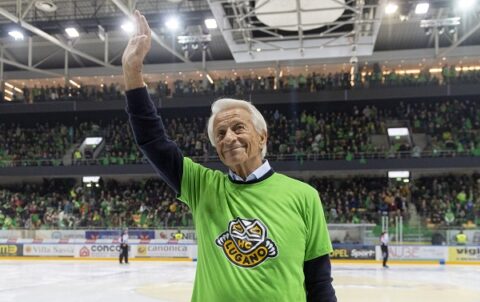
Another episode that connects me to Geo Mantegazza dates back to the beginning of my passion for music. Like many young people, I was a hockey player, but above all, I was a huge fan of the Hockey Club Lugano, which was enjoying its greatest successes at the time. Together with my cousin Flavio Maspoli, we arranged some light music, with a rousing and celebratory tone, which were played during games and were a great success: almost a sort of " We Are the Champions" ante litteram.
My deepest knowledge and constant association with Geo Mantegazza, however, are linked to his passion for classical music and his intimate pleasure in attending important performances, especially operas performed at the Teatro alla Scala. He was certainly proud of my work at the great theater. He was a connoisseur of symphonic music, as evidenced by his many support of Lugano's musical institutions. But his truest passion was for the great Italian opera composers, Verdi and Puccini first and foremost. He appreciated opera's ability to combine sets, costumes, and ballets. But, in particular, the extraordinary power of lyrical voices, capable of penetrating thousands of spectators, even without microphones and amplification, speaking directly to their hearts and souls.
Over the years, a close bond was born, which was then consolidated through various occasions in which I had the honor of playing, especially the organ, to celebrate his family events, especially weddings.
When Mario asked me to play at Geo's funeral, I didn't hesitate to leave rehearsals on tour so I could arrive and leave on time and not miss the last (but not last) farewell. Seeing his chauffeured Rolls-Royce outside the cemetery reminded me of a while earlier, when I'd chased him on my bike as he left his villa in Figino. I hadn't had the courage to pull up alongside and knock on the window to say goodbye, but I have this fond memory. Thank you, Geo!