
 For the director of theITicino Cardiocenter Institute, Massimo Manserra, the challenge isn't just technological or organizational, but also cultural: keeping the patient at the center, the human dimension of care, and the ability to innovate without losing our identity. This conversation highlights the vision of an increasingly integrated, multidisciplinary, and human-centered medicine.
Cardiocentro Ticino has undergone a major transformation in recent years with its integration into the EOC. What was the main challenge?
«The most significant challenge was probably integrating the Cardiocentro into a larger organization while maintaining its identity, culture, and level of specialization that have made it a point of reference for the Ticino population over the years.
It wasn't a foregone conclusion. Every integration process inevitably involves organizational, cultural, and emotional changes. Looking back on the five and a half years since joining the EOC, I believe we've managed to transform what initially seemed like a challenge into a great opportunity. The most significant result is precisely this: today, the Cardiocentro is fully integrated into the EOC, but has strengthened its role as a specialized center. We can count on the strength of a large hospital system while maintaining a strong clinical and scientific identity.
 Today, the Cardiocentro is evolving into an institute dedicated to the heart, blood vessels, and lungs. What does this mean in concrete terms?
Modern medicine increasingly requires integration between different skills. The heart, great vessels, and lungs belong to the same anatomical and clinical region, and many pathologies are closely linked. Bringing cardiology, cardiac surgery, thoracic surgery, and gradually also vascular surgery and angiology under the same roof allows specialists to work side by side, sharing experiences, decisions, and patient-centered treatment plans.
For patients, this translates into greater safety, greater effectiveness, and much more comprehensive care. It means avoiding fragmentation and dispersion of expertise across the region. There's another important aspect: with this project, the Cardiocentro is increasingly open to patients with lung and thoracic oncology conditions, offering them a highly specialized yet deeply humane environment.
In your communications, you often reference major European university centers. What is the role of Cardiocentro Ticino today?
" The Cardiocentro has already assumed a role that extends beyond cantonal borders, while remaining primarily the cardiology and cardiac surgery center of Italian-speaking Switzerland. Over the years, we have developed expertise, activity volumes, and clinical quality that allow us to interact with top-level Swiss and European institutions. When we refer to major university centers, we do so not out of imitation, but because specialized medicine everywhere is moving toward integrated, multidisciplinary, and highly technological models.
Our goal is to ensure that Ticino can offer standards of care increasingly similar to those of major international centers, while maintaining a more personal and human approach to patients. This is the real challenge."
 Cardiology is experiencing a period of significant innovation. What changes do you consider most significant?
We are experiencing a period of extraordinary technological and scientific evolution. I'm thinking first and foremost of minimally invasive interventional cardiology, which today allows us to treat very complex conditions with less traumatic procedures for the patient and much faster recovery times than in the past.
Advanced diagnostics, cardiovascular imaging, and artificial intelligence applied to the interpretation of clinical data are also profoundly changing the way we treat, fostering increasingly personalized medicine. Alongside technology, however, the cultural approach is also changing. Today, we work much more in multidisciplinary teams, bringing together different skills around the patient. True innovation isn't just technological: it's the ability to integrate knowledge, people, and treatment pathways.
How much do stress, a sedentary lifestyle, and a modern lifestyle contribute to the increase in cardiovascular diseases?
They have a significant impact. Contemporary society exposes people to levels of stress, a sedentary lifestyle, and pressure that are very different from those of the past. Added to this are an unbalanced diet, sleep disturbances, and increasing difficulty finding adequate recovery time.
The heart is inevitably affected. Today, we see cardiovascular diseases even in relatively younger people than a few decades ago. This is why prevention is essential. But prevention doesn't just mean regular medical checkups: it also means learning to listen to your body, recognize its signals, slow down when necessary, and take more conscious care of yourself.
The Cardiocentro is also perceived as a center that pays close attention to the human dimension of care. How important is the relationship with the patient?
Modern medicine has extraordinary technologies at its disposal, but patients aren't just experiencing an illness: they experience fear, anxiety, fragility, uncertainty, and a need for trust. This is why the human relationship remains central to care.
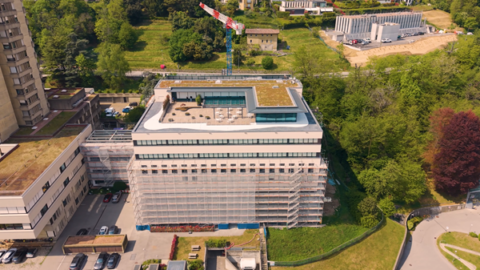
The Cardiocentro has always strived to combine high levels of specialization with patient-focused care. I believe this is one of the characteristics that the Ticino population most recognizes in us. The newly inaugurated spaces were also designed with this philosophy in mind: not just clinical efficiency, but concrete attention to the well-being of patients, their families, and staff.
In addition to clinical activity, the Cardiocentro also invests heavily in training and research. How important is it today to nurture the younger generations?
Education, research, and care are the three pillars on which a modern specialist center is founded. The quality of an institution is measured not only by the care it offers today, but also by its ability to contribute to the training of tomorrow's professionals. In an era of rapidly evolving medicine, it is essential to create environments that attract young talent, offer quality training programs, and continuously develop clinical research. The Institute's project dedicated to the heart, blood vessels, and lungs will also significantly boost Ticino's attractiveness in the medical and academic landscape.
You come from a human resources background, not a medical background. How has this experience influenced your approach to managing the Cardiocentro?
My professional career has developed in the world of human resources and the humanities. I entered the healthcare sector in 2013 when I joined Cardiocentro, and I immediately became deeply passionate about this environment.
I was particularly struck by the ability to combine performance, technique, and individual care. I subsequently delved deeper into the field with a master's degree in health and social care economics, leading me to the role I hold today. Perhaps this very background has led me to always view healthcare not just as a clinical organization, but also as a place built on human relationships, listening, and responsibility toward the community.