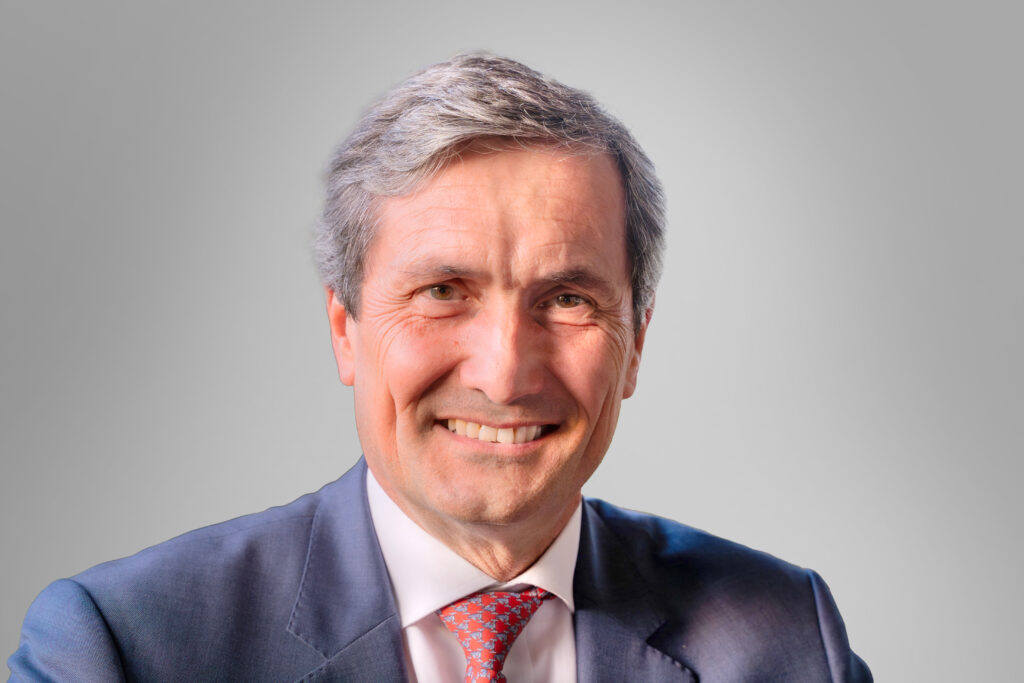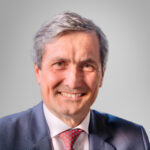


His appointment at the helm of ABT fully represents a return to that financial world that has seen him as a protagonist for many years. With what spirit are you preparing to face this new assignment?
«With a lot of enthusiasm. I left some managerial functions, where it is necessary to dedicate a lot of time to the daily management of the business, to devote myself to functions where we deal with more issues that will have an impact in the medium term. There is a lot to do and I'm certainly not getting bored ».
During these years, marked by a serious international financial crisis, the Swiss banking system has undergone quite a few transformations: what are the main structural elements that need to be taken into account today?
"For private banking, certainly the transition from a world centered on banking secrecy to a world where customer privacy remains important but where knowing whether or not the capital is declared to the taxman of residence is no longer a topic, given the automatic exchange of information. The competition between financial centers will remain fierce and we have lived on our skin as there are countries that have had no qualms in inflicting blows below the waist, preaching well and scratching badly.
For the financial sector in general, as indeed for many other economic sectors, the impact of digitization and new technologies in general will be important over the next 10 or 15 years. It is not just about the importance of information technology (already today a lot revolves around IT) but about a radical change of paradigm. The customer will benefit from financial services differently and banks will have to radically change their processes.
Finally, a whole series of professions in the sector are destined to disappear but new ones will be created. In my opinion, the challenge will be to be able to ferry as many collaborators as possible from one world to another ».
In this context, what do you think are the strengths and weaknesses of the Ticino banking system?
«The strengths are those of the Swiss system: a solid, reliable, economically strong, legally stable country and a financially well-capitalized banking system, rich in know-how and experience, still a world leader in offshore asset management. The weaknesses are a system that is too oriented towards a single market, Italy. A country that has had a stagnant economy for years (if the economy does not create wealth, the assets managed by the banks certainly cannot grow) and which lately cannot be said to be particularly open with Swiss banks. The history of the Roadmap established with Italy and then systematically disregarded represents a good lesson ».
What are the objectives that ABT should pursue over the next few months and years?
«At the moment, we are closely following the negotiations between Switzerland and Italy for access to the cross border market. More generally, as a trade association, we try to closely follow the evolution of the situation (economic, legislative, regulatory) and support our members ».
In particular, what is the most important ABT project for which you feel you have to spend all your energy?
«In a world undergoing profound change, the most important thing is to have a staff that is always up-to-date and able to face challenges. Training becomes a very important competitive factor. For a financial center located in a relatively small place (we are neither London nor New York, but not even Zurich or Geneva) it will be important to create a system between educational institutions. USI, SUPSI, Centro Studi Bancari must network their offer, avoid duplication and collaborate to optimize the use of resources, which are in themselves very limited when compared to the large financial and university centers ».
Lastly, in the course of our most recent interview, you had expressed a desire to thin out your commitments to allow yourself more time to study and write. Do you think that this new professional adventure will allow you to carry on this project?
«As I said before, it is not so much a question of working less (although, compared to the past, I can more easily carve out a few moments just for myself or for the family) but to take care of other things. Less uptime, more time devoted to strategy development and control functions. The world in which I move is always the same, but the perspective is different and the experience enriching ».