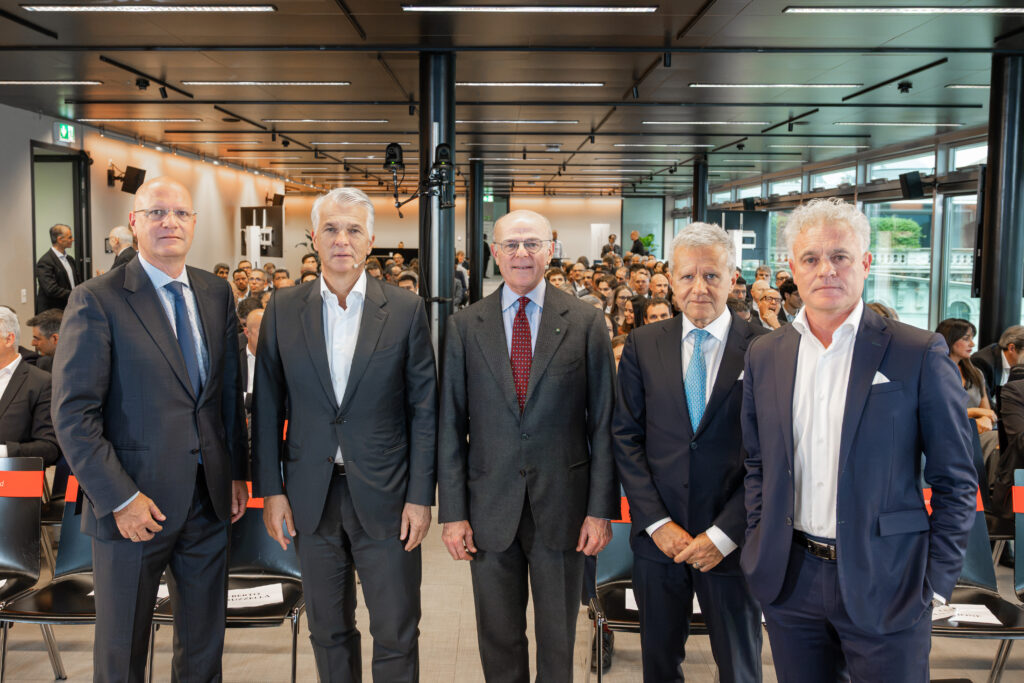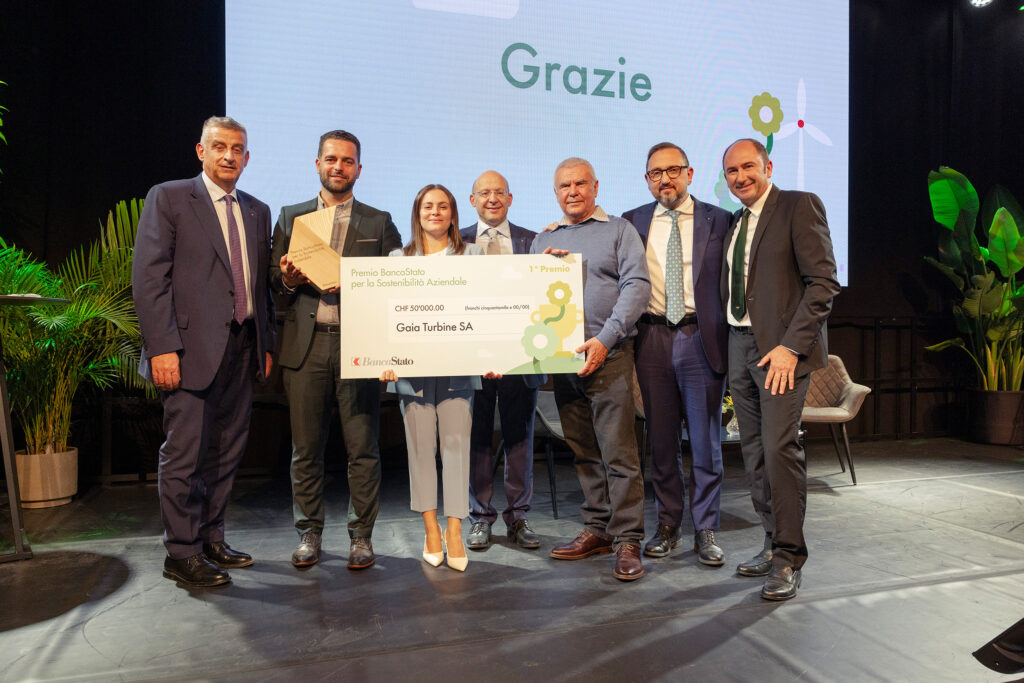

They responded to the inquiry:
Sébastien Pesenti (SP), Head of Private Banking in the Ticino Region of Credit Suisse and Head of the Ticino Region
Claudio Cereghetti (CC), Member of the Executive Board and Head of BancaStato Private Banking
Marco Forzinetti (MF), Co-director of BPS (Suisse), Head of Private Banking Lugano
Franco Polloni (FP), Head Central Switzerland Ticino & Italy Region of EFG International
Claudio Beretta (CB), Head Ticino & St Moritz of Banca Julius Baer & Co.
Alberto Crugnola (AC), Head of Private Clients Migros Bank Ticino Region
Luca Pedrotti (LP), Managing Director of UBS Ticino
What are the main consequences that the international financial crisis of recent years has had on Private Banking activities in Switzerland and Ticino?
SP: «Great efforts have been undertaken by the supervisory bodies in collaboration with the banks to make the system more stable. By way of example, FINMA has requested the major banks to unbundle their Swiss business. This in the case of Credit Suisse led towards the end of 2016 to the creation of Credit Suisse (Switzerland) Ltd, a unit focused entirely on activities in our country, separating them from international ones. The new structure demonstrates the importance of the Swiss market for the bank and the willingness to invest in the area in which we want to continue to grow ».
CC: “The last few years for the banking sector have certainly not been easy. The various tax self-declaration programs, the implementation of the automatic exchange of information, the implementation of new European and Swiss regulations relating to investor protection have imposed a great deal of commitment on banking and financial players. This change has unfortunately led, in some cases, to company downsizing or even closures. Nonetheless, I believe that all this commitment ultimately strengthened our market: this is demonstrated by the fact that there has not been a generalized stampede by customers, who indeed demonstrate to appreciate the great added value in terms of consultancy. and service provided. A customer who now belongs to a Swiss bank receives a comprehensive offer, ranging from tax to social security, corporate or private aspects. It must be said that it is not only the banks that have changed their approach: the innovations of recent years have also been accepted and assimilated by customers, who are well aware that we have left an era behind ”.
MF: «The financial crisis had two main effects on the Private Banking business in Switzerland and Ticino. On the one hand, it has pushed heavily indebted countries to implement measures aimed at increasing tax revenues and among these also regularization programs and repayment of capital abroad, with the consequence of reducing the assets managed and providing an increase in complexity in the management of foreign customers. On the other hand, however, the need to diversify the country risk emerged more clearly, favoring Switzerland as a completely tax-compliant allocation center for a more or less large component of its movable assets.
For the Ticino financial sector, given its specialization in asset management and its proximity to the Italian market, this has obviously been a real epochal change: customer management now requires in-depth knowledge of the regulations imposed by the countries of residence and greater specialization also in tax and social security matters. Financial Institutions have had to prepare IT investments to better manage new customer requests, such as the production of dedicated tax statements, or for the implementation of new regulations and, obviously, they have had to invest in training ».
FP: «The international financial crisis has progressively triggered a series of regulatory changes on a global scale that have also had an impact on the financial center and on Swiss and Ticino private banking, generating important changes. The main changes have certainly been the birth of a new paradigm of private banking which has generated a change in the culture of the way of doing banking. A new approach dictated by numerous challenges such as the strong pressure on revenues, especially due to the higher costs due to the implementation of the new regulations, the appreciation of the Swiss Franc, as well as the level of very low or even negative interest rates. In this context, banks have had to review and adapt their business models aiming for more sustainable growth in which attention to costs plays a fundamental role. In addition, many small and medium-sized banks had to combine with other banks to achieve a critical mass in terms of assets under management that allowed them to stay on the market profitably. This is exactly what EFG did with the acquisition of BSI. An acquisition that is already giving its first positive results ».
CB: «Since the financial crisis, Private Banking has adapted to the current environment, characterized by an increased level of regulation, negative interest rates and the tendency of investors to implement passive strategies, with a consequent increase in pressure on margins. However, the sector continues to benefit from the high quality service offering which is still one of the strengths compared to other countries, as well as from its good reputation, high professional ethics and financial stability. Nonetheless, for the Ticino financial center these events have had important effects as it has always been linked to the Italian market. The Ticino square has undoubtedly lost a part of the assets under management, but in a much lower percentage than initial forecasts, demonstrating that it can still offer customers an important added value ».
AC: «The most evident consequence for Private Banking in Switzerland, but above all in our canton, is the significant reduction in jobs and in the number of active banks. In the last 10 years in Ticino the number of work units in the branch has dropped by more than 11%. However, we cannot fail to highlight the negative consequences for the sector caused by the changed relations with foreign customers (tax agreements, voluntary disclosure), which have led to a sharp reduction in assets under management. In general, the banks have had to adapt their structures, products and services to the different needs of customers, both indigenous and foreign, which have changed following the situation on the capital and stock markets (reduction in interest rates and large available liquidity) " .
LP: “Following the financial crisis, a wave of regulation has been unleashed. To reduce risks in the banking sector, the legislator has imposed stricter conditions, especially with regard to the provisions on capital requirements. With the introduction of the LSF / MIFID II and LIFin regulations, the provisions for banks on transparency towards customers are also tightened. Another consequence of the crisis is the consolidation on the Swiss and Ticino financial center. In the changing regulatory environment, it will be increasingly difficult to conduct business profitably, especially for small and medium-sized wealth managers.
Finally, again as a result of the financial crisis, the banks have had to deal with a significant loss in terms of reputation and trust, mostly recovered in recent years thanks to various measures ».
For some time there has been talk of the need for a structural change in the Ticino financial center. In your opinion, what are the main elements to take into account and which should be quickly changed?
SP: «The changes are already taking place and are dictated on the one hand by the changing needs of customers and on the other by the new trends underway. For example, we note that the number of transactions carried out at bank branches continues to decrease from year to year. The new generations - Millennials in particular - are actively demanding fast and easy-to-use digital solutions, wherever they are. What does not change, however, is the need for personalized advice, both in the context of private and corporate clients. It is important to rethink structures with a view to future needs, therefore more digital solutions for all basic operations and in-depth consultancy for all specialist needs. For some time now, we have also organized teams of collaborators within our company according to the customer's domicile. This allows greater specialization, with in-depth training, of collaborators and the possibility of being even more precise and effective in consulting ».
CC: «I believe that the worst is over and that the important efforts made in terms of organization and business model have been crucial in addressing current and future challenges. However, the sector is faced with other important needs, such as that represented by digitization. Technologies and people's habits are profoundly changing, in a much faster and more transversal way than in the past, and Ticino is not excluded from this global revolution ».
MF: «The Ticino financial sector is characterized by specialization in the management of mainly foreign capital and this exposes it to the risks deriving from the new economic-legislative context. The strategic orientation of BPS (Suisse), which has historically placed local roots and service to resident customers at the center, both in Ticino and in the other Cantons in which we are present, at least partially shields us from these changes and these risks.
However, we cannot see that, as far as international Private Banking is concerned, the limited access to foreign markets has put volumes and margins under pressure, triggering consolidation processes, especially by banks specialized exclusively in the Private sector that seek rapid growth in volumes. of business.
All banks are called upon to critically examine their business models and possibly adapt them according to increasingly complex customer needs, also in consideration of the progressive digitization process which is becoming increasingly important, both from the customer service side and in terms of customer service. terms of work organization. A more efficient financial center with highly qualified personnel will be the challenge of the future ».
FP: «More than talking about changes, it would be appropriate to talk about necessity. The Ticino financial center needs to find a clear and pragmatic agreement with Italy. Free cross-boarder access to the Italian market for Swiss banks is a decisive issue that will shape the future of banks in Ticino. Switzerland has fulfilled the bilateral agreements of 2015 and it is now necessary for Italy to do its part and respect those same agreements. The Confederation must take action with everything in its power to make this happen as soon as possible. Otherwise, many players in the Ticino financial center will have to decide whether to focus on new segments or other market areas. Such an approach could, on the one hand, free Ticino from its strong ties with the Italian market and, on the other, affirm it as a center of competence for southern Europe ”.
CB: Ticino is already experiencing a structural change, both at the level of individual structures and of the financial center. The sudden changes caused by the economic crisis have already begun to leave their mark on the local economic and financial fabric in recent years. According to the study “La Piazza Finanza Ticinese”, published by the Ticino Banking Association, banking institutions in Ticino fell from 77 units in 2006 to 49 in 2015, with a consequent decrease in the number of employees employed by them. Consolidation, undoubtedly accelerated by the events of recent years, is a key element to allow the market to compete in the current market context both inside and outside our borders. Furthermore, it becomes necessary to adapt the technical and specialist knowledge of the operators, who are called upon to deal with a different reality from that which characterized the financial sector until a few years ago ”.
AC: I believe that in recent years the Ticino financial center has already adapted well to the structural changes that have occurred. I am referring in particular to the tax agreements with third countries, to the regulations issued to limit systemic risks, to the taxation on the granting of credits, as well as to Fidleg, which is about to enter into force. Currently of great importance for the Ticino financial center is resolving the question linked to the measures envisaged by MIFID 2 introduced in the nearby peninsula, according to which in order to serve Italian customers it is necessary to have a branch on site. I therefore believe that the Ticino financial center must take greater and priority action with the federal authority so that an agreement can be reached with the Italian government, which allows our banks to operate as up to now by making quality services available to customers in Italy. performing products. It is desirable that the presence in the Federal Council of Ignazio Cassis will increase the sensitivity of the Federal Government on this issue ».
LP: «The Ticino banking center is going through a phase of profound change. The number of banks domiciled in the region has declined sharply, resulting in a reduction in the workforce. Despite numerous initiatives such as “Copernico”, “Agire foundation” and “Ticino Finance” as well as investments in training (USI, SUPSI), further efforts are needed to strengthen the attractiveness and prestige of the Ticino financial center. It would be important to improve the tax interest for the canton. By way of example, the “wealth tax” of 0,6% for net assets above CHF 6 million. It is neither effective nor competitive compared to other cantons. The goal is to quickly bring Ticino back into the top five cantons of Switzerland, exercising an ever-increasing appeal both for companies and for wealthy people ».
How have the needs and requests of Private Banking customers changed?
SP: «A change that we have anticipated concerns entrepreneurs. Credit Suisse has extensive experience in following this customer segment: in fact, the bank was founded by Alfred Escher in 1856 precisely to guarantee the financing of the first railway tunnel and promote the industrialization of Switzerland. While in the past the entrepreneur clearly separated the bank for business needs from the one that took care of their private assets, today he is more inclined to bring everything together under one roof. For this reason we have created “Executive & Entrepreneur” desks throughout Switzerland, in Ticino directed by Franco Cancellara. The added value we offer to customers lies in the 360 ° analysis of their needs: from commercial to private banking, social security and insurance that now go hand in hand. For example, the financing of the company can take place by drawing on company resources, or on the private or social security resources of the entrepreneur. Furthermore, our research shows that one in five SMEs are close to corporate succession and more than half of SMEs will be sold out of the family. In this context we offer great added value, following every year over 350 company successions, evaluating together with the customer the various options for the future of the company ».
CC: "Compared to the past, the client in the Private Banking sector is looking for advice with a greater three-dimensionality, which also takes into account, for example, tax or inheritance aspects. He increasingly prefers to have a single point of reference on which to converge his private and professional needs. And, I repeat, our square has learned to respond very effectively to these needs ».
MF: «Traditionally, the requests of Private Banking customers concerned assistance in the phases of creation, growth and earning of wealth. In recent times, the Private Banker is increasingly involved in the processes of protection and transmission of wealth, assuming a central role in the processes of generational change both in the family and in the company. The Private Banker is increasingly requested a 360-degree consultancy that allows the identification of solutions that guarantee high levels of flexibility and customization not only in the financial field but also in the real estate, insurance / pension, art advisory, liquidity event with processes of tax and inheritance planning ».
FP: «Customers are increasingly informed, competent and demanding with a good financial background. For this reason, banks also need to offer high-quality, highly transparent services and products that are able to meet the needs of each individual customer. The flexibility and quality of the offer as well as the preparation of banking professionals, called to specialize in specific and complementary skills, are therefore fundamental elements for being competitive in the short, medium and long term. At EFG, the centrality of the customer has always been a distinctive feature and this gives us a competitive advantage, especially in light of the changes in recent years ».
CB: Private Banking customers continue to look for the stability of the financial and political system, economic and social solidity and profound know-how in the financial and investment sector in our financial center. However, changing the global scenario, in which the banking and finance world is moving today, the needs of customers can be satisfied only by taking into account the greater complexity and the rules and regulations to be respected. Clients require holistic advice considering their own patrimonial, professional and private situation. Our institute aims to implement a consultancy approach, which can take these needs into account and provide customers with what the latter expects. Finally, the issue of digitization is particularly relevant. The new communication channels, and the tools made available by technology must also be usable by customers belonging to the most important segments, p. ex. “High net” and “ultra high net” ».
AC: The low interest rate situation has led a good number of private banking clients to invest part of their capital in the real estate sector. From our observatory we have also noticed a greater predisposition of investors to rely on management mandates (in funds or direct investments) as well as in strategic investment funds. The experiences of the last financial crisis have left their mark at least in part with regard to confidence in direct investments in equities. There is also an increasing demand from private banking customers for advice in the field of financial and pension planning. We also note how the low transaction costs for online stock exchange transactions also lead some private banking customers to operate directly via e-banking. However, in our view, personal advice will still be of great importance for the investment decisions of our clients ".
LP: «Our customers have higher and higher expectations for digital services, which must be characterized by simplicity and convenience. The services must be available 24 hours a day and everywhere, even on the smartphone. At the same time, customers continue to appreciate personal advice in the branch for more complex matters, such as taking out a mortgage. We respond to these needs and requests with a multi-channel strategy: the customer decides through which channel he wishes to communicate with us and obtain his products and services. The trend clearly leans towards the digital offer: in addition to two million contacts with customer consultants, we count over 24 million digital interactions every year ».
One of the most important problems concerns the training of personnel and the acquisition of new specific skills. In this perspective, what are the main interventions you have promoted?
SP: «First of all, in 2010 we introduced an innovative certification process for all consultants and assistants in Private & Wealth Management worldwide. This process includes intensive online and classroom training in all areas of counseling and concludes with a challenging exam, to be reconfirmed every three years. This compulsory training is recognized by the supervisory bodies and represents a milestone in the financial industry. Added to this are online training on various topics and also the opportunity to attend courses at the Center for Banking Studies, SUPSI, USI and the Swiss Finance Institute. Nowadays every employee must have in-depth basic training and the will to continuously improve their knowledge in order to better identify and meet customer needs. This is above all also in view of the changes taking place, for example at a demographic, social level and in the context of digitization. Keeping up with the times means staying competitive and this is true both for the bank and for the collaborators ".
CC: «BancaStato acts on two main levels. The first is that concerning continuous training, essential to avoid the obsolescence of skills. The ever more rapid changes in technologies and market needs require us to make a great effort to keep the professional level of collaborators up-to-date throughout their professional life. Minimum training standards have been introduced for each employee and at the same time all our consultants are required to carry out the mandatory certification, which must be repeated every three years. However, the Institute also has a great tradition in supporting personal development and encourages individual studies parallel to everyday professional activity. The second level concerns targeted and specific needs, which require specializations that the Bank does not have. In this case, the Institute selects suitable profiles on the market or initiates fruitful collaborations with experts in the sectors in question. It must be said that at the moment we do not feel specific shortcomings of professional figures: BancaStato's activities and orientation towards the local market do not pose any problems in this sense ».
MF: «Training at BPS (Suisse) is not a problem but an opportunity for enrichment and development for everyone, the Bank, collaborators and collaborators. As for the Private Banking sector, the more a consultant possesses consolidated specialist knowledge and, the better he understands the wishes and needs of his interlocutor, the chances of acquiring and retaining the customer increase exponentially. We invest a lot in terms of training and personal development, with particular reference to soft and relational skills. In addition, special courses dedicated to taxation and technical skills were organized.
Furthermore, the envisaged Federal Law on Financial Services, currently under discussion in Parliament, requires that all those who manage relationships with customers have the necessary knowledge to serve them in an adequate and professional manner. It is therefore necessary to align with the required standards and proceed with the certification of those who work at the front. We are in a phase of preparation for this certification, a quality punch that certifies the skill, ability, skills and professionalism of BPS (Suisse) consultants ».
FP: «The major changes in regulations, technology and business models have an impact both at the level of organization of work and services, and in the relationship with customers. For this reason it is now necessary to continuously update the staff. At EFG we consider training a fundamental element for business development. For this reason, our bank, for many years, has had a first-rate training offer, with courses also organized in collaboration with the Centro di Studi Bancari of the Ticino Banking Association and with external professionals. In this context, we have three levels of training: basic training, with which we prepare new recruits also for the new skills required by the current context in the individual markets. Continuous training, thanks to which our employees are constantly updated. And, finally, the retraining courses, thanks to which our employees have the opportunity to readjust their qualifications and skills on the basis of what have become the needs of the bank and the requests of customers, both from a current and future perspective. I am thinking, in particular, of the technological, compliance and business processes fields that will be the real drivers of change in the coming years. Being ready and with professionals at the height in these sectors will mean having a competitive advantage, both in Switzerland and globally ».
CB: Various levels of training and certification have been created within our institute. Based on the importance and extent of the subject, training events are organized with the aim of updating, expanding and deepening the knowledge of staff in contact with customers. We thus move from a simple internal “webinar” to a training / study program with final exams and external certification ».
AC: Our consultants regularly attend technical and methodological courses in order to be always ready to satisfy any need of our customers. Furthermore, by the end of the year all the collaborators in our Private Customers segment will take a certification exam. The greater complexity of the activity in private banking provides for a high level of expertise of the consultants that is not limited to the knowledge of the products and the consultancy processes but also touches on other issues such as pension and Swiss and foreign taxation.
The quality of the service offered, and therefore of the collaborators, is today probably the main element that leads the customer to decide for a financial center and even more so for a banking institution. In addition to training, we will shortly be making a new range of products and services available to our employees and customers, which will make it even easier to always find the right solution to offer Migros Bank customers. "
LP: «The continuous training of employees has always been one of the pillars of our strategy. We are attentive to the evolution of the knowledge required of professionals in the banking world, in order to offer our customers cutting-edge services. A constant analysis of the necessary requirements in the various sectors of activity allows us to propose a very wide and innovative internal training offer. We have recently made available to our collaborators some online training courses, with videos and role play films, on transversal themes and of common interest, which allow continuous and immediate updating.
Of course, we also support our collaborators in external training and remember that we were among the promoters, several years ago, of the certifications for all customer consultants. This approach to training guarantees us a high standard of skills and up-to-date technical knowledge that each employee can draw on, also defining further individual measures as part of a personal development plan ».