
Corporate sustainability in Ticino also depends on companies' ability to transform innovation and environmental awareness into operational solutions. This is the challenge faced by the five finalist projects of the second edition of the " BancaStato Award for Corporate Sustainability," an initiative aimed at SMEs based in the Canton and dedicated to projects already in the operational phase. Over forty applications were received for the 2026 edition.
The award, promoted by BancaStato with the involvement of the Economics Division of the Department of Finance and Economics, the Chamber of Commerce, Industry, Crafts and Services of the Canton of Ticino, the Ticino Industries Association, Ticino Energia, the University of Applied Sciences and Arts of Southern Switzerland, and SQS Switzerland, aims to recognize initiatives capable of producing concrete environmental, social, or economic impacts.
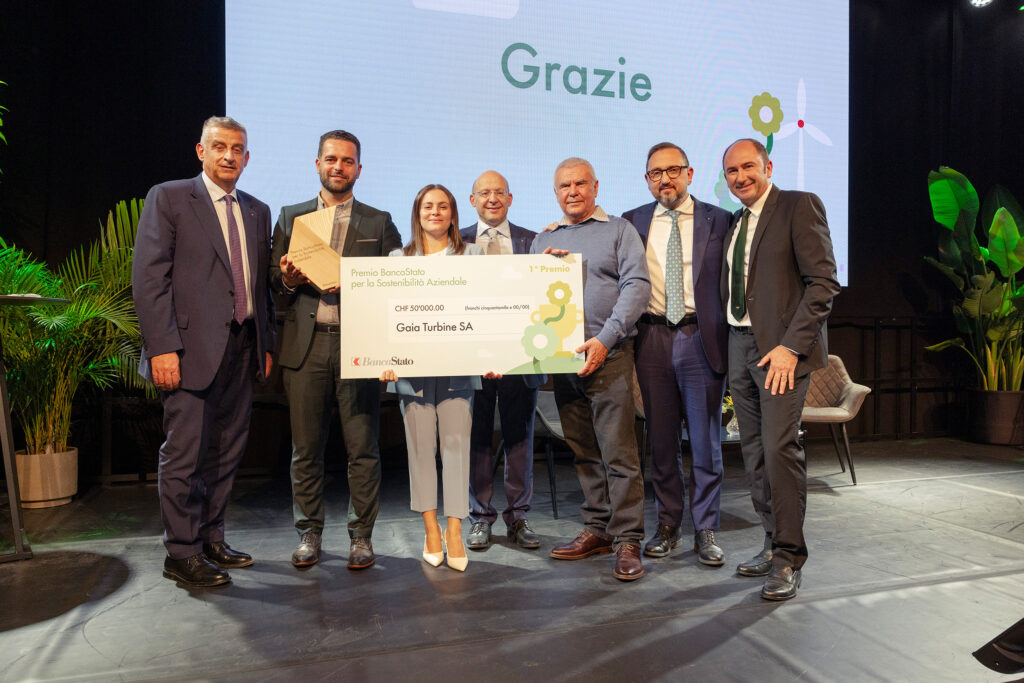
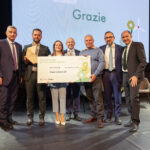
The closing ceremony is scheduled for Monday, October 5th at the Conza Pavilion in Lugano. The three winning projects will be announced there, and they will share a total prize pool of 80 francs: 50 for first place, 20 for second place, and 10 for third place.
An award aimed at projects already operational
The initiative's distinctive feature is its focus not on companies as such, but on individual projects. The 2026 edition's regulations stipulate that applications must concern initiatives already operational and therefore capable of generating a tangible impact. SMEs based in Ticino with between 2 and 249 employees are eligible, while projects developed in collaboration between multiple companies may also be submitted.
The jury considered several factors: the scope of the impact, its relevance and long-term sustainability, the degree of innovation, the project's consistency with the company's sustainability approach, and the possibility of replicating the solution in other contexts.
These criteria, therefore, seek to go beyond the declarative dimension of sustainability, favoring initiatives that have already found concrete application. This approach was already present in the first edition of the award, when the number of nominations exceeded fifty.
The five finalist projects
The selection process resulted in five projects, each different in terms of sector, technology, and intervention approach. They all share the same goal of addressing specific aspects of the transition to production models with a lower environmental impact.
The first is "High-efficiency plug-and-play hydroelectric power plants ," presented by Gaia Turbine SA of Lugano . The project aims to enhance wastewater flows through a modular and compact technology for the production of local renewable energy. The solution is designed to reduce environmental impact while simultaneously limiting the need for invasive infrastructure projects.
The second finalist project is "Technologies for Sustainable Heating ," developed by HeatNeutral Sagl of Riviera . The idea involves using a multi-fuel burner that can be installed on existing oil-fired systems without altering their structure. The system allows for the transition to biofuels and, according to the project, can reduce CO₂ emissions by up to 100%. Another aspect involves the recovery of used cooking oils, integrated into a local circular economy supply chain.
"GRETA: Measuring and Reducing the Environmental Impact of Products ," a project by Interroll SA of Sant'Antonino , comes from the industrial sector . The platform integrates the LCA (Life Cycle Assessment) methodology into industrial processes. The system automatically calculates environmental impacts and generates product labels. The goal is to provide data that can be used to inform decisions related to eco-design and production.
The fourth selected project is "RegaCLEAN, the Roller Shutter that Breathes ," by Regazzi SA of Gordola . In this case, the innovation involves a titanium dioxide-based photocatalytic coating applied to the roller shutters. The technology harnesses solar radiation without requiring additional energy and aims to help reduce air pollutants. The coating is also credited with self-cleaning properties and a positive effect on air quality.
The "SUNCOL TILE TECH: photovoltaics integrated into architecture" project by SUNAGE SA of Balerna completes the lineup . The company has developed compact and customizable photovoltaic modules that can directly replace some traditional roofs. The goal is to extend the possibility of producing renewable energy to buildings and contexts with specific aesthetic, architectural, or landscape requirements. The project also includes a production chain geared toward sustainability.
Different technologies, one direction
The five projects demonstrate the broad definition of sustainability applied to business. Energy, heating, industrial processes, air quality, and photovoltaic integration represent very different areas, but they share the search for solutions that can be implemented practically.
In some cases, innovation directly affects the production of energy from renewable sources; in others, it affects the efficiency of existing plants or the ability to more accurately measure the environmental impact of products. Then there are projects that address the relationship between energy technologies and the architectural features of buildings.
The jury's choice thus highlights a variety of approaches to sustainability. It's also one of the defining elements of the award: the regulations don't single out a single technological or production area, but consider the environment, social/community, and economy as components of corporate social responsibility.
The event on October 5th in Lugano
The process that began with the collection of applications will conclude on October 5th, when the three winning projects will be announced at the Conza Pavilion.
The prize money will be divided into 50 francs for first place, 20 francs for second place, and 10 francs for third place. The availability of a significant financial reward is one of the elements of the initiative, which aims to support projects already underway and potentially replicable.
The award is also part of BancaStato's broader sustainability strategy. The institution has structured its approach around five areas: Governance, Customers, Community, Human Resources, and Climate and Environment. The stated goal is to progressively integrate sustainability into the organization's activities and decisions, also considering the impact on the local community.
BancaStato's sustainability strategy
The award is thus one of the tools through which BancaStato seeks to support sustainability issues in the canton's economic fabric. The institution also links this initiative to its internal program, which includes products and services dedicated to sustainability, attention to climate issues, and the integration of ESG criteria into processes and decisions.
On the climate front, BancaStato has set the goal of achieving net zero emissions by 2050. The institution's sustainability report highlights how the strategy addresses both operational emissions and those related to financing and investment activities.
In 2025, according to the press release for the 2026 edition of the award, the institute also defined its climate strategy and related transition plan, identifying the first operational emissions reduction targets.
Among the initiatives cited is the introduction of the Green Plus mortgage, designed to support sustainable construction projects. In the same year, BancaStato also reported its support for over 600 local organizations and associations and continued training and awareness-raising activities on sustainability issues.
The second edition of the BancaStato Prize thus highlights five experiences born within Ticino companies. Beyond the award ceremony, the selection offers a snapshot of some of the directions in which the canton's manufacturing sector is experimenting with solutions related to energy, environmental impact reduction, and more efficient use of resources.