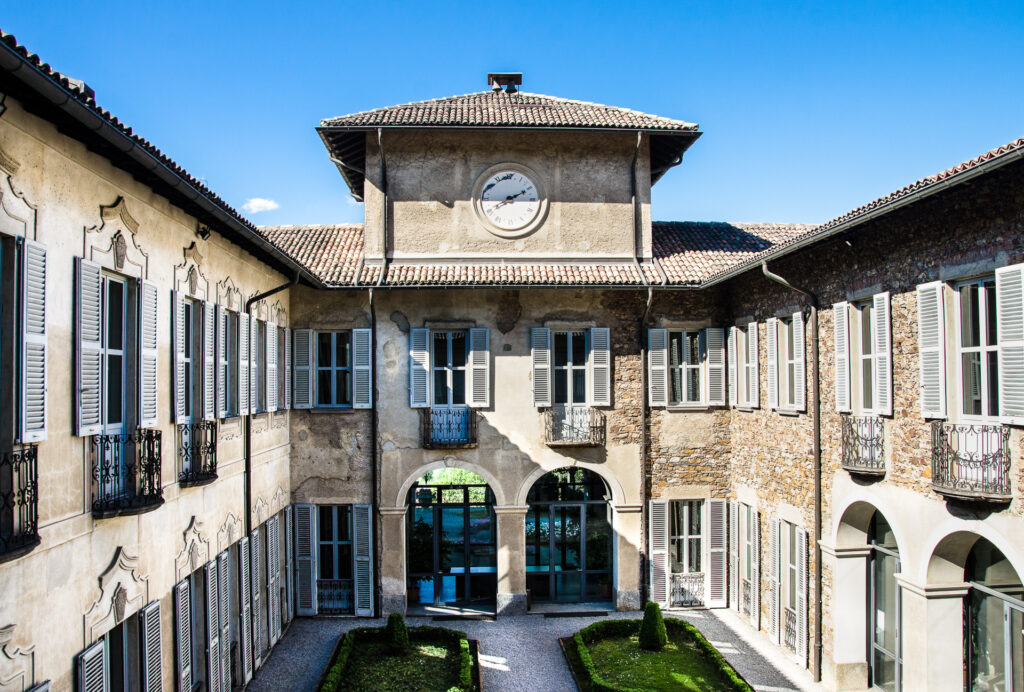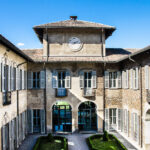

The Lugano Sustainability Series , a series of meetings dedicated to the major environmental, social, and economic issues affecting Ticino, returns on Monday, September 7th. The second meeting, scheduled from 5:30 to 7:00 pm in the Sala San Rocco in the Quartiere Maghetti district, will focus on a key element in the success of policies for change: the ability to engage people and build trust.
The meeting's title is formulated as a question: "How can we build an inclusive, just, and ecological transition together?" This question shifts the discussion from the purely technical dimension of sustainability to the relationship between institutions, research, business, and citizens.
The initiative, free and open to the public, is a collaboration between the City of Lugano, through the #LuganoSostenibile project, the University of Applied Sciences and Arts of Southern Switzerland, the University of Italian Switzerland, Franklin Switzerland, and the Quartiere Maghetti district.
Sustainability as a collective issue
The transition to more sustainable development models is often addressed through goals, regulations, technological innovations, and economic strategies. But for change to translate into concrete and lasting results, it also requires another element: the participation of those who live, work, and study in the area.
It is from this consideration that The Lugano Sustainability Series takes shape. The series aims to offer opportunities for in-depth discussion and discussion of the various dimensions of sustainability, bringing together academic expertise, institutions, and stakeholders in society and the economy.
The goal is not only to inform, but to create spaces in which to question the transformations underway and the ways in which they can be shared. Sustainability, from this perspective, is not just about environmental protection, but also about the social and economic consequences of the choices needed to address the challenges of the coming years.
The theme of the second meeting
The September 7th meeting will focus specifically on the relationship between trust and participation. An ecological transition can encounter challenges not only for financial, technological, or organizational reasons, but also when people perceive decisions as distant, imposed, or difficult to understand.
Hence the central question of the evening: how can we build a transformational path that doesn't leave segments of the population behind and allows citizens to identify with the change?
The discussion will therefore address the issue of a transition capable of reconciling environmental objectives with the demands of equity and inclusion. Participation is not considered merely as a consultative phase, but as a potential component of the process through which to identify problems, develop solutions, and strengthen consensus around the actions to be taken.
Four perspectives compared
Ludovico Giacomo Conti of USI, Alessandro Fontana of SUPSI, Mario Schultz of Franklin Switzerland, and Jody Trinkler of the City of Lugano will provide various contributions.
The presence of representatives from academia, business, and institutions reflects the very nature of the event. Sustainability is approached as a multifaceted issue that can hardly be traced back to the actions of a single entity.
Research, public administration, businesses, and citizens are thus faced with different responsibilities, but also with the need to identify common ground. Strategies developed at the institutional level must address the specific conditions of the local area, while the knowledge developed through research can help provide tools for understanding and addressing complex problems.
From comparison to public participation
After the opening remarks, the evening will continue with a round table discussion and a moment of dialogue open to the public.
The debate will focus on a series of central questions: how can we strengthen trust in transformation processes? How can we better engage the population? And what tools can help make the ecological transition socially just?
These questions are also relevant in the debate on sustainability in Lugano, where global challenges must be translated into the reality of a city and its surrounding area. Moving from general objectives to concrete actions requires consideration of the habits, needs, and expectations of those who will be directly affected by the changes.
A project built between institutions and territory
The Lugano Sustainability Series was born from the desire to connect individuals with different skills and roles. The City of Lugano, USI, SUPSI, Franklin Switzerland, and Quartiere Maghetti share the goal of developing a long-term awareness-raising and in-depth program.
The idea behind the project is to create a stable space for dialogue on key issues related to environmental, social, and economic sustainability.
In a context where transition is often described through broad international lens, this series of meetings aims to bring the discussion back to a local dimension. Choices related to energy, mobility, consumption, the organization of urban spaces, and social cohesion have direct consequences for communities.
For this reason, according to the review's approach, a lasting transformation must be based on collaboration between the various local stakeholders and the possibility of building shared responsibility.
The appointment of September 7th
The second meeting of The Lugano Sustainability Series will be held on Monday, September 7, 2026, from 5:30 pm to 7:00 pm, in the Sala San Rocco in the Quartiere Maghetti.
Refreshments will be served following the discussion. Participation is free and open to the public; registration is required via the link.
The event will be an opportunity to discuss not only what changes are needed, but also how these can be achieved. Because, alongside policies, technologies, and investments, sustainability in Lugano also depends on the ability to engage citizens as active participants in a shared journey.