
Two distinct research paths, united by a common underlying question: how can we make AI-based systems increasingly capable of operating in the real world, while also making them more reliable and understandable ? On one hand, there's a humanoid robot learning to play the drums to hone its motor skills. On the other, a study on optical networks uses Explainable AI to make machine learning models' decisions more transparent.
These are the two areas that have brought SUPSI research to the international spotlight in recent weeks. The drumming robot LARO participated in the Davos Tech Summit 2026, while a group of researchers from the Institute for Information Systems and Networking received the 2026 IEEE Communications Society Charles Kao Award for Best Optical Communication and Networking Paper.
These seemingly distant fields, then, are connected by a common challenge: pushing artificial intelligence beyond the automatic execution of tasks, while also addressing the issues of learning, adaptation, and trust in machine decisions.
An international laboratory dedicated to technology
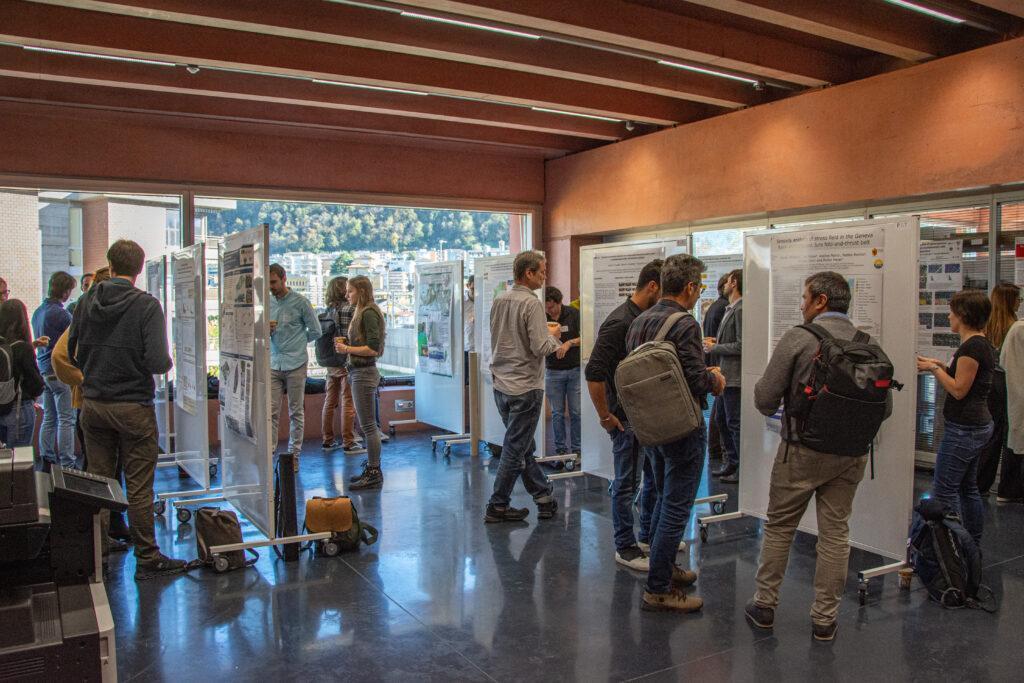
The Davos Tech Summit brings together research groups, companies, startups, and institutions committed to technological innovation and to reflecting on the implications that new technologies can have on society.
The 2026 edition paid particular attention to robotics, transforming various spaces in the city into a sort of "Robot City." More than 55 systems, including humanoid robots, quadrupeds, drones, and other intelligent machines, were involved in demonstrations designed to demonstrate the potential for interaction between humans and autonomous systems.
Among the protagonists of the initiative was LARO, a humanoid drummer robot used as a research platform to study the acquisition of complex motor skills.
In this case, music isn't the project's ultimate goal. Drumming becomes a tool for testing a series of skills that are central to the development of humanoid robotics: the simultaneous coordination of multiple limbs, precision of movement, respect for timing, and the ability to adapt actions to the conditions in which the robot operates.
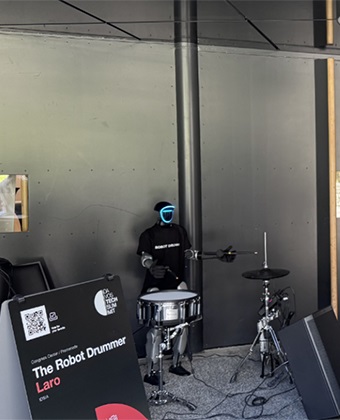 LARO and learning movement
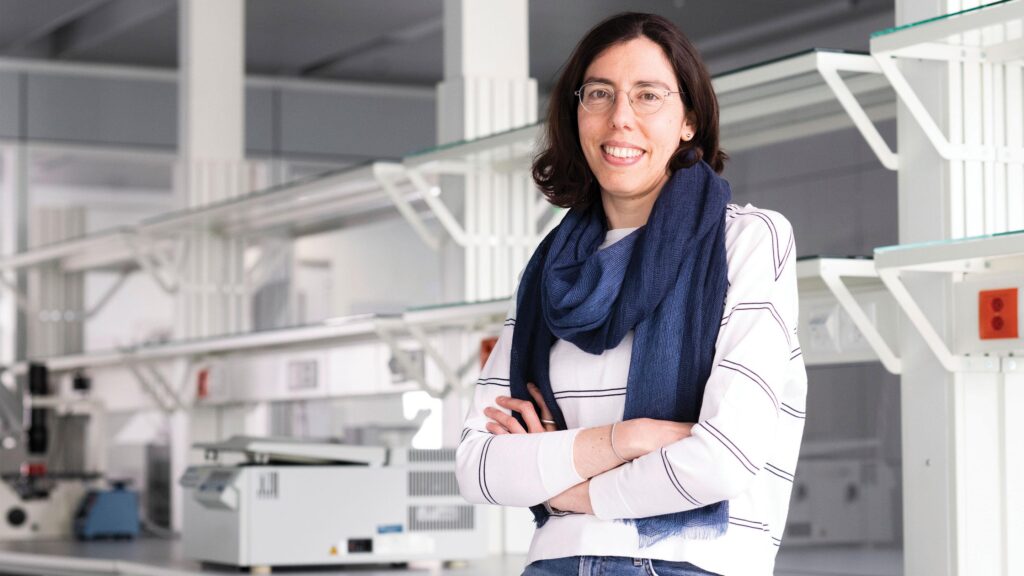
The project, entitled Robot Drummer: Learning Rhythmic Skills for Humanoid Drumming , is at the heart of the research activities of Asad Ali Shahid, SUPSI researcher in the LEarning for Optimization and coNtrol (LEON) group of the Dalle Molle Institute for Artificial Intelligence Studies, IDSIA USI-SUPSI.
The researcher's contribution focuses specifically on training the artificial intelligence models that allow the robot to acquire new movements and transferring these capabilities to the physical system. The research is conducted under the supervision of Professor Loris Roveda, Associate Professor of Integrated Intelligence for Robotics at the Department of Innovative Technologies at SUPSI and at the Polytechnic University of Milan.
The idea behind the work departs from a model based solely on the advance programming of each individual gesture. Instead, LARO is used to study progressive learning processes, through which the robot can develop and refine specific motor skills.
The drums are a particularly demanding test. Achieving a coherent performance requires more than simply moving a single limb toward a target: you need to coordinate multiple body parts, adhere to a time sequence, control the strength and precision of your movements, and maintain a consistent relationship with the rhythm.
These are aspects that, if developed reliably, could also be useful in contexts other than music. Research on motor skills can contribute to the development of more autonomous and adaptable robots, potentially employable in situations where the simple repetition of predefined movements is not sufficient.
More information about the project is available in the SUPSI study, New frontiers of music: a humanoid robot that plays the drums.
From the ability to act to the need to explain
While LARO addresses the problem of how a machine can learn to perform increasingly sophisticated actions, another SUPSI research project focuses on a complementary question: how to understand and verify the decisions made by artificial intelligence systems.
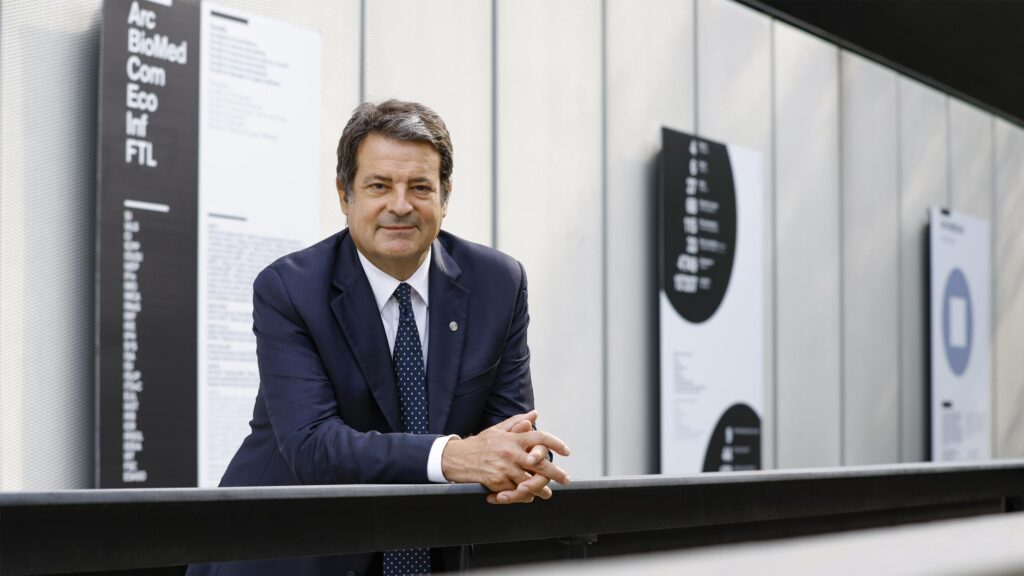
On August 5, the award was announced to Omran Ayoub, Davide Andreoletti, and Professor Silvia Giordano of the Institute for Information Systems and Networking (ISIN ). The researchers received the 2026 IEEE Communications Society Charles Kao Award for Best Optical Communication and Networking Paper.
The prize is named in honor of Sir Charles Kao, winner of the 2009 Nobel Prize in Physics and a key figure in the development of fiber-optic communications. The award is presented annually to the best paper published in the previous three years in the IEEE/Optica Journal of Optical Communications and Networking (JOCN).
Evaluation criteria include scientific quality, originality, research impact, clarity of presentation, and the ability to suggest new potential directions for study.
 The Optical Network Research Award
The 2026 edition honored the work Towards Explainable Artificial Intelligence in Optical Networks: The Use Case of Lightpath QoT Estimation , published in January 2023.
In addition to Omran Ayoub, Davide Andreoletti, and Silvia Giordano of SUPSI, the paper is co-authored by Sebastian Troia and Massimo Tornatore of the Polytechnic University of Milan, as well as Andrea Bianco and Cristina Rottondi of the Polytechnic University of Turin.
The study focuses on the application of Explainable Artificial Intelligence, or XAI, to optical network management. This is a field in which machine learning models can be used to automate predictions and decisions, but where accuracy alone is not always sufficient.
One of the most debated issues in the use of artificial intelligence concerns the functioning of so-called "black boxes": systems capable of producing very precise results without immediately making the path that led to a given prediction clear.
When these models are applied to important infrastructure, the ability to understand and verify their decisions takes on additional value.
Making decisions verifiable
The awarded work examines the estimation of Quality of Transmission , QoT, a parameter used to predict the quality of the signal along an optical link.
Using explainable AI techniques, the researchers analyzed the possibility of verifying whether the indications provided by the models are consistent with the physical phenomena that regulate the functioning of the networks. This approach could help make forecasts more reliable and identify any anomalies before the systems are deployed.
According to Omran Ayoub, co-head of the Trustworthy and Secure Computer Networks scientific area , the work represents one of the first international contributions dedicated to the introduction and application of Explainable AI in the field of optical networks.
The recognition, in the researcher's words, confirms a line of study aimed at making artificial intelligence and machine learning not only high-performance, but also interpretable and usable in the automation of communication networks.
The search for autonomy and reliability
Robots that learn to beat time and algorithms that must account for their predictions belong to two distinct fields of application. Both, however, highlight an ongoing transformation in artificial intelligence research.
On the one hand, there's growing interest in machines capable of learning skills and adapting their behavior to complex tasks. On the other, there's a growing need to evaluate, understand, and verify how algorithms reach their conclusions.
In the first case, LARO represents an experiment on the relationship between machine learning and physical motion control. In the second, the Sir Charles Kao Award-winning study addresses the issue of model transparency in managing communications infrastructures.
SUPSI research is thus moving along two fronts that could become increasingly intertwined: developing intelligent systems capable of more and, at the same time, ensuring that their functioning remains sufficiently reliable, verifiable, and understandable.
Perhaps it is precisely in this balance that one of the greatest challenges of technological evolution lies: not only building machines capable of learning, moving, and making decisions, but also developing the tools needed to understand how they do so and to what extent it is possible to entrust them with increasingly complex tasks.